The CiRCE Institute provides inspiration, information, and insight to classical educators throughout the U.S. and Canada via an annual conference, an online classical academy, in-house teacher training, Lost Tools of Writing™ Workshops and materials, consulting on board development, school leadership, and school start-up, as well as a content-laden website and blog.
“CIRCE” is an acronym for “Center for Independent Research on Classical Education.” A secondary acronym is “Consulting and Integrated Resources for Classical Educators.”
The CiRCE Institute first began in 1996 as Circe Ministries, a research and tutoring service formed by Andrew Kern for the purpose of writing a book, Classical Education: The Movement Sweeping America, and teaching high school aged home school students in a university style great books class.
Over the years, a rapidly growing number of schools and organizations asked Mr. Kern to speak at their conferences, to help them develop curricula, and to train their teachers. To facilitate this work, CiRCE began its annual conference in the summer of 2002.
That year, CiRCE Ministries became the non-profit 501(c)3 corporation CiRCE Institute. Since then, continued growth has led to the addition of a board of directors; a fleet of experienced, expert consultants; The CiRCE Papers – a weekly e-newsletter; a regularly updated and informative blog; and a product line that includes The Lost Tools of Writing™, Next Step Teacher Training™, audio recordings, books, and other valuable resources for classical schools and homes.
The CiRCE Institute is called to promote, model, and support classical education in the school, within itself, and in the home. Our clients consider the CiRCE Institute the cutting-edge organization in the Christian classical renewal because of our unique ability to identify the ancient principles of learning, to communicate them enthusiastically, and to apply them vigorously in today’s educational settings.
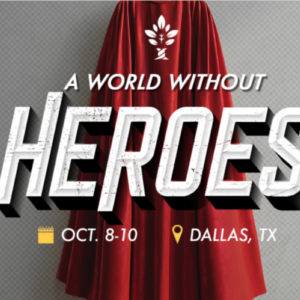
The CiRCE Institute will host its Fall regional conference in McKinney, Texas, from October 8th–10th, 2026. The theme of the conference is “A World without Heroes” and includes the following speakers: Jonathan Pageau, Heidi White, Matthew Bianco, Andrew Kern . . .
In this lecture, D. C. Schindler explores Plato’s ideas on education to argue that the essence of education is a revolution — a complete turning-around — of the soul toward God, reality, and the self. (44 minutes)
Justin Johnson argues that the anthropology and ontology of St. Maximus the Confessor provide a “user-friendly Augustinian framework” to teach literature. (59 minutes)
Jeanne Schindler argues that three key technological inventions — the car, central heating, and digital devices — have contributed, respectively, to the loss of “at-homeness” people experience in the city, the home, and within ourselves. (50 minutes)
James Matthew Wilson explores the tragic vision of the world in Shakespeare’s plays, revealing the often-overlooked and somewhat hidden hints of grace and of Christ that point to a more hopeful view of the cosmos. (59 minutes)
Storyteller Nicholas Kotar speaks of the role of the “idiot” in Russian fairy tales, one whose simplicity and humility lead to wisdom and the transformation of those around them. (48 minutes)
Darrell Falconbourg explains the tensions inherent in the word “revolution,” which in the classical sense meant a return to an origin and in modernity means a total rupture with the past. (41 minutes)
Andrew Kern takes his listeners along an “interlinear” reading of a portion of St. Augustine’s Confessions that explores the differences between how God makes and how we create. (38 minutes)
George Grant recounts the fascinating history of Hernando Colón’s attempt in the 16th century to curate a universal library of the world’s knowledge. (41 minutes)
Tim McIntosh describes moral philosopher Alasdair MacIntyre’s intellectual conversion to a synthesis of Aristotelian ethics and Christianity, best embodied in Thomism. (44 minutes)
Christopher and Christine Perrin discuss the implications of architect Christopher Alexander’s (1936–2022) discovery of patterns of building that cohere with the the created cosmos and with ourselves as human creatures. (59 minutes)
Jeanne Schindler advocates for a return to an understanding and prioritizing of sensory experience — real engagement with the real world — as foundational to learning and living. (35 minutes)
In this lecture, Heidi White explains how the modern project is a diabolical inversion of Christendom and calls for Christians to build lives and a culture that can counter it. (53 minutes)
In this lecture, Ken Myers explains how it is that our participation in harmonic beauty in music is a kind of participation in the life of God, in Whom all order and beauty coheres and is sustained. (61 minutes)
In this lecture, Ken Myers explains how the virtue of prudence is fundamentally connected with a deep and anchored understanding of reality. (54 minutes)
Ken Myers explains the ancient classical and Christian view that music embodies an order and forms that correspond to the whole of created reality, in its transcendence and materiality. (54 minutes)
In a lecture at a CiRCE Institute conference, Ken Myers presented a rebuttal to the notion that encouraging the aesthetic appreciation of “higher things” is elitist and undemocratic. (58 minutes)
In this lecture, Ken Myers argues that the end of education is to train students to recognize what is really real. The things of this earth are only intelligible in light of heavenly realities. (59 minutes)
In the second of two lectures given by D. C. Schindler, he explores the nature of authority with reference to the transcendental dance of Truth, Goodness, and Beauty. (60 minutes)
In this lecture presented at the CiRCE Institute national conference, D. C. Schindler presents a metaphysical description of what symbols are. (54 Minutes)