
The current Friday Feature
duration 17:25
If you’re a member, you can select this (or any other) Friday Feature, and download it to our app for later listening. Here’s the listing of Features.
Latest wisdom from Sound Thinking
- From myth to sacramentality
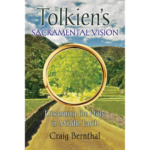 Craig Bernthal: Tolkien asserts that reading fairy stories is a way to ‘recover’ the world”
 - Mythopoeic power
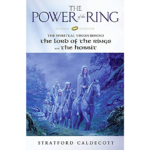 Stratford Caldecott on Tolkien’s literary achievement
 - God also was a Cave-man
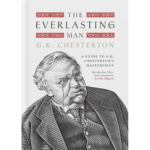 G. K. Chesterton on the convergence of omnipotence and impotence in Bethlehem
 - Bemused by joy
 Fr. James V. Schall, S.J., on G. K. Chesterton’s awareness of the reality of both evil and joy
 - The (super)natural theology of fairy-tales
 Alison Milbank describes Chesterton’s belief that story-telling is an affirmation of transcendent meaning
“I’m not a member yet. Convince me that it’s worth it.”
- AUDITION some of the features on our Listen for free page (over 15 hours of listening).
- READ our mission statement and some testimonials.
- BROWSE the various sections of our catalog to see how much you’re missing.
- SCROLL down on the Meet our Guests page to see if you recognize anyone.
- SIGN UP here.
Related Features
On making well
Taking up the tale
On embodiment
Echoes of Middle-eart
Meet one of our Partners

Since March of 2009, Front Porch Republic has published hundreds of pieces on their website, exploring and advancing decentralist and localist ideas, hosting lectures and conferences, and building a unique coalition of writers and thinkers from “left” and “right” to think together about a more humane American future. They’ve even managed quite literally to alter the terms of political and cultural debate: they unwittingly inserted the noun “porcher” into the blogospheric lexicon. FPR aims to bring together thoughtful men and women across America to promote human-scale institutions and the rebirth of community. FPR wants to help people resist the dehumanization that seems to threaten from every quarter, focusing on the overlapping local and regional groups, communities, and associations that provide a matrix for human flourishing. Through FPR’s website, books, a semi-annual print journal, an annual conference, and other ventures, they seek to discuss concepts such as human scale, the distribution of power, and our responsibility to the future and to bring them back into the public conversation.
On this page, you can browse a listing of articles and lectures that Front Porch Republic has made available as Features for Mars Hill Audio members.
Click here to see news from all our Partners
A recent Conversation

Jeff Bilbro discusses the 50th anniversary edition of Wendell Berry’s (1934–2026) The Unsettling of America (Counterpoint Press, 2026). Bilbro explores Berry’s insights into American gnosticism, the differences between exploiters and nurturers, and the war between technique and virtue. This broad-ranging conversation reveals the depth and vigor of Berry’s legacy of wisdom, wisdom that involved gratitude for Creation, limits, and the body and embodied practices, as well as affection for and service to one’s local place. Bilbro also discusses Berry’s iconic view of Creation and his influence on other pastors and thinkers.
The 18 most recent Conversations and Features we’ve released are described here.
If you’re not yet a member, you can get a free Visitor’s Pass and listen to hours of free audio. Details are here.
Our most recent Journal
Guests on Volume 169
- ALEC RYRIE, author of The Age of Hitler and How We Will Survive It, on cultural values based on a villain
- FREDERICK BAUERSCHMIDT, author of No Lasting City: Essays on Theology, Politics, and Culture, on changes in ethics in postmodernity
- ANDREW KERN, author of Unless the Lord Builds the House: Shared Foundations for Christian Education, on helping students discover the glory of each created thing
- MICHAEL D. C. DROUT, author of The Tower and the Ruin: J. R. R. Tolkien’s Creation, on Tolkien’s creation of Middle-earth and its unique impact on readers
- ROSS MCCULLOUGH, author ofThe Body of This Death: Letters from the Last Archbishop of Lancaster, on portraying faith and life in the later 21st century in fiction
- DALE AHLQUIST, editor of I Also Had My Hour: An Alternative Autobiography of G. K. Chesterton, on G. K. Chesterton’s genius and humility