PREVIEW
The player for this Journal volume is only available to current members or listeners with a legacy account. If you have an active membership, log in here. If you’d like to become a member — with access to all our audio programs — sign up here.
Guests heard on Volume 131
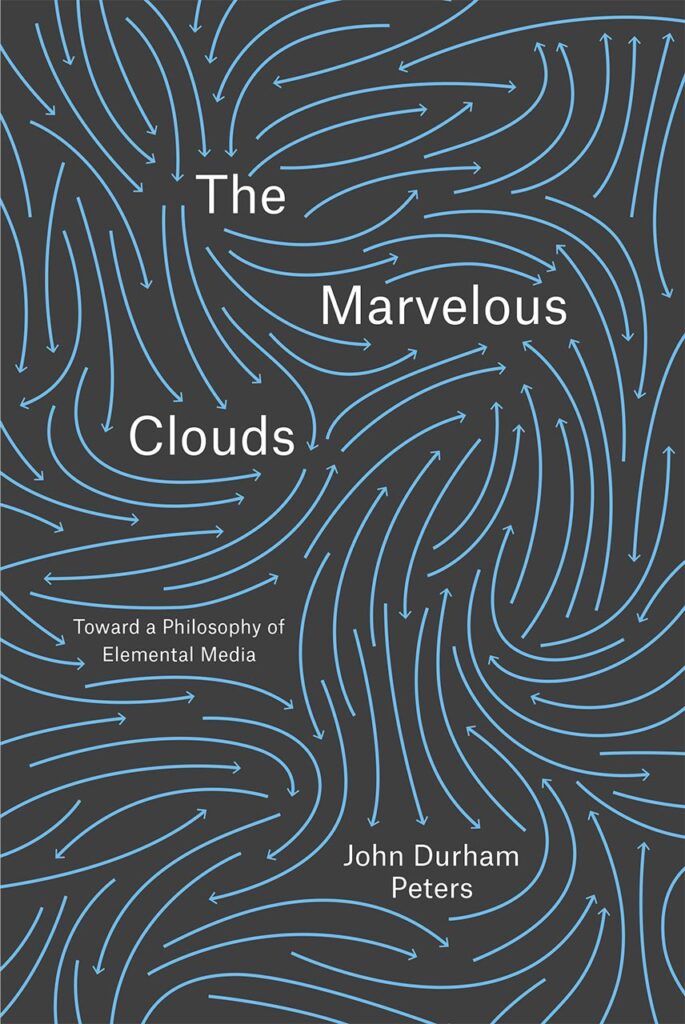
John Durham Peters, author of The Marvelous Clouds: Toward a Philosophy of Media, on understanding media as agencies of order, not just devices of information
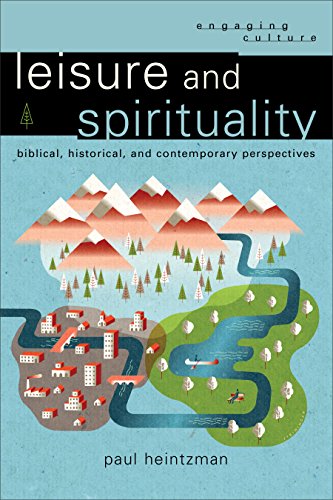
Paul Heintzman, author of Leisure and Spirituality: Biblical, Historical, and Contemporary Perspectives, on how a biblical understanding of human spirituality can inform our concept of “leisure”
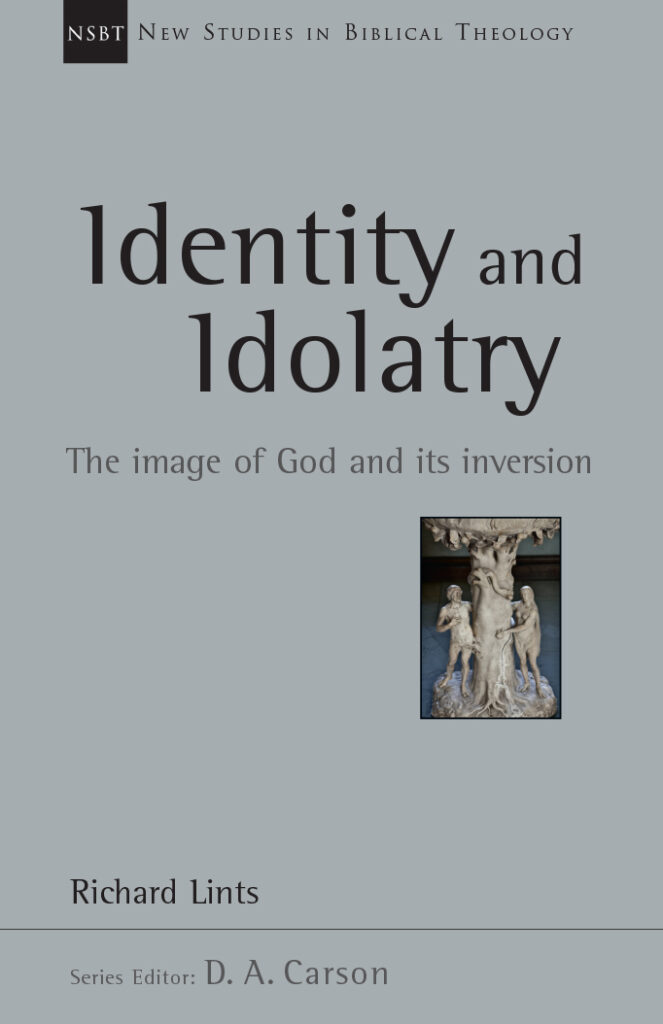
Richard Lints, author of Identity and Idolatry: The Image of God and Its Inversion, on how the image of God and idolatry are inversely related
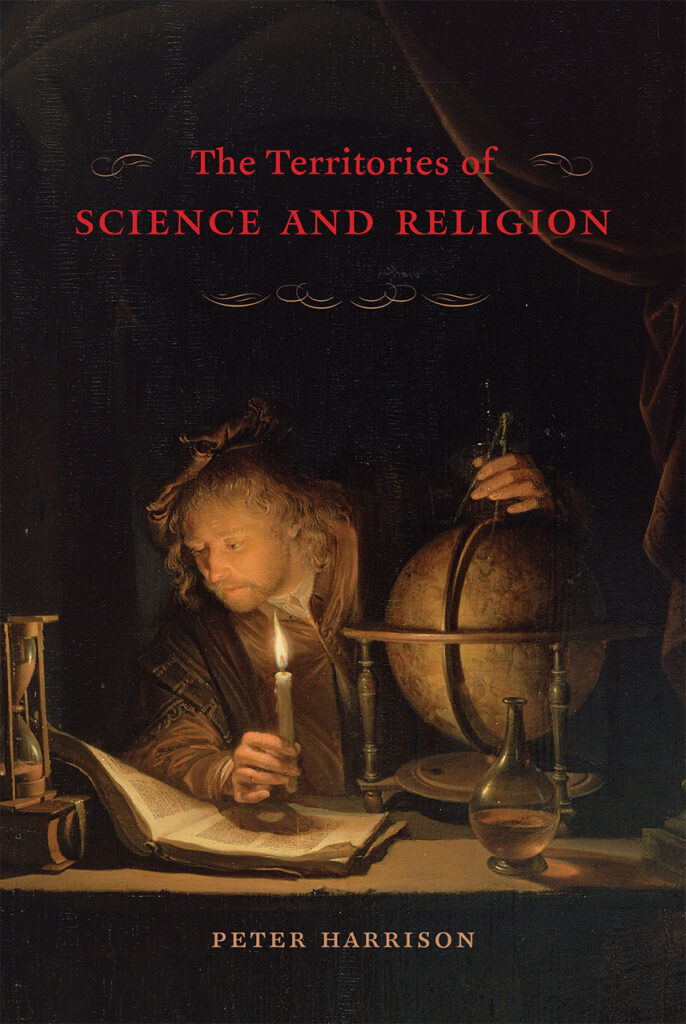
Peter Harrison, author of The Territories of Science and Religion, on how our current definition of “science” and “religion” represents novel conceptual categories
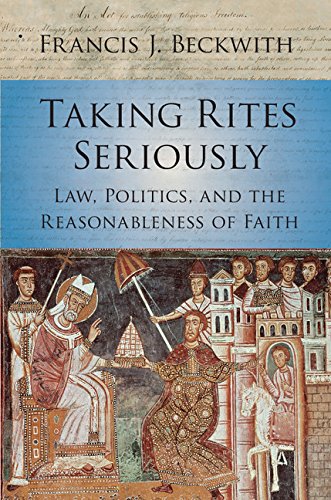
Francis J. Beckwith, author of Taking Rites Seriously: Law, Politics, and the Reasonableness of Faith, on the widespread tendency to erect a wall between faith and reason
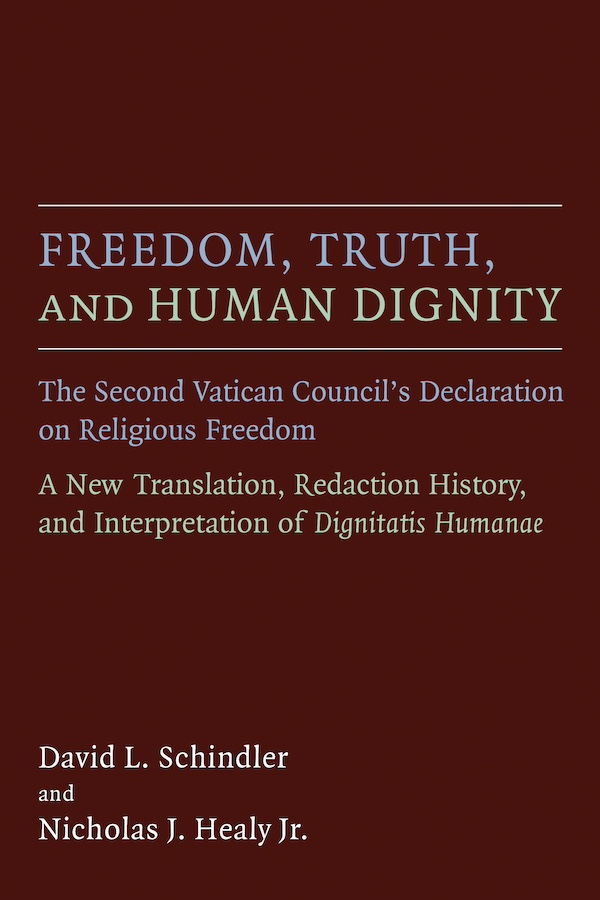
David L. Schindler & Nicholas J. Healy, Jr., co-authors of Freedom, Truth, and Human Dignity: The Second Vatican Council’s Declaration on Religious Freedom, on how the First Amendment is not as sympathetic to religious freedom as is commonly believed
Related reading and listening
- Mid-20th century intellectual consensus — FROM VOL. 122 George Marsden discusses the influence of public intellectuals in America during the 1950s and their concerns for national moral consensus. (22 minutes)
- “Your life is a miracle” — In this lecture, L. M. Sacasas questions whether Byung-Chul Han’s critique of modern life as a “burnout society” is still accurate. (40 minutes)
- On disposable experience — Todd Gitlin argues that we simultaneously resent and crave the experience of media saturation, and that it ultimately cheapens our lives. (33 minutes)
- Social(izing) medium — Todd Gitlin on the ways in which television and other media have shaped our ways of having emotions
- Looking past the juicy distraction — Marshall McLuhan on the necessity of evaluating how — not just what — various media convey
- Immediately yours — Todd Gitlin on the effect of media on our sense of time
- Modern isolation — FROM VOL. 150 Eric Jacobsen argues that the emblematic items of the car windshield, the television, and the cell phone — “three pieces of glass” —have led to alienation from people and the places where we live. (22 minutes)
- Nietzsche, technology, and desire — Steven Knepper and Robert Wyllie discuss philosopher Byung-Chul Han’s thought on Nietzsche and on the effects of digital media on concepts of freedom, desire, and receptivity to others. (14 minutes)
- Mars Hill Audio Journal, Volume 166 — FEATURED GUESTS: William Cavanaugh, Kent Burreson, Beth Hoeltke, Jeffrey Barbeau, Jason Baxter, John Betz, and Bruce Herman
- Politics and idolatry — FROM VOL. 109 Theologian William Cavanaugh explains how the modern state is a unique kind of political entity, inviting a new kind of idolatry. (26 minutes)
- A flood of images — Oliver O’Donovan describes the distinctive character of publicity in modernity, which drowns us in a flood of ever-changing representations that do not serve the common good. (37 minutes)
- Beyond a reasonable doubt — From a 1980 interview with Ken Myers, Mortimer J. Adler discusses his argument that belief in the existence of God is rational. (14 minutes)
- Mystery novels with theological concerns — In these interviews from 1993, mystery author P. D. James speaks about the philosophical and theological issues woven into her novels, and Alan Jacobs discusses James’s novel The Children of Men. (23 minutes)
- Christian belief as real knowledge — Dallas Willard on the modern divorce between faith and knowledge
- Media as agencies of order — Media theorist John Durham Peters wants us to reexamine the purposes of media and how fundamental media are. (59 minutes)
- Utopian dreams and cynicism — John Durham Peters discusses the history of the idea of communication, saying that our hopes are too high when we believe that the solution to social discord is just better communication. (49 minutes)
- Thinking Together — Alan Jacobs discusses some principles he’s compiled to help us think well (and charitably) in our cultural context, and he warns us to be attentive to the ways technology displaces previously fixed communities. (53 minutes)
- The amplification of distraction — FROM VOL. 152 Jeffrey Bilbro advocates a Christian posture toward our contemporary digital media ecosystem that addresses its disorienting and disintegrating effects. (23 minutes)
- Nervousness about the shape of religion in America — Thomas Albert Howard discusses European perspectives of eighteenth-century American religious life. (21 minutes)
- Wonder, being, skepticism, and reason — FROM VOL. 135 Matthew Levering talks about the long and rich tradition of reasoning about God. (23 minutes)
- Impact of “infotainment” on community — Neil Gabler and C. John Sommerville discuss how the mentalities conveyed by our experience with communications media work against the nurturing of community. (36 minutes)
- Defined by what we buy — FROM VOL. 48 Gary Cross argues that Americans are uniquely susceptible to the temptation to define ourselves by what we buy. (10 minutes)
- Modernity and the shaping of America — FROM VOL. 48 Historian Jon Butler explains how aspects of modernity were already present and at work in colonial American life prior to 1776. (12 minutes)
- Sensory overload — FROM VOL. 59 Todd Gitlin discusses the effects of media saturation on our mental and emotional lives. (14 minutes)
- Metaphysical impulses beneath techno-utopianism — FROM VOL. 38 Erik Davis describes his research on how humans’ fascination with technology is permeated with “mythic energy” and gnostic aspirations. (11 minutes)
- The theological significance of current events — FROM VOL. 65 George Marsden discusses how Jonathan Edwards (1703–1758) understood world history and the American experience. (14 minutes)
- Alchemy, astrology, energy, and gnosticism — FROM VOL. 85 Catherine Albanese describes the varieties of “metaphysical religion” popular in early American history and draws connections with the more recent New Age movement. (14 minutes)
- When philosophy loses its way — FROM VOL. 52 Ralph McInerny (1929–2010) speaks about themes from his 1999 Gifford Lectures, which relate how natural theology came to be regarded as pointless, resulting in a philosophical dead end.(24 minutes)
- The need for robust Christian intellectual life — In this lecture, Robert Benne surveys the contemporary landscape in which Christian scholars attempt to integrate their faith and their intellectual life. (43 minutes)
- Why liberalism tends toward absolutism — In this lecture, Michael Hanby examines what causes liberalism to become dictatorial in thought and practice. (49 minutes)
- Faith as the pathway to knowledge — Lesslie Newbigin on authority and the Author of all being
- Mars Hill Audio Journal, Volume 162 — FEATURED GUESTS: Mark Noll, R. Jared Staudt, Paul Weston, William C. Hackett, Hans Boersma, and David Paul Baird
- Is liberalism compatible with religious freedom? — D. C. Schindler relies on two Thomistic axioms to illustrate why liberalism — which claims to offer a minimalist conception of the common good — is ultimately incompatible with a Catholic understanding of religious freedom. (34 minutes)
- Play as a signal of transcendence — FROM VOL. 2
Father James V. Schall reflects upon the importance of play and contemplation in ancient political thought. (7 minutes)
- St. Irenaeus against the Gnostics — In this reading of an essay by theologian Khaled Anatolios, St. Irenaeus is remembered for his synthesis of faith and reason. (52 minutes)
- Infrastructures of addiction — Christopher Lasch on the subversive effects of the expectation of novelty
- Heintzman, Paul — FROM THE GUEST PAGE: Paul Heintzman is Professor of Leisure Studies at the University of Ottawa, where he is also an Affiliated Professor in the MSc in Environmental Sustainability program.
- Peters, John Durham — FROM THE GUEST PAGE: John Durham Peters is María Rosa Menocal of English and Professor of Film and Media Studies at Yale.
- Beckwith, Francis J. — FROM THE GUEST PAGE: Francis J. Beckwith is on the faculty of Baylor University, where he serves as Professor of Philosophy & Church-State Studies, Affiliate Professor of Political Science, Associate Director of Graduate Studies in Philosophy, and Resident Scholar in the Institute for Studies of Religion.
- In the image of an Imaginer — Dorothy L. Sayers on the inevitability of analogical language about God (and everything else)
- Mars Hill Audio Journal, Volume 159 — FEATURED GUESTS:
Kirk Farney, Andrew Willard Jones, James L. Nolan, Jr., Andrew Kaethler, Peter Ramey, and Kathryn Wehr
- Resituating discussion of “science” and “religion” — Peter Harrison argues that modern Western culture’s partitioning of ‘science’ and ‘religion’ into distinct spheres is a novel categorical conception in history. (58 minutes)
- The basic act and order of things — David L. Schindler (1943–2022) insists that the reduction of love to a matter of private and personal sentiment, piety, or good will — is one of the fundamental disorders of modern culture. Christians should know better. (39 minutes)
- “Christianity” is gnostic — Peter Leithart on why what the Church is and practices is not a “religion”
- The evolving connotation of “Christianity” — William Cantwell Smith on how the abstraction known as “Christianity” displaced the concrete reality of “Christian living”
- The birth of “religion” — Brent Nongbri on how Christian disunity led to the privatization of God and the gods
- Mars Hill Audio Journal, Volume 152 — FEATURED GUESTS:
Elisabeth Lasch-Quinn, Jeffrey Bilbro, Zena Hitz, James L. Nolan, Jr., Bishop Robert Barron, and Jason Blakely
- The novelty of “science” and “religion” — Peter Harrison on the contingency of the boundaries that divide our lives
- The scantily clad public square — Reinhard Hütter on the necessity of the virtue of religion
- Is religious freedom a myth? — Kenneth Craycraft, Jr. details the myths about religious freedom which are so commonly held by American Christians and analyzes their fallacies. (34 minutes)