
PREVIEW
The player for this Journal volume is only available to current members or listeners with a legacy account. If you have an active membership, log in here. If you’d like to become a member — with access to all our audio programs — sign up here.
Guests heard on Volume 158
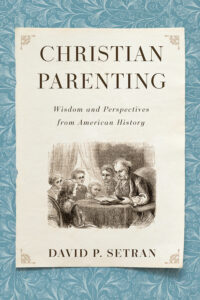
David Setran, author of Christian Parenting: Wisdom and Perspectives from American History, on how American Christians thought about being good parents in the colonial period and in the nineteenth century
read more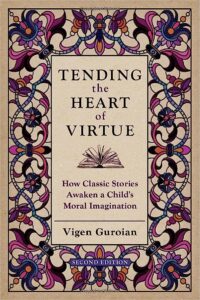
Vigen Guroian, author of Tending the Heart of Virtue: How Classic Stories Awaken a Child’s Moral Imagination, on how fairy stories serve to nurture healthy moral imaginations in children
read more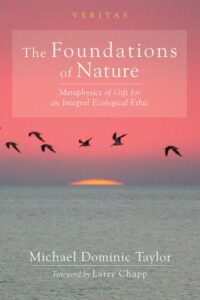
Michael Dominic Taylor, author of The Foundations of Nature: Metaphysics of Gift for an Integral Ecological Ethic, on why we need an adequate metaphysical framework for understanding the natural world
read more
Thomas Pfau, author of Incomprehensible Certainty: Metaphysics and Hermeneutics of the Image, on the way in which images reveal to us invisible, numinous realities
read more
Jason Paone, the editor of Thomas Aquinas, Selected Commentaries on the New Testament, on the relative ignorance of these important books
read more
Matthew Levering, author of The Abuse of Conscience: A Century of Catholic Moral Theology, on why the virtues rather than conscience should be recognized as the heart of Christian moral life
read moreRelated reading and listening
- Paradoxes of “nature” and “culture” — Robert Spaemann, on the destructive consequences of a merely naturalistic understanding of nature
- Christian culture and the myth of the secular — Ken Myers draws on T. S. Eliot to argue that Western civilization has broken down, not into a multiplicity of cultures, but into a “post-culture.” (47 minutes)
- A sampling of newly published lectures — Ken Myers introduces listeners to four recently released lectures, courtesy of our Partners. The lecturers are Jennifer Frey, Gary Saul Morson, N. T. Wright, and Andrew Kern. (27 minutes)
- The just war tradition and whole-life discipleship — Daniel M. Bell, Jr. discusses the just war tradition, a tradition which is often invoked by figures who, upon closer inspection, tend to lack a robust understanding of its history and criteria. (57 minutes)
- Mars Hill Audio Journal, Volume 166 — FEATURED GUESTS: William Cavanaugh, Kent Burreson, Beth Hoeltke, Jeffrey Barbeau, Jason Baxter, John Betz, and Bruce Herman
- Moral reasoning and human flourishing — Tim McIntosh describes moral philosopher Alasdair MacIntyre’s intellectual conversion to a synthesis of Aristotelian ethics and Christianity, best embodied in Thomism. (44 minutes)
- Publicity and representative images in society — Oliver O’Donovan describes the nature of publicity as the force that mediates our communication with one another, creating common interests and then rapidly subsuming them into newer ones.(Lecture 3 of 3; 57 minutes)
- Alert to the magic in the world — Junius Johnson discusses the importance of teaching stories, particularly fairy stories, in classical education. (25 minutes)
- Stewarding God’s creation —
FROM VOL. 116 Fred Bahnson talks about how a Christian understanding of God’s redemptive work on the earth should influence our practices of growing and sharing food. (19 minutes) - University or “utiliversity”? — In this essay, Reinhard Hütter examines in depth John Henry Newman’s The Idea of a University and argues that its insights and prescriptions are urgently relevant to the current status of higher education. (87 minutes)
- Man as “both mystic and hobbit” — D. C. Schindler explores how building is a quintessential human activity and an expression of our view of the meaning of reality. (47 minutes)
- The reciprocity of all things —
FROM VOL. 148 Jeffrey Bilbro explores the importance of sustainability through the essays, poetry and fiction of Wendell Berry. (13 minutes) - Good News for All Creation — Theologian Norman Wirzba helps us rethink the category of nature in terms of the Christian doctrine of creation. (66 minutes)
- Passing on the virtues to the next generation — Theologian and ethicist Stanley Hauerwas reflects on being a godparent and the responsibility to cultivate and talk about Christian virtue. (21 minutes)
- A life well lived — In this essay, Stanley Hauerwas explains the breadth and depth of Alasdair MacIntyre’s thought, the goal of which was to help people to act intelligibly and live morally worthy lives. (40 minutes)
- It takes a character (and a village) — Herbert McCabe, O.P. on the Aristotelian, Thomistic, and MacIntyrean account of the moral life
- The recovery of an integrated ecology — In this essay, Michael Hanby unpacks the summons of Laudato si’ to an ecological way of life based on a proper understanding of creation in its fullness and integrity. (57 minutes)
- The interiority of reality —
FROM VOL. 132 D. C. Schindler discusses the thought of contemporary German philosopher Robert Spaemann, and his defense of a purposeful structure in nature. (28 minutes)) - The profound drama of human sexuality — In this lecture, D. C. Schindler explains the cosmological significance of human sexuality and why it is paradigmatic of the relationship between nature and freedom. (32 minutes)
- Flannery at 100 — In honor of Flannery O’Connor’s 100th birthday, we have gathered here an aural feast of interviews with O’Connor scholars and aficionados discussing her life, work, and faith. (3 hours, 28 minutes)
- Insights from St. Thomas’s biblical exegesis — Jason Paone explains how St. Thomas’s commentaries reveal the saint’s personality, his rhetorical flair, and the Christocentric vision that underlie all his work. (24 minutes)
- Wonder, being, skepticism, and reason —
FROM VOL. 135 Matthew Levering talks about the long and rich tradition of reasoning about God. (23 minutes) - Economics and personhood —
FROM VOL. 147 Mary Hirschfeld argues that modern economics makes some fundamental assumptions about personhood, material goods, and God that prevent the development of a truly human understanding of economic life. (20 minutes) - Metaphysics and sub-creation —
FROM VOL. 144 Jonathan McIntosh claims that scholarship has tended to ignore the depth of St. Thomas Aquinas’s influence on J. R. R. Tolkien’s work. (28 minutes) - Gratitude, vitalism, and the timid rationalist — In this lecture, Matthew Crawford draws a distinction between an orientation toward receiving life as gift and a timid and cramped rationalism that views man as an object to be synthetically remade. (52 minutes)
- Metaphysical impulses beneath techno-utopianism —
FROM VOL. 38 Erik Davis describes his research on how humans’ fascination with technology is permeated with “mythic energy” and gnostic aspirations. (11 minutes) - Nature’s intelligibility — In this lecture, Christopher Blum argues that scientists need to regain a full appreciation of nature’s intelligibility, as they are apt to lose sight of reality due to the reductionism produced by their theories. (31 minutes)
- Perceiving truths that dazzle gradually — Rolland Hein on lessons from George MacDonald about the imagination as a spiritual faculty
- We wonder as they wander — Daniel Gabelman on the spiritual geography of George MacDonald’s fairyland
- Victorian ideas about belief and doubt —
FROM VOL. 148 Timothy Larsen situates George MacDonald within a Victorian understanding of faith and doubt. (17 minutes) - What is lost with labor-saving devices — Romano Guardini on what is lost when cultural pursuits eclipse natural order
- The (super)natural theology of fairy-tales — Alison Milbank describes Chesterton’s belief that story-telling is an affirmation of transcendent meaning
- Aslan, the Christ-figure of Narnia — Alex Markos explores the transformational power of Aslan as the Christ figure in C. S. Lewis’s Chronicles of Narnia. (31 minutes)
- Goodness, truth, and conscience — David Crawford examines Karol Wojtyła’s thought on the relationship between conscience and truth. (37 minutes)
- The relationship between prudence and reality — In this lecture, Ken Myers explains how the virtue of prudence is fundamentally connected with a deep and anchored understanding of reality. (54 minutes)
- Constructing your Favorites List — Ken Myers describes the new ecosystem of Mars Hill Audio’s membership/partnership program and shares clips from five recent lectures released as Bonus Features. (26 minutes)
- Why the sexual revolution “failed on its own terms” —
FROM VOL. 38 Wendy Shalit argues that when promiscuity is considered natural, women lose the leverage and power inherent in modesty. (13 minutes) - A metaphysics of realism, relationality, and personalism — John Milbank gives a survey and critique of the efforts of 20th and 21st century theologians to articulate a Trinitarian ontology that reflects reality and counters secularization. (61 minutes)
- Apprehending the enduring things — Vigen Guroian explains how children’s literature has the capacity to birth the moral imagination in our children, affirming for them the permanent things. (53 minutes)
- Mars Hill Audio Journal, Volume 162 — FEATURED GUESTS: Mark Noll, R. Jared Staudt, Paul Weston, William C. Hackett, Hans Boersma, and David Paul Baird
- “A society of friends at work” — Political philosopher Andrew Willard Jones lays out a robust vision for a just society in which virtues are formed in an analogical manner through relational obedience and trust. (71 minutes)
- Prudence in politics —
FROM VOL. 146 Henry T. Edmondson, III talks about Flannery O’Connor’s understanding of political life, which was influenced by a range of thinkers including Aristotle, Thomas Aquinas, Eric Voegelin, and Russell Kirk. (19 minutes) - The artist’s commitment to truth — Fr. Damian Ference, author of Understanding the Hillbilly Thomist, explores the depths to which Flannery O’Connor was steeped in Thomistic philosophy. (18 minutes)
- Flannery O’Connor and Thomistic philosophy — Fr. Damian Ference explores the depths to which Flannery O’Connor was steeped in Thomistic philosophy, as evidenced by her reading habits, letters, prayer journal, and, of course, essays and fiction. (48 minutes)
- Farming and our primal vocation — Shawn and Beth Dougherty make a theological case for biomimicry, or fulfilling our original vocation of tending the earth by working according to the nature of Nature. (68 minutes)
- A theology of eating —
FROM VOL. 113 Theologian Norman Wirzba examines the relationship between food and faith. (24 minutes) - Honoring the pigness of pigs —
FROM VOL. 137 Popular innovator and speaker on farming practices Joel Salatin talks about the challenges of caring for Creation within an agricultural and food system that pays little attention to the purposes and inclinations of Creation. (25 minutes) - What does it mean to be a creature? — Canon-theologian Simon Oliver explains how and why the doctrine of Creation is cardinal and must frame all theology. (62 minutes)
- Orienting reason and passions — In an essay titled “The Abolition of Mania” (Modern Age, Spring 2022), Michael Ward applies C. S. Lewis’s insights to the polarization that afflicts modern societies. (16 minutes)
- Mars Hill Audio Journal, Volume 161 — FEATURED GUESTS: Andrew Wilson, Kyle Edward Williams, Andrew James Spencer, Landon Loftin, Esther Lightcap Meek, Andrew Davison