PREVIEW
The player for this Journal volume is only available to current members or listeners with a legacy account. If you have an active membership, log in here. If you’d like to become a member — with access to all our audio programs — sign up here.
Guests heard on Volume 103
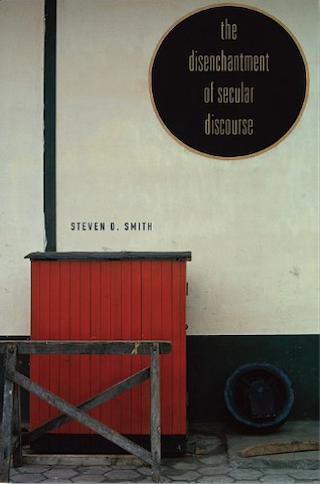
Steven D. Smith, author of The Disenchantment of Secular Discourse, on how the law only makes sense in the context of certain metaphysical beliefs, and on why we aren’t allowed to talk about such things in public
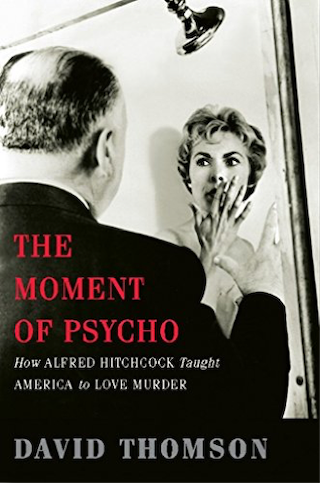
David Thomson, author of The Moment of Psycho: How Albert Hitchcock Taught America to Love Murder, on the American Dream, acting, loneliness, the moral complicity of movie audiences, and the genius of Alfred Hitchcock’s Psycho
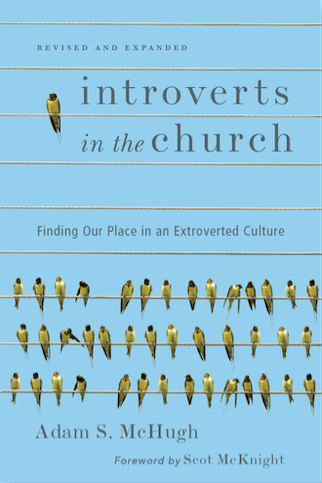
Adam McHugh, author of Introverts in the Church: Finding Our Place in an Extroverted Culture, on how American culture distrusts introverts and on why their place in the Church needs to be valued
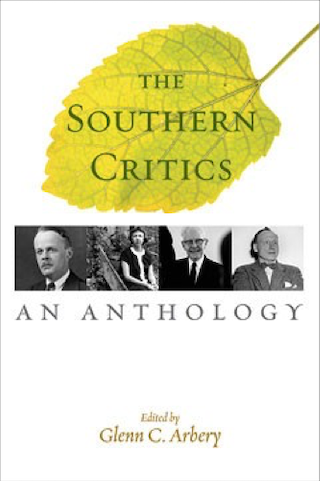
Glenn C. Arbery, author of The Southern Critics: An Anthology, on the Vanderbilt Agrarians, poetry, and the moral imagination and the shaping of virtue
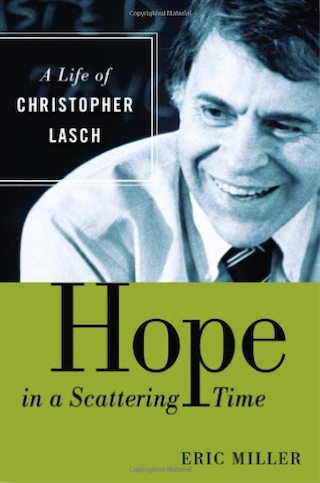
Eric Miller, author of Hope in a Scattering Time: A Life of Christopher Lasch, on Christopher Lasch’s intense commitment to understand the logic of American cultural confusion (Archive Feature available)
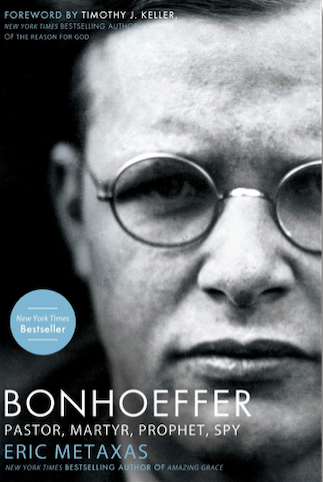
Eric Metaxas, author of Bonhoeffer: Pastor, Martyr, Prophet, Spy, on how Dietrich Bonhoeffer’s early experiences prepared him for his heroic defiance of the Third Reich
Related reading and listening
- Knowing and living our metaphysical totality — Clyde Kilby on the power of myth to bring together “the slender hints of the knowable”
- Savoring the taste of Reality — C. S. Lewis on the transporting, illuminating capacity of Myth
- When myth becomes fact — In this 1976 interview, Clyde Kilby (1902–1986) discusses C. S. Lewis’s critique of scientism and rationalism, his belief in the primacy of the imagination, and his mythic vision. (37 minutes)
- Christian culture and the myth of the secular — Ken Myers draws on T. S. Eliot to argue that Western civilization has broken down, not into a multiplicity of cultures, but into a “post-culture.” (47 minutes)
- The Bride of Christ — John Cavadini explores the different views of Origen and Augustine as to the nature and mission of the Church, and he calls for a recovery of the identity of the Church as the Bride of Christ. (38 minutes)
- Early ambivalence toward anti-Nazi resistance — FROM VOL.107 Biographer Ferdinand Schlingensiepen talks about the memory of Dietrich Bonhoeffer in the post-war period of Germany, and how his popularity changed over the years. (15 minutes)
- The primacy of the Body of Christ — FROM VOL. 134 Philip Turner reflects on how Christian ethics is misplaced if it has as its central concern individual moral behavior or social justice. (28 minutes)
- Theology and the imagination — Jeffrey Barbeau explains what made C. S. Lewis an effective “translator” of theology for non-theologians. (21 minutes)
- Mars Hill Audio Journal, Volume 166 — FEATURED GUESTS: William Cavanaugh, Kent Burreson, Beth Hoeltke, Jeffrey Barbeau, Jason Baxter, John Betz, and Bruce Herman
- The pathos of sin — FROM VOL. 15 Poet Robert Pinsky discusses his translation of Dante’s Inferno. (9 minutes)
- Existential preparation for reading literature — FROM VOL. 128 Rod Dreher recounts how he thought he was reading Dante’s Commedia, when in reality the poem was reading him. (18 minutes)
- An icon of the whole world — Jason Baxter explains how Dante includes a panoply of characters and creatures in his Comedia, offering a prismatic view of all of Creation in its glory. (20 minutes)
- Films that lead to contemplation — FROM VOL. 162 David Paul Baird discusses some of the films on the Vatican’s list of recommended films. (25 minutes)
- An invitation to a feast — Christina Bieber Lake explains how poetry is an invitation to experience the beauty and goodness of Creation as gift. (44 minutes)
- Sacred and Profane Love: Graham Greene and the Catholic Imagination — Katy Carl discusses novelist Graham Greene’s fiction and spiritual struggles in light of the concept of the Catholic imagination. (49 minutes)
- University or “utiliversity”? — In this essay, Reinhard Hütter examines in depth John Henry Newman’s The Idea of a University and argues that its insights and prescriptions are urgently relevant to the current status of higher education. (87 minutes)
- Man as “both mystic and hobbit” — D. C. Schindler explores how building is a quintessential human activity and an expression of our view of the meaning of reality. (47 minutes)
- Secularization and anarchy — Joseph Cardinal Ratzinger on the necessary connection between law, ethics, and worship
- “A man after reality” — FROM VOL. 30 Clyde Kilby discusses C. S. Lewis‘s critique of scientism and rationalism, and his belief in the primacy of the imagination. (15 minutes)
- Two versions of Shadowlands — FROM VOL. 10 Marjorie Mead examines two film portrayals of C. S. Lewis, noting which best captures Lewis’s jovial personality and the nuances of his faith. (4 minutes)
- Manners and morals — FROM VOL. 19 Film and literary critic Alan Jacobs discusses how modern audiences relate to the manners and morals portrayed in Jane Austen films. (16 minutes)
- Poetry and Liturgy — Karen Dieleman explores the influence of liturgical practices on shaping the imaginations and poetry of Elizabeth Barrett Browning, Christina Rossetti, and Adelaide Proctor. (49 minutes)
- The moral complicity of movie audiences — Film critic David Thomson explains why Alfred Hitchcock’s film Psycho achieves a kind of unique synergy with American culture, raising unsettling questions about alienation and identity. (33 minutes)
- The Transformed Vision of Samuel Taylor Coleridge — Poet Malcolm Guite explores the dramatic and even prophetic parallels between the life of Samuel Taylor Coleridge and that of the titular character in his famous poem “The Rime of the Ancient Mariner.” (59 minutes)
- Sacramental Poetics — Poet and Eastern Orthodox believer Scott Cairns explains how a good poem functions like an icon: it assists the process of our becoming aware of what is real, and it is generative in the ways it keeps opening up new understandings. (56 minutes)
- Poetry and piety — FROM VOL. 48 James Trott discusses insights he learned while editing A Sacrifice of Praise: An Anthology of Christian Poetry in English from Caedman to the Mid-Twentieth Century. (7 minutes)
- A poet’s relationship to time — FROM VOL. 57 Poet Wilmer Mills (1969–2011) discusses how his agricultural and cross-cultural childhood in Brazil shaped his imagination and his relationship with modernity. (11 minutes)
- The life of the city in poetry — FROM VOL. 1 Ken Myers talks with W. H. Auden’s biographer and literary executor, Edward Mendelson, about political and social themes in Auden’s poetry. (7 minutes)
- Joy & sorrow, destitution & abundance — In this poetry reading and talk, poet Christian Wiman discusses his own faith journey and how his struggles worked themselves into his poems. (40 minutes)
- Seeing Creation Anew: The Life & Poetry of Gerard Manley Hopkins — Dana Gioia examines Gerard Manley Hopkins‘s poetic genius and dedication to Christ in spite of his personal trials and difficult cultural context. (55 minutes)
- “The essence of a moment, clearly perceived” — Haiku poet Gary Hotham reads his poetry and discusses how the form of haiku reveals the connection between creatures and creation. (45 minutes)
- The joy and mystery of poetry — FROM VOL. 98 Jeanne Murray Walker discusses how she helps students approach and appreciate poetry as the mysteriously meaningful literature it is, rather than as a linguistic cage containing static meaning to be abstracted from the words of the poem. (23 minutes)
- The idiom for the revelation of mystery — Dana Gioia on the foundational place of poetry in Christian faith
- Breaking the frozen sea — Dana Gioia on how poetry enchants
- John Donne’s Passion in Life, Faith, & Verse — Poet Dana Gioia discusses the remarkable life of poet John Donne and how his spiritual and intellectual struggles created the conditions for his unique poetic voice. (53 minutes)
- Longfellow’s appeal — FROM VOL. 53 Poet and critic Dana Gioia explains why Henry Wadsworth Longfellow (1807-1882) is one of the three great American poets. (30 minutes)
- Sacramental correspondence — FROM VOL. 51 Poet Dana Gioia discusses the state of contemporary poetry and the sacramental relationship between language and reality. (15 minutes)
- Flannery at 100 — In honor of Flannery O’Connor’s 100th birthday, we have gathered here an aural feast of interviews with O’Connor scholars and aficionados discussing her life, work, and faith. (3 hours, 28 minutes)
- Ideas made incarnate — In this lecture, Karen Swallow Prior examines the power of great literature to shape lives, nourish imaginations, and develop a vision of the good life. (43 minutes)
- Metaphysics and sub-creation — FROM VOL. 144 Jonathan McIntosh claims that scholarship has tended to ignore the depth of St. Thomas Aquinas’s influence on J. R. R. Tolkien’s work. (28 minutes)
- Lex Rex, or Vox Populi Lex, or Rex Lex? — Law professor Li-ann Thio on the theological roots of belief in the rule of law
- Impact of “infotainment” on community — Neil Gabler and C. John Sommerville discuss how the mentalities conveyed by our experience with communications media work against the nurturing of community. (36 minutes)
- Gratitude, vitalism, and the timid rationalist — In this lecture, Matthew Crawford draws a distinction between an orientation toward receiving life as gift and a timid and cramped rationalism that views man as an object to be synthetically remade. (52 minutes)
- Metaphysical impulses beneath techno-utopianism — FROM VOL. 38 Erik Davis describes his research on how humans’ fascination with technology is permeated with “mythic energy” and gnostic aspirations. (11 minutes)
- “A sign of contradiction” — In this lecture, Daniel Gibbons compares and contrasts understandings of sacramental poetics proposed by Augustine, Aquinas, and Sydney. (36 minutes)
- Knowing by heart — D. C. Schindler reflects on Plato’s idea of “conversion” in education, assuming the symbol of the heart as the center of man. (39 minutes)
- Privacy and a right to kill — FROM VOL. 60 Russell Hittinger explains the legal history behind the “right to privacy” and how it was used in landmark cases involving abortion and physician-assisted suicide. (33 minutes)
- Education as a pilgrimage and a mystery — In this lecture, James Matthew Wilson gives a compelling argument for understanding the role of a literary or poetic education as an immersion of the whole being in truth and beauty. (43 minutes)
- A prophetic “wake-up call” — In this 2024 lecture honoring the bicentennial of George MacDonald’s birth, Malcolm Guite explores MacDonald’s power to awaken readers’ spirits and effect in them a change of consciousness. (59 minutes)
- Perceiving truths that dazzle gradually — Rolland Hein on lessons from George MacDonald about the imagination as a spiritual faculty