PREVIEW
The player for this Journal volume is only available to current members or listeners with a legacy account. If you have an active membership, log in here. If you’d like to become a member — with access to all our audio programs — sign up here.
Guests heard on Volume 107
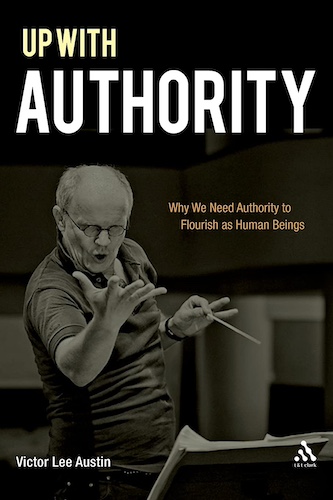
Victor Lee Austin, author of Up With Authority: Why We Need Authority to Flourish as Human Beings, on why authority is not a barrier to true freedom and is necessary for human flourishing (and will be forever)
Ellen T. Charry, author of God and the Art of Happiness, on why happiness has been underplayed in Christian theology (and why it shouldn’t be)
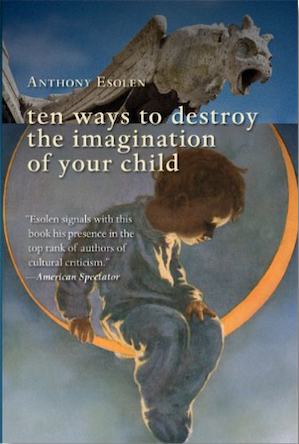
Anthony Esolen, author of Ten Ways to Destroy the Imagination of Your Child, on the explicit and implicit teaching that has caused many young people to be cynical and unhappy
Ferdinand Schlingensiepen, author of Dietrich Bonhoeffer, 1906-1945: Martyr, Thinker, Man of Resistance, on the ambivalence of postwar Germans to the anti-Nazi resistance movement (and to Dietrich Bonhoeffer) (Archive Feature available)
Allen Verhey, author of Nature and Altering It, on why it’s dangerous to draw too stark a line between nature and supernature
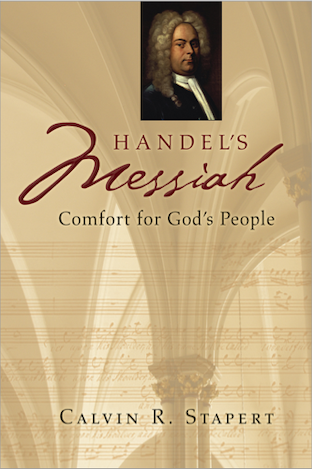
Calvin Stapert, author of Handel’s Messiah: Comfort for God’s People, on the historical, theological, and musical elements that combined to produce Handel’s Messiah
Related reading and listening
- Knowing and living our metaphysical totality — Clyde Kilby on the power of myth to bring together “the slender hints of the knowable”
- Savoring the taste of Reality — C. S. Lewis on the transporting, illuminating capacity of Myth
- When myth becomes fact — In this 1976 interview, Clyde Kilby (1902–1986) discusses C. S. Lewis’s critique of scientism and rationalism, his belief in the primacy of the imagination, and his mythic vision. (37 minutes)
- Paradoxes of “nature” and “culture” — Robert Spaemann, on the destructive consequences of a merely naturalistic understanding of nature
- Early ambivalence toward anti-Nazi resistance — FROM VOL.107 Biographer Ferdinand Schlingensiepen talks about the memory of Dietrich Bonhoeffer in the post-war period of Germany, and how his popularity changed over the years. (15 minutes)
- Rose without thorns — Ken Myers introduces various settings of “Ther is no rose of swych vertu,” a medieval carol that uses imagery of a rosebush to describe the Virgin Mary. (29 minutes)
- “Investigations of divine works” — Greg Wilbur explains how closely connected music is to the order of the cosmos and how it even reveals attributes of God. (56 minutes)
- The experience of a “real presence” in sacred music — FROM VOL. 126 Jonathan Arnold explores why people of no religious commitment pay money to hear specifically sacred music. (22 minutes)
- How music blesses and teaches — FROM VOL. 64 Theologian and musician Jeremy Begbie explores what we learn about time, theology, and the structure of Creation from the experience of music. (28 minutes)
- Theology and the imagination — Jeffrey Barbeau explains what made C. S. Lewis an effective “translator” of theology for non-theologians. (21 minutes)
- Sacred and Profane Love: Graham Greene and the Catholic Imagination — Katy Carl discusses novelist Graham Greene’s fiction and spiritual struggles in light of the concept of the Catholic imagination. (49 minutes)
- The founding of a choral ensemble — FROM VOL. 119 Founder Peter Phillips recounts the history of his choral ensemble The Tallis Scholars. (23 minutes)
- A beautiful human geometry — Musicologist Leopold Brauneiss compares Arvo Pärt’s compositional technique with Jungian archetypes
- A bridge between yesterday and today — Composer Arvo Pärt describes how he came to appropriate the mysteries of polyphony
- From the heart of silence — Conductor Paul Hillier on the sources of Arvo Pärt’s distinctive musical expression
- Prayer and complexity in Arvo Pärt’s music — In honor of Estonian composer Arvo Pärt’s 90th birthday, Ken Myers talks with Peter Bouteneff, about the singular qualities of Pärt’s music. (19 minutes)
- How to illustrate music and mystery — FROM VOL. 164 Illustrator Joonas Sildre discusses his graphic biography of Estonian composer Arvo Pärt. (19 minutes)
- Money, status, and satisfaction — FROM VOL. 44 David Myers and Robert Frank discuss the tenuous relationship between wealth and happiness. (22 minutes)
- Good News for All Creation — Theologian Norman Wirzba helps us rethink the category of nature in terms of the Christian doctrine of creation. (66 minutes)
- How the Church promotes the cause of freedom — Oliver O’Donovan: “We discover we are free when we are commanded by that authority which commands us according to the law of our being, disclosing the secrets of the heart.”
- What is beyond our choosing? — D. C. Schindler on our nihilistic quest for freedom
- The danger of not defining “freedom” — Richard Bauckham insists that an adequate understanding of freedom requires recognition of God as the ground of true human freedom
- Power to the people — Nathan O. Hatch on the DIY spirit of early American Christianity
- Free for obedience — Glenn W. Olsen on Augustine’s understanding of freedom
- What Ockham severed — Jean-Charles Nault on the advent of sheer freedom
- “A man after reality” — FROM VOL. 30 Clyde Kilby discusses C. S. Lewis‘s critique of scientism and rationalism, and his belief in the primacy of the imagination. (15 minutes)
- Antagonism or fruitfulness? — FROM VOL. 108 Jean Porter describes how natural law justifies legal and moral authority within the life of the human person. (17 minutes)
- The Transformed Vision of Samuel Taylor Coleridge — Poet Malcolm Guite explores the dramatic and even prophetic parallels between the life of Samuel Taylor Coleridge and that of the titular character in his famous poem “The Rime of the Ancient Mariner.” (59 minutes)
- The interiority of reality — FROM VOL. 132 D. C. Schindler discusses the thought of contemporary German philosopher Robert Spaemann, and his defense of a purposeful structure in nature. (28 minutes))
- The profound drama of human sexuality — In this lecture, D. C. Schindler explains the cosmological significance of human sexuality and why it is paradigmatic of the relationship between nature and freedom. (32 minutes)
- Governments officially committed to ignorance — In this lecture, D. C. Schindler explains why authority, properly understood, is essential to genuinely human life. (39 minutes)
- An ancient liturgical form — Calvin Stapert on the long history of recounting Christ’s sufferings musically
- Music that conveys spiritual truths — FROM VOL. 137 Musicologist Michael Marissen discusses the masterful way in which J. S. Bach uses musical idiom and quotation by way of theological counterpoint to the texts of his sacred vocal works. (13 minutes)
- The idiom for the revelation of mystery — Dana Gioia on the foundational place of poetry in Christian faith
- Breaking the frozen sea — Dana Gioia on how poetry enchants
- Mars Hill Audio Journal, Volume 164 — FEATURED GUESTS: Dana Gioia, Brady Stiller, Robert Royal, Richard DeClue, Tiffany Schubert, and Joonas Sildre
- Flannery at 100 — In honor of Flannery O’Connor’s 100th birthday, we have gathered here an aural feast of interviews with O’Connor scholars and aficionados discussing her life, work, and faith. (3 hours, 28 minutes)
- Ideas made incarnate — In this lecture, Karen Swallow Prior examines the power of great literature to shape lives, nourish imaginations, and develop a vision of the good life. (43 minutes)
- Excluding cranks and dabblers — Drusilla Scott on Michael Polanyi’s insistence that the “community of science” required authority
- Steward of knowledge vs. autonomous knower — FROM VOL. 66 Esther Lightcap Meek challenges the modernist view of knowledge, which prefers the figure of the autonomous knower to the figure of a steward of knowledge acquired in part from others. (15 minutes)
- Knowing by heart — D. C. Schindler reflects on Plato’s idea of “conversion” in education, assuming the symbol of the heart as the center of man. (39 minutes)
- Nature’s intelligibility — In this lecture, Christopher Blum argues that scientists need to regain a full appreciation of nature’s intelligibility, as they are apt to lose sight of reality due to the reductionism produced by their theories. (31 minutes)
- Submission to mathematical truth — In this lecture, Carlo Lancellotti argues that integration of the moral, cognitive, and aesthetic aspects of mathematics is needed in a robust liberal arts mathematics curriculum. (25 minutes)
- Music, silence, and the order of Creation — In this lecture, Ken Myers explains how it is that our participation in harmonic beauty in music is a kind of participation in the life of God, in Whom all order and beauty coheres and is sustained. (61 minutes)
- Angelic voices: saying or singing? — Pope Benedict XVI on the intrinsically musical character of angelic utterance
- A prophetic “wake-up call” — In this 2024 lecture honoring the bicentennial of George MacDonald’s birth, Malcolm Guite explores MacDonald’s power to awaken readers’ spirits and effect in them a change of consciousness. (59 minutes)
- Perceiving truths that dazzle gradually — Rolland Hein on lessons from George MacDonald about the imagination as a spiritual faculty
- Foolishness, gravity, and the Church — In this essay, Albert L. Shepherd V explains why George MacDonald’s story “The Light Princess” is meant for “all who are childlike in faith and imagination.” (8 minutes)
- Victorian ideas about belief and doubt — FROM VOL. 148 Timothy Larsen situates George MacDonald within a Victorian understanding of faith and doubt. (17 minutes)
- What is lost with labor-saving devices — Romano Guardini on what is lost when cultural pursuits eclipse natural order