PREVIEW
The player for this Journal volume is only available to current members or listeners with a legacy account. If you have an active membership, log in here. If you’d like to become a member — with access to all our audio programs — sign up here.
Guests heard on Volume 120
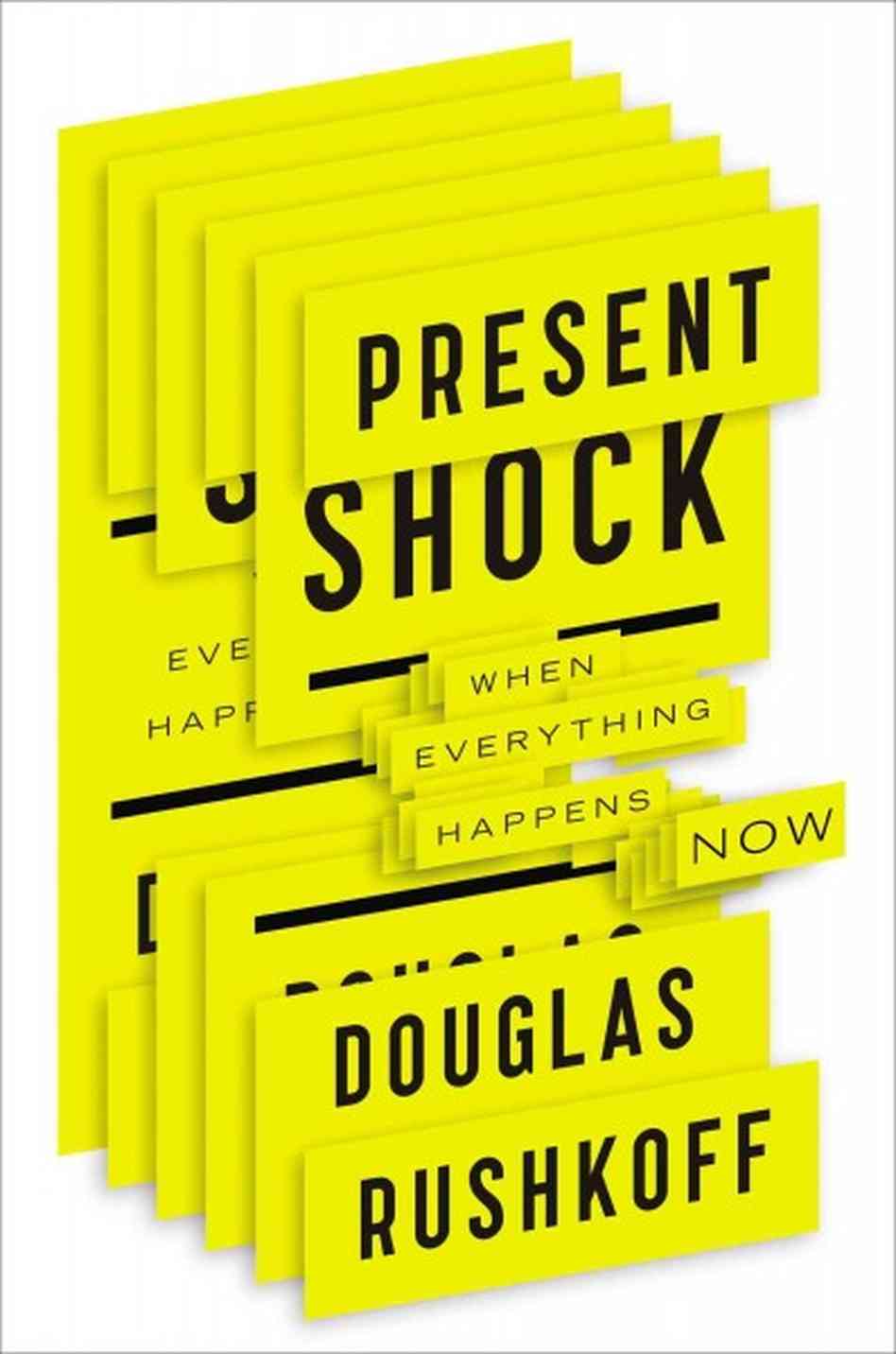
Douglas Rushkoff, author of Present Shock: When Everything Happens Now, on the experience of “present shock” and the consequent loss of belief in the capability of stories to convey the shape of reality to us
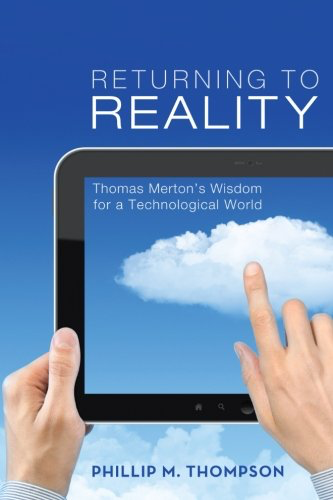
Phillip Thompson, author of Returning to Reality: Thomas Merton’s Wisdom for a Technological World, on Thomas Merton’s lifelong concern about the disorienting effects of the technological mindset
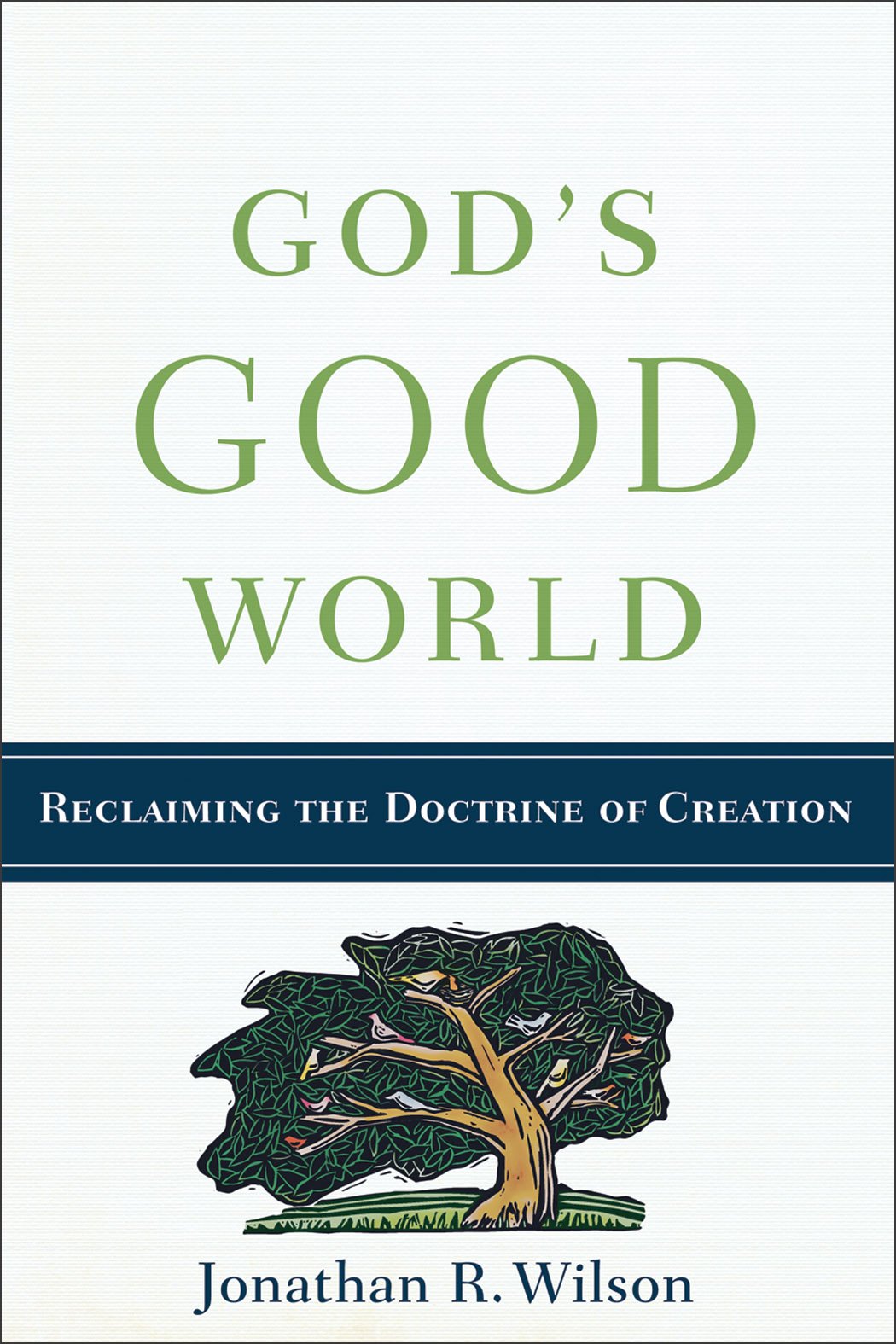
Jonathan R. Wilson, author of God’s Good World: Reclaiming the Doctrine of Creation, on how the life of the Trinity — a life of interpersonal giving and receiving — is the model of life within Creation, calling us to lives of generosity
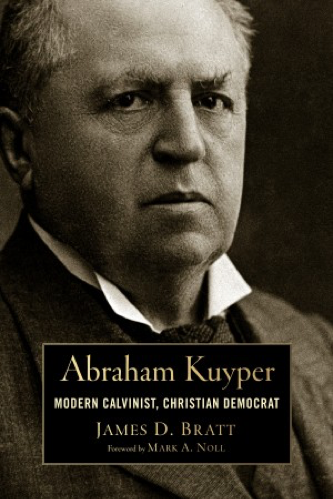
James Bratt, author of Abraham Kuyper: Modern Calvinist, Christian Democrat, on the life and thought of Abraham Kuyper, and on some of his early influences
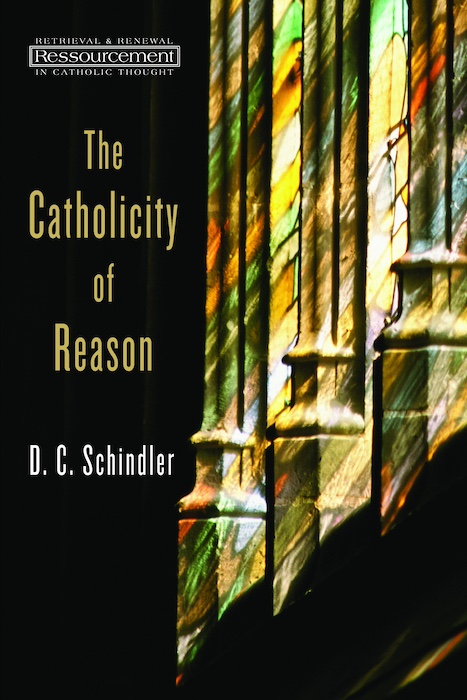
D. C. Schindler, author of The Catholicity of Reason, on how consciousness and reason are “ecstatic,” and necessarily involve reaching outside of ourselves (Archive Feature available)
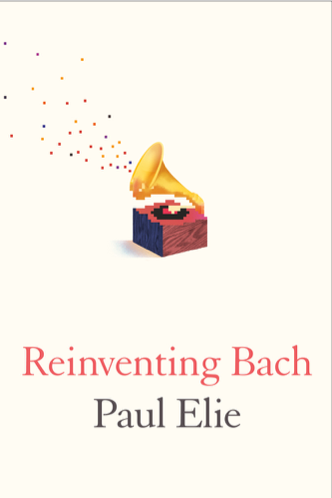
Paul Elie, author of Reinventing Bach, on how access to recordings enables a deeper understanding of music, and how the experience of Bach’s music benefits from such depth
Related reading and listening
- When myth becomes fact — In this 1976 interview, Clyde Kilby (1902–1986) discusses C. S. Lewis’s critique of scientism and rationalism, his belief in the primacy of the imagination, and his mythic vision. (37 minutes)
- Reason and the love of truth — FROM VOL. 97 James Peters discusses historical understandings of reason and rationality and how they differ from the modern notion of rationality. (21 minutes)
- A sampling of newly published lectures — Ken Myers introduces listeners to four recently released lectures, courtesy of our Partners. The lecturers are Jennifer Frey, Gary Saul Morson, N. T. Wright, and Andrew Kern. (27 minutes)
- The inward eye, cosmic truth, and making well — Andrew Kern takes his listeners along an “interlinear” reading of a portion of St. Augustine’s Confessions that explores the differences between how God makes and how we create. (38 minutes)
- The roots of J. S. Bach’s fruitfulness — Music historian Markus Rathey explains why and how J. S. Bach composed his choral works as he did. (54 minutes)
- Celebrating Christmas with Bach (through Epiphany) — Ken Myers offers a detailed introduction to J. S. Bach’s Christmas Oratorio, a work composed to be sung on six occasions from Dec. 25th to Jan. 6th
- Christmas music from Luther to Bach — Tova Leigh-Choate on the roots of Bach’s Christmas Oratorio
- “Investigations of divine works” — Greg Wilbur explains how closely connected music is to the order of the cosmos and how it even reveals attributes of God. (56 minutes)
- To be at home in the world — D. C. Schindler examines how rituals enable us to experience time in a meaningful way — how they actually make time habitable for us. (41 minutes)
- Nun komm der Heiden Heiland — Ken Myers looks at the history of an Advent hymn written by St. Ambrose in the fourth century, adapted by Martin Luther in the sixteenth century, and transformed by J. S. Bach and many others in the years since. (21 minutes)
- A letter from Ken Myers — Ken Myers examines the cultural implications of the Incarnation and the deep-seated dualism of modernity that divorces spirituality from our material experience. (22 minutes)
- How music blesses and teaches — FROM VOL. 64 Theologian and musician Jeremy Begbie explores what we learn about time, theology, and the structure of Creation from the experience of music. (28 minutes)
- Mars Hill Audio Journal, Volume 166 — FEATURED GUESTS: William Cavanaugh, Kent Burreson, Beth Hoeltke, Jeffrey Barbeau, Jason Baxter, John Betz, and Bruce Herman
- Creation, in harmony with the Logos — Rowan Williams on the Logos and the diverse logoi that mirror it
- An icon of the whole world — Jason Baxter explains how Dante includes a panoply of characters and creatures in his Comedia, offering a prismatic view of all of Creation in its glory. (20 minutes)
- The “sovereign uselessness of moral reflection” — Calling on the wisdom of St. Augustine, Oliver O’Donovan reminds his listeners that all knowledge participates in the eternal Logos of God and is rooted in love, not disinterested moral judgement.(Lecture 1 of 3; 52 minutes)
- Cosmic realities in the built world — Christopher and Christine Perrin discuss the implications of architect Christopher Alexander’s (1936–2022) discovery of patterns of building that cohere with the the created cosmos and with ourselves as human creatures. (59 minutes)
- Beyond a reasonable doubt — From a 1980 interview with Ken Myers, Mortimer J. Adler discusses his argument that belief in the existence of God is rational. (14 minutes)
- The “book” of Creation — Alan Noble explains why the modern world makes it profoundly difficult to experience Creation as revelation, and he encourages unmediated encounters with Creation that lead to meditation. (52 minutes)
- Life more abundantly — Jeanne Schindler advocates for a return to an understanding and prioritizing of sensory experience — real engagement with the real world — as foundational to learning and living. (35 minutes)
- Heaven and earth are full of His glory — Gerald R. McDermott examines the typological tradition of the Church, particularly through Jonathan Edwards’s thought, and he argues for a recovery of the Christian understanding of the universe as an “immense Trinitarian symbol.” (61 minutes)
- An invitation to a feast — Christina Bieber Lake explains how poetry is an invitation to experience the beauty and goodness of Creation as gift. (44 minutes)
- Stewarding God’s creation — FROM VOL. 116 Fred Bahnson talks about how a Christian understanding of God’s redemptive work on the earth should influence our practices of growing and sharing food. (19 minutes)
- “Earth-shaking” and “heart-breaking” beauty — FROM VOL. 151 Junius Johnson warns that the pursuit of beauty is both perilous and an experience that points to the desire for God. (25 minutes)
- Universities as the hosts of reciprocating speech — Robert Jenson on how the Christian understanding of Truth in a personal Word shaped the Western university
- Man as “both mystic and hobbit” — D. C. Schindler explores how building is a quintessential human activity and an expression of our view of the meaning of reality. (47 minutes)
- Showing as meaning — Daniel McInerny on how the arts convey meaning
- Clips from five extended interviews — We are pleased to share clips from five interviews that we’ve recently produced as full-length Conversations. (30 minutes)
- Breaking out of the immanent frame — Norman Wirzba on the true character of Creation and of our creatureliness
- Good News for All Creation — Theologian Norman Wirzba helps us rethink the category of nature in terms of the Christian doctrine of creation. (66 minutes)
- What is beyond our choosing? — D. C. Schindler on our nihilistic quest for freedom
- “A man after reality” — FROM VOL. 30 Clyde Kilby discusses C. S. Lewis‘s critique of scientism and rationalism, and his belief in the primacy of the imagination. (15 minutes)
- Ten, seven, and the rhythm of God’s love — Joseph Cardinal Ratzinger on the meaningfulness of numbers in Creation and Scripture
- Lives of generosity — Jonathan Wilson distinguishes between two fundamental ways of viewing Creation: a true Christian account of the world and a “survival of the fittest” one. (21 minutes)
- What we can know about God’s nature — Bruce McCormack outlines the history of the development of the doctrine of the Trinity. He shows how early Christians’ understanding of the nature of God moved from a focus on His oneness to a more full apprehension of His Triune nature. (66 minutes)
- What it means to be a creature — Fred Sanders offers a Trinitarian analysis of the doctrinal significance of the biblical Adam, explaining how his creaturehood is paradigmatic for human beings and their relationship with the Triune God. (46 minutes)
- Creation and redemption as trinitarian projects — Colin Gunton on Christ and Spirit in creation and redemption
- Reflecting the being of God in communion — Colin Gunton on the relationality at the heart of Creation
- The whole world in his Hands — Colin Gunton on the trinitarian emphasis in St. Irenaeus’s doctrine of Creation
- Knowing and doing the good — Oliver O’Donovan raises several key questions and complications involved in the task of taking concrete and practical action toward a recognized moral good. (Lecture 3 of 3; 63 minutes)
- Attentiveness to the world, the self, and time — Oliver O’Donovan uses the metaphor of waking to discuss the concept of moral sensibility as attention to the world, the self, and time. (Lecture 1 of 3; 60 minutes)
- A life well lived — In this essay, Stanley Hauerwas explains the breadth and depth of Alasdair MacIntyre’s thought, the goal of which was to help people to act intelligibly and live morally worthy lives. (40 minutes)
- How the Enlightenment blinded us — Alasdair MacIntyre on the dependence of rationality on a lived tradition
- The recovery of an integrated ecology — In this essay, Michael Hanby unpacks the summons of Laudato si’ to an ecological way of life based on a proper understanding of creation in its fullness and integrity. (57 minutes)
- The Transformed Vision of Samuel Taylor Coleridge — Poet Malcolm Guite explores the dramatic and even prophetic parallels between the life of Samuel Taylor Coleridge and that of the titular character in his famous poem “The Rime of the Ancient Mariner.” (59 minutes)
- The hatred of logos — D. C. Schindler draws on Plato to argue that in its very form, social media evidences a general contempt for logos — reason and language — which defines man. (26 minutes)
- Politics and the good — FROM VOL. 160 D. C. Schindler argues that political order cannot be disentangled from the social, and that fundamental questions of what humans are and what the good is cannot be bracketed from politics. (30 minutes)
- The collapse of public life — FROM VOL. 154 D. C. Schindler explains how liberalism sought to make way for individuals to function together without any orientation to an explicit common good. (37 minutes)
- Truth, goodness, and beauty (and why they matter) — FROM VOL. 147 Philosopher D. C. Schindler examines how postmodernism poses a unique threat to our sense of an interior self. (28 minutes)
- The interiority of reality — FROM VOL. 132 D. C. Schindler discusses the thought of contemporary German philosopher Robert Spaemann, and his defense of a purposeful structure in nature. (28 minutes))