
PREVIEW
Guests heard on Volume 125
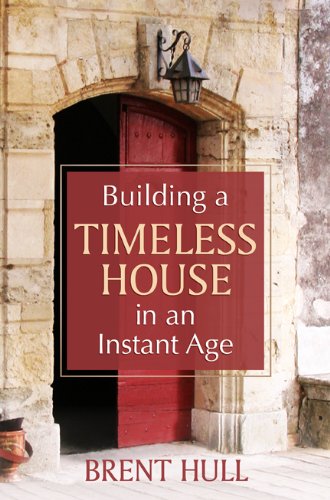
Brent Hull, author of Building a Timeless House in an Instant Age, on the virtues of craftsmanship
read more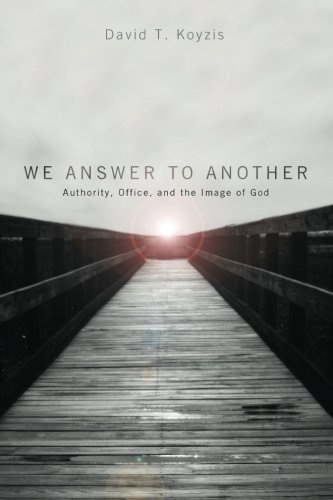
David Koyzis, author of We Answer to Another: Authority, Office, and the Image of God, on the goodness and nature of authority
read more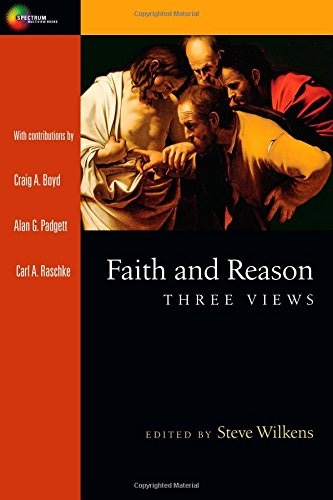
Steve Wilkens, editor of Faith and Reason: Three Views, on three Christian views of the relationship between faith and reason
read more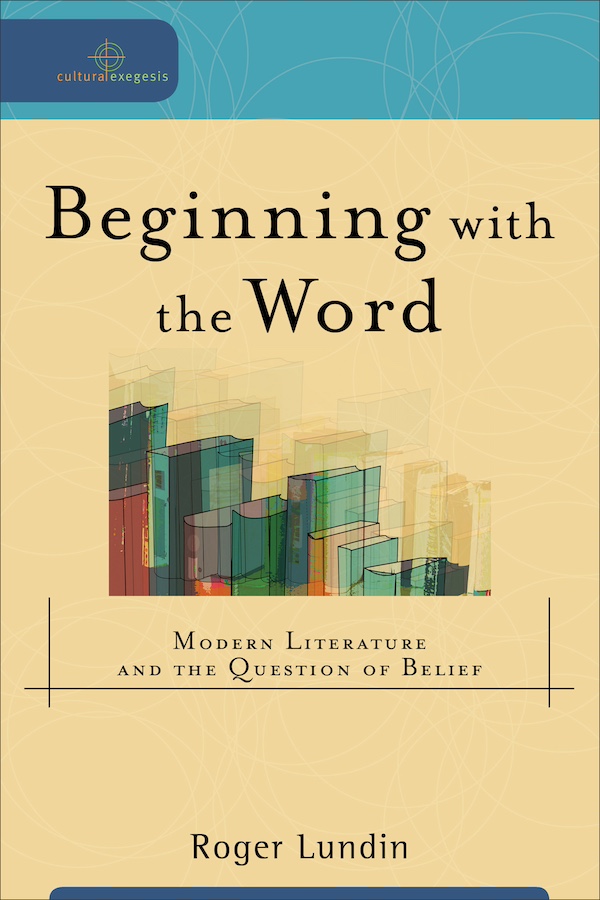
Roger Lundin, author of Beginning with the Word: Modern Literature and the Question of Belief, on faith and doubt in an inescapably verbal universe
read more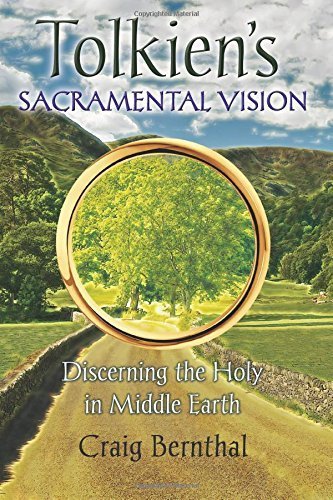
Craig Bernthal, author of Tolkien’s Sacramental Vision: Discerning the Holy in Middle Earth, on the Christian doctrine of Creation in Tolkien’s mythic writings
read more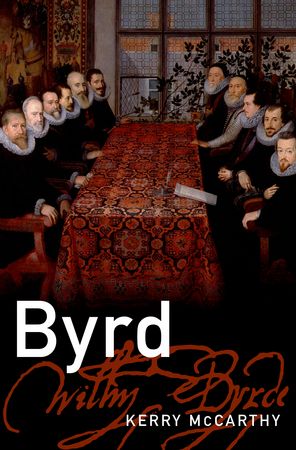
Kerry McCarthy, author of Byrd, on the life and legacy of English Renaissance composer William Byrd
read moreRelated reading and listening
- A sampling of newly published lectures — Ken Myers introduces listeners to four recently released lectures, courtesy of our Partners. The lecturers are Jennifer Frey, Gary Saul Morson, N. T. Wright, and Andrew Kern. (27 minutes)
- “If there is no God, all is permitted” — Gary Saul Morson explores the consequences of belief and disbelief in God through Russian literature. (51 minutes)
- Grace and Christian realism — Jennifer Frey explores Thomist elements in Flannery O’Connor’s theology and writing, with a particular emphasis on a Thomist understanding of art. (39 minutes)
- A “cosmological omnibus” — George Grant recounts the fascinating history of Hernando Colón’s attempt in the 16th century to curate a universal library of the world’s knowledge. (41 minutes)
- The pathos of sin —
FROM VOL. 15 Poet Robert Pinsky discusses his translation of Dante’s Inferno. (9 minutes) - Existential preparation for reading literature —
FROM VOL. 128 Rod Dreher recounts how he thought he was reading Dante’s Commedia, when in reality the poem was reading him. (18 minutes) - An icon of the whole world — Jason Baxter explains how Dante includes a panoply of characters and creatures in his Comedia, offering a prismatic view of all of Creation in its glory. (20 minutes)
- The soul’s awakening —
FROM VOL. 145 Jason Baxter discusses the great psychological subtlety in Dante’s Divine Comedy. (20 minutes) - How literature shaped Lewis —
FROM VOL. 155 Jason Baxter explains how reading medieval literature enabled C. S. Lewis to become a “naturalized citizen of the Middle Ages.” (25 minutes) - Beyond a reasonable doubt — From a 1980 interview with Ken Myers, Mortimer J. Adler discusses his argument that belief in the existence of God is rational. (14 minutes)
- Mordor versus the Shire — In this lecture, Heidi White explains how the modern project is a diabolical inversion of Christendom and calls for Christians to build lives and a culture that can counter it. (53 minutes)
- Ontology and reality in fiction — Katy Carl discusses Catholic novelist Graham Greene’s skill in portraying the struggle between spiritual belief and doubt. (27 minutes)
- Sacred and Profane Love: Graham Greene and the Catholic Imagination — Katy Carl discusses novelist Graham Greene’s fiction and spiritual struggles in light of the concept of the Catholic imagination. (49 minutes)
- Alert to the magic in the world — Junius Johnson discusses the importance of teaching stories, particularly fairy stories, in classical education. (25 minutes)
- Christian belief as real knowledge — Dallas Willard on the modern divorce between faith and knowledge
- Mars Hill Audio Journal, Volume 165 — FEATURED GUESTS: Jeffrey Bilbro, Daniel McInerny, Joseph Minich, Carl Elliott, Nadya Williams, and Don W. King
- How the Church promotes the cause of freedom — Oliver O’Donovan: “We discover we are free when we are commanded by that authority which commands us according to the law of our being, disclosing the secrets of the heart.”
- Power to the people — Nathan O. Hatch on the DIY spirit of early American Christianity
- The law of faith and of love — Oliver O’Donovan compares St. Augustine’s interpretation of Psalm 119 with that of others, revealing Augustine’s more nuanced understanding of the complexities of the life of faith that the psalmist explores. (64 minutes)
- Postmodern culture and the gospel —
FROM VOL. 6 Roger Lundin discusses the ethical and theological consequences of our postmodern culture. (9 minutes) - Antagonism or fruitfulness? —
FROM VOL. 108 Jean Porter describes how natural law justifies legal and moral authority within the life of the human person. (17 minutes) - Governments officially committed to ignorance — In this lecture, D. C. Schindler explains why authority, properly understood, is essential to genuinely human life. (39 minutes)
- Sacramental Poetics — Poet and Eastern Orthodox believer Scott Cairns explains how a good poem functions like an icon: it assists the process of our becoming aware of what is real, and it is generative in the ways it keeps opening up new understandings. (56 minutes)
- Joy & sorrow, destitution & abundance — In this poetry reading and talk, poet Christian Wiman discusses his own faith journey and how his struggles worked themselves into his poems. (40 minutes)
- “The Emersonian elixir” —
FROM VOL. 20 Robert Richardson and Roger Lundin discuss how Ralph Waldo Emerson’s legacy lingers in American culture. (18 minutes) - The primacy of imagination —
FROM VOL. 51 Literary critic Roger Lundin situates William Blake as a descendant of the radical Protestant movement of the 17th century and as a forerunner of the late 19th and early 20th century movements that put theology and the human spirit in opposition to the natural, fragmented, fallen world. (11 minutes) - Dickinson and modern malaise —
FROM VOL. 36 Roger Lundin explains how Emily Dickinson’s understanding of love, nature, religion, and mortality are modern in content. (11 minutes) - The importance of literary reading —
FROM VOL. 70 Dana Gioia discusses the important role literary reading plays in society and the 2004 publication from the NEA about such reading. (13 minutes) - Flannery at 100 — In honor of Flannery O’Connor’s 100th birthday, we have gathered here an aural feast of interviews with O’Connor scholars and aficionados discussing her life, work, and faith. (3 hours, 28 minutes)
- Ideas made incarnate — In this lecture, Karen Swallow Prior examines the power of great literature to shape lives, nourish imaginations, and develop a vision of the good life. (43 minutes)
- Insights into O’Connor’s development as a writer —
FROM VOL. 160 Jessica Hooten Wilson discusses her experience studying and organizing Flannery O’Connor’s unfinished third novel, Why Do the Heathen Rage? (27 minutes) - Excluding cranks and dabblers — Drusilla Scott on Michael Polanyi’s insistence that the “community of science” required authority
- Steward of knowledge vs. autonomous knower —
FROM VOL. 66 Esther Lightcap Meek challenges the modernist view of knowledge, which prefers the figure of the autonomous knower to the figure of a steward of knowledge acquired in part from others. (15 minutes) - Wonder, being, skepticism, and reason —
FROM VOL. 135 Matthew Levering talks about the long and rich tradition of reasoning about God. (23 minutes) - Metaphysics and sub-creation —
FROM VOL. 144 Jonathan McIntosh claims that scholarship has tended to ignore the depth of St. Thomas Aquinas’s influence on J. R. R. Tolkien’s work. (28 minutes) - “A sign of contradiction” — In this lecture, Daniel Gibbons compares and contrasts understandings of sacramental poetics proposed by Augustine, Aquinas, and Sydney. (36 minutes)
- Submission to mathematical truth — In this lecture, Carlo Lancellotti argues that integration of the moral, cognitive, and aesthetic aspects of mathematics is needed in a robust liberal arts mathematics curriculum. (25 minutes)
- When philosophy loses its way —
FROM VOL. 52 Ralph McInerny (1929–2010) speaks about themes from his 1999 Gifford Lectures, which relate how natural theology came to be regarded as pointless, resulting in a philosophical dead end.(24 minutes) - The need for robust Christian intellectual life — In this lecture, Robert Benne surveys the contemporary landscape in which Christian scholars attempt to integrate their faith and their intellectual life. (43 minutes)
- How fantasy restores the world — In this 2019 lecture, Alison Milbank shows how fantasy can help restore to us a vision of human flourishing that counters the atomization and meaninglessness of modern life. (43 minutes)
- Virgil and purposeful history — In this lecture from June 2019, classical educator Louis Markos examines Book II of The Aeneid to argue that Virgil had an eschatological view of history. (68 minutes)
- The Decline of Formal Speech and Why It Matters — John McWhorter examines the reasons behind the decline in articulate speech and writing in the late 20th century, and the implications of this change across many areas of culture. (55 minutes)
- Bearing well the burdens of the past, present, and future — Louis Markos shows how great literature like the Iliad links us to the human story and strengthens us to live fully and well. (65 minutes)
- The recovery of true authority for societal flourishing — Michael Hanby addresses a confusion at the heart of our current cultural crisis: a conflation of the concepts of authority and power. (52 minutes)
- Books worthy of a lifetime of encounters —
FROM VOL. 69 Daniel Ritchie discusses why great books programs survive mainly in Christian institutions while declining in secular ones. (13 minutes) - Literature for wisdom, not propaganda —
FROM VOL. 23 Daniel Ritchie provides a constructive alternative to the ideological captivity of literature and literary studies. (13 minutes) - Apprehending the enduring things — Vigen Guroian explains how children’s literature has the capacity to birth the moral imagination in our children, affirming for them the permanent things. (53 minutes)
- Faith as the pathway to knowledge — Lesslie Newbigin on authority and the Author of all being
- Bearing witness through poetry — Roger Lundin discusses the incarnational witness of poet Czesław Miłosz (1911–2004), exploring his service to truth and to his native tongue, Polish. (16 minutes)
- Czesław Miłosz: A Poet of Luminous Things — Roger Lundin discusses the themes, breadth, and depth of poet Czesław Miłosz‘s work, explaining how Milosz incarnated in his life and work a sense of exile and alienation so common to modern man. (43 minutes)