PREVIEW
The player for this Journal volume is only available to current members or listeners with a legacy account. If you have an active membership, log in here. If you’d like to become a member — with access to all our audio programs — sign up here.
Guests heard on Volume 126
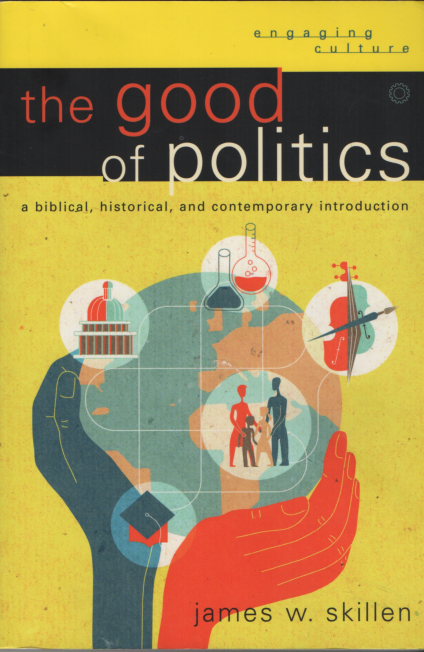
James W. Skillen, author of The Good of Politics: A Biblical, Historical, and Contemporary Introduction, on how all human cultural activity, including politics, should be understood in the context of God’s good purposes for Creation
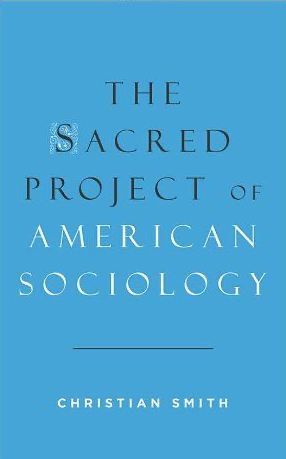
Christian Smith, author of The Sacred Project of American Sociology, on how American sociology is not (as is claimed) a disinterested scientific endeavor but the pursuit of a sacred project driven by sacred commitments
B. W. Powe, author of Marshal McLuhan and Northrop Frye: Apocalypse and Alchemy, on the unique “apocalyptic” insights of Marshall McLuhan and Northrop Frye
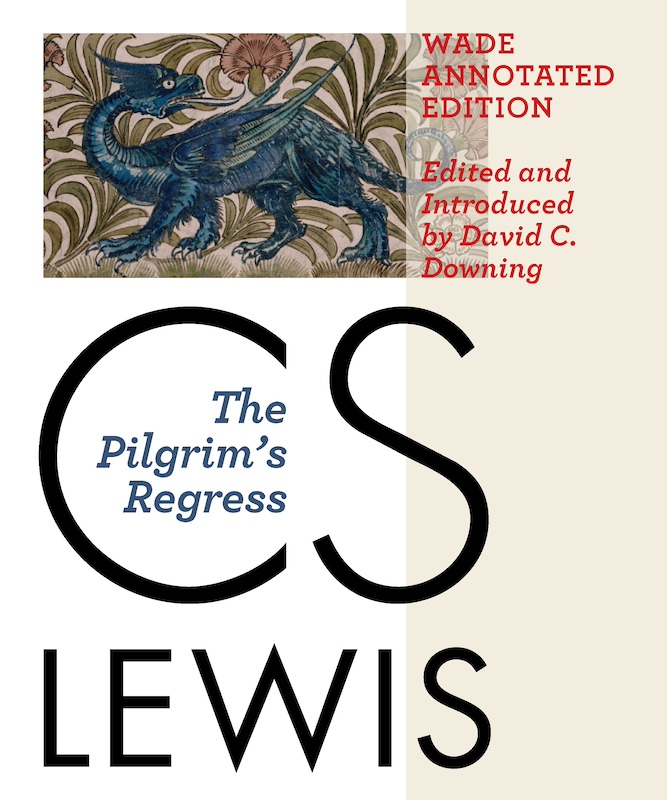
David Downing, editor of the Wade Annotated Edition of C. S. Lewis’s The Pilgrim’s Regress, on the book’s allegorical references to twentieth-century cultural and intellectual movements
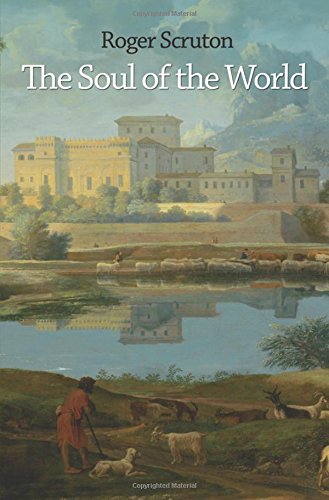
Roger Scruton, author of The Soul of the World, on the inability of materialism to give a satisfactory account of our experience of the material world (this track also available as an Archive Feature)
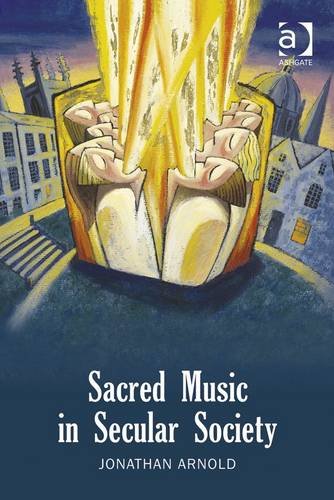
Jonathan Arnold, author of Sacred Music in Secular Society, on the curious place of sacred music in a secular society
Related reading and listening
- The true places aren’t on any map — Clyde Kilby on C. S. Lewis’s claim that the Gospel is the greatest myth
- Savoring the taste of Reality — C. S. Lewis on the transporting, illuminating capacity of Myth
- When myth becomes fact — In this 1976 interview, Clyde Kilby (1902–1986) discusses C. S. Lewis’s critique of scientism and rationalism, his belief in the primacy of the imagination, and his mythic vision. (37 minutes)
- A great Reality at the core of things — Clyde Kilby on the nature and need for myths
- “A Myth Retold” — Literary critic Thomas Howard explains why he considers C. S. Lewis’s Till We Have Faces to be one of the author’s richest and most rewarding works. (18 minutes)
- Alienation and autoamputation: the price of power — Nicholas Carr on the numbing effect of technology
- In tune with the muses of Zion — Ken Myers on the Christmas music of Michael Praetorius
- Nun komm der Heiden Heiland — Ken Myers looks at the history of an Advent hymn written by St. Ambrose in the fourth century, adapted by Martin Luther in the sixteenth century, and transformed by J. S. Bach and many others in the years since. (21 minutes)
- The experience of a “real presence” in sacred music — FROM VOL. 126 Jonathan Arnold explores why people of no religious commitment pay money to hear specifically sacred music. (22 minutes)
- Theology and the imagination — Jeffrey Barbeau explains what made C. S. Lewis an effective “translator” of theology for non-theologians. (21 minutes)
- Mars Hill Audio Journal, Volume 166 — FEATURED GUESTS: William Cavanaugh, Kent Burreson, Beth Hoeltke, Jeffrey Barbeau, Jason Baxter, John Betz, and Bruce Herman
- How literature shaped Lewis — FROM VOL. 155 Jason Baxter explains how reading medieval literature enabled C. S. Lewis to become a “naturalized citizen of the Middle Ages.” (25 minutes)
- Politics and idolatry — FROM VOL. 109 Theologian William Cavanaugh explains how the modern state is a unique kind of political entity, inviting a new kind of idolatry. (26 minutes)
- The modern invention of “religion” — FROM VOL. 101 Theologian William Cavanaugh examines the emptiness of the myth of religious violence. (22 minutes)
- The Heav’ns and All the Powers Therein — In this extended interview, Michael Ward makes a compelling case that the qualities attributed to the seven planets in the cosmology of antiquity and the Middle Ages are embodied in C. S. Lewis’s seven books about Narnia. (68 minutes)
- Prayer and complexity in Arvo Pärt’s music — In honor of Estonian composer Arvo Pärt’s 90th birthday, Ken Myers talks with Peter Bouteneff, about the singular qualities of Pärt’s music. (19 minutes)
- “Emerging adulthood” — FROM VOL. 100 Christian Smith discusses the aimless cultural world of emerging adulthood and on how it makes the idea of objective moral order implausible. (17 minutes)
- Harbinger of disorder — Mark Mitchell on Michael Polanyi’s recognition of the dangerous dead-end of materialistic reductionism
- Mars Hill Audio Journal, Volume 165 — FEATURED GUESTS: Jeffrey Bilbro, Daniel McInerny, Joseph Minich, Carl Elliott, Nadya Williams, and Don W. King
- A mixed reception — FROM VOL. 162 Mark Noll discusses early critical reception of C. S. Lewis’s work in America. (29 minutes)
- “A man after reality” — FROM VOL. 30 Clyde Kilby discusses C. S. Lewis‘s critique of scientism and rationalism, and his belief in the primacy of the imagination. (15 minutes)
- Two versions of Shadowlands — FROM VOL. 10 Marjorie Mead examines two film portrayals of C. S. Lewis, noting which best captures Lewis’s jovial personality and the nuances of his faith. (4 minutes)
- Music that conveys spiritual truths — FROM VOL. 137 Musicologist Michael Marissen discusses the masterful way in which J. S. Bach uses musical idiom and quotation by way of theological counterpoint to the texts of his sacred vocal works. (13 minutes)
- Economics and personhood — FROM VOL. 147 Mary Hirschfeld argues that modern economics makes some fundamental assumptions about personhood, material goods, and God that prevent the development of a truly human understanding of economic life. (20 minutes)
- How advertising detaches us from the world — FROM VOL. 13 Historian and cultural critic Jackson Lears discusses the power of advertising to reinforce and shape cultural attitudes about material goods. (9 minutes)
- Gifts for a baby King — Ken Myers introduces listeners to various musical compositions created for Epiphany (January 6), the Church’s feast day celebrating the revelation of Christ to the world. (25 minutes)
- Seven Messianic titles, seven attributes of Christ — Ken Myers introduces listeners to four composers who each have set all seven of the O Antiphons to music. (17 minutes)
- “Prophet of holiness” — Timothy Larsen discusses a new edition of George MacDonald‘s Diary of An Old Soul, a slim book of poem-prayers to be read daily as a devotional aid. (30 minutes)
- Aslan, the Christ-figure of Narnia — Alex Markos explores the transformational power of Aslan as the Christ figure in C. S. Lewis’s Chronicles of Narnia. (31 minutes)
- The Bully Pulpit: Presidential Rhetoric and True Leadership — Elvin Lim talks about the decline of the content of presidential rhetoric and its consequences to democracy. (49 minutes)
- Mars Hill Audio Journal, Volume 162 — FEATURED GUESTS: Mark Noll, R. Jared Staudt, Paul Weston, William C. Hackett, Hans Boersma, and David Paul Baird
- Early evangelical response to C. S. Lewis — Historian Mark Noll discusses the reasons why American evangelicals were initially slow to warm to Lewis. (15 minutes)
- “A state of divine carelessness” — FROM VOL. 121
Daniel Gabelman attempts to correct the notion that George MacDonald prizes seriousness and sobriety. (20 minutes)
- Prudence in politics — FROM VOL. 146
Henry T. Edmondson, III talks about Flannery O’Connor’s understanding of political life, which was influenced by a range of thinkers including Aristotle, Thomas Aquinas, Eric Voegelin, and Russell Kirk. (19 minutes)
- The formative power of hymns and hymnbooks — FROM VOL. 149 Christopher Phillips discusses the cultural and spiritual effects of hymns and the “thingness” of hymnals. (18 minutes)
- Congregational singing in Martin Luther’s time — FROM VOL. 137 Liturgical scholar Robin Leaver clarifies some misconceptions about Martin Luther’s commitment to congregational singing. (10 minutes)
- Early 19th-century hymnody — FROM VOL. 151 Musicologist Peter Mercer-Taylor tells the story of how early 19th-century hymnody introduced many Americans to a repertoire of classical music. (27 minutes)
- Ideas and historical consequences — Historian John Lukacs (1924–2019) discusses the relationship between institutions and character, popular sentiment versus public opinion, the distinction between patriotism and nationalism, and the very nature of studying history. (36 minutes)
- “Reading Lewis with blinders on” — Chris Armstrong explains how C. S. Lewis’s work is grounded deeply in the Christian humanist tradition. (45 minutes)
- On The Abolition of Man — FROM VOL. 154 Michael Ward explains why The Abolition of Man is one of Lewis’s most important but also most difficult books. (36 minutes)
- Seeking control, in white magic and The Green Book — Alan Jacobs on C. S. Lewis’s critique of the modern pursuit of god-like control
- Education, reason, and the Good — Justin Buckley Dyer and Micah J. Watson on C. S. Lewis’s argument about natural law
- Orienting reason and passions — In an essay titled “The Abolition of Mania” (Modern Age, Spring 2022), Michael Ward applies C. S. Lewis’s insights to the polarization that afflicts modern societies. (16 minutes)
- Fixed certainties, fixed mysteries — FROM VOL. 42Science journalist John Horgan, author of The Undiscovered Mind: How the Human Brain Defies Replication, Medication, and Explanation, discusses the limits of neuroscience. (13 minutes)
- Materialism and the problem of mind — David Bentley Hart on the evasiveness implicit on all efforts to explain away human consciousness
- Skillen, James William — FROM THE GUEST PAGE: After teaching political science and philosophy at three Christian colleges, Dr. James W. Skillen became the director and then president of the Center for Public Justice in Washington, D.C. from 1981 until his retirement in 2009.
- In dulci jubilo — Ken Myers introduces some of the music for the season composed by Michael Praetorius (1571–1621), best known for his settings of Es ist ein Ros entsprungen (“Lo how a rose e’er blooming”) and In dulci jubilo. (18 minutes)
- Freedom from the nature of things? — Leon Kass on the pressure exerted by the authority of science to embrace reductionistic materialism
- An unlikely trio in life (and in death) — FROM VOL. 1Philosopher Peter Kreeft was interviewed in 1982 by Ken Myers about his book, Between Heaven and Hell. In 1992, that interview was featured on the pilot cassette tape which became the Mars Hill Tapes. (10 minutes)
- Music, passion, and politics — In this interview from 2001, Carson Holloway discusses his book All Shook Up: Music, Passion, and Politics, which summarizes the dramatic chasm between the classical and modern views of political ends and of musical means. (45 minutes)
Tags:
Arnold, JonathanDowning, DavidFrye, NorthrupLewis, C. S.MaterialismMcLuhan, MarshallMusic, ChurchPoliticsPowe, B. W.Scruton, RogerSkillen, James W.Smith, ChristianSociology