
PREVIEW
Guests heard on Volume 128
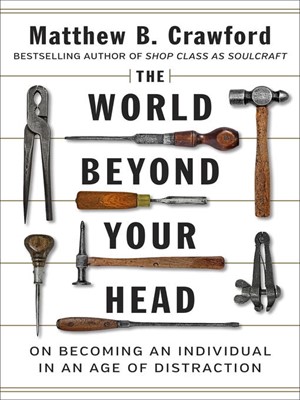
Matthew Crawford, author of The World Beyond Your Head: On Becoming an Individual in an Age of Distraction, on how skillful engagement with the material world provides the setting for true individuality (Archive Feature available)
read more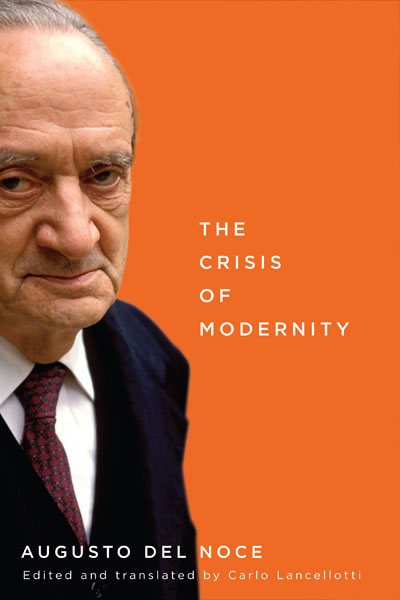
Carlo Lancellotti, editor of The Crisis of Modernity, on Augusto Del Noce’s critique of modernity (Archive Feature available)
read more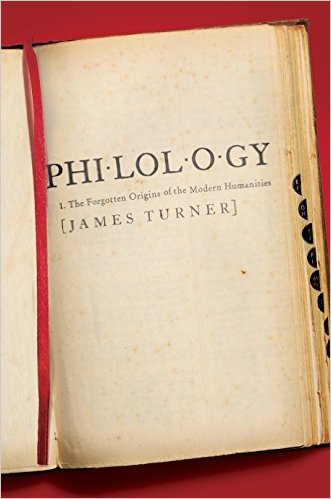
James Turner, author of Philology: The Forgotten Origins of the Modern Humanities, on the origins of the humanities in the venerable discipline of philology
read more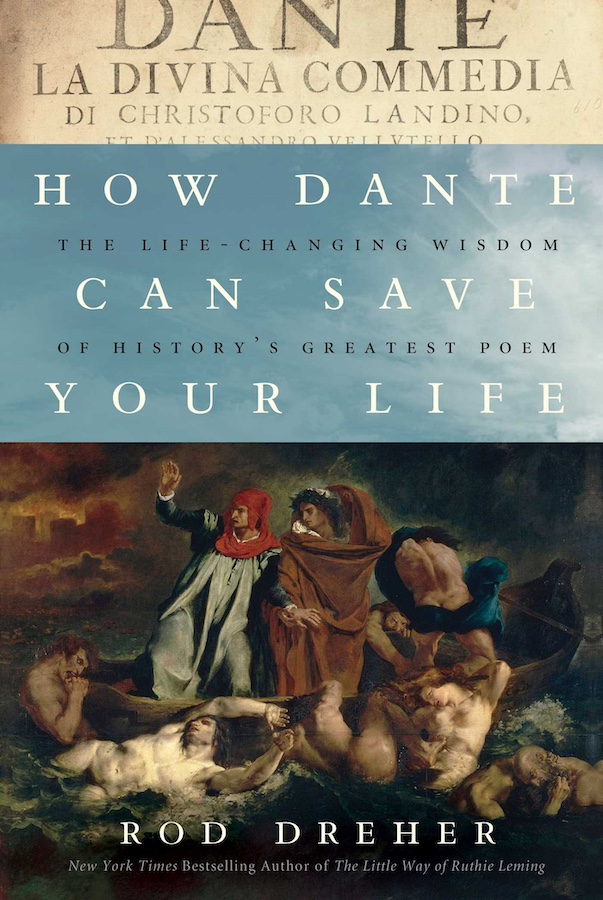
Rod Dreher, author of How Dante Can Save Your Life, on what he learned from Dante’s Divine Comedy (Archive Feature available)
read more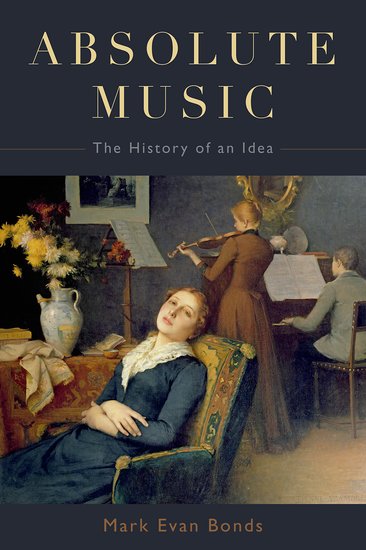
Mark Evan Bonds, author of Absolute Music: The History of an Idea, on how the idea of “absolute music” waxed and waned
read more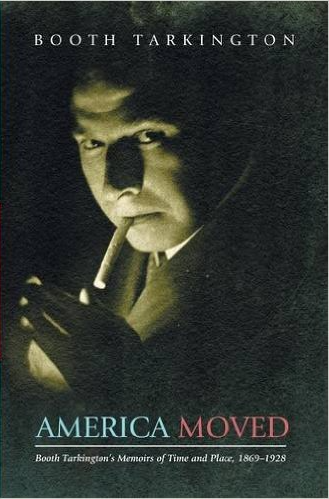
Jeremy Beer, editor of America Moved: Booth Tarkington’s Memoirs of Time and Place, 1869-1928, on the neglected accomplishments of a forgotten American novelist
read moreRelated reading and listening
- Rose without thorns — Ken Myers introduces various settings of “Ther is no rose of swych vertu,” a medieval carol that uses imagery of a rosebush to describe the Virgin Mary. (29 minutes)
- “Investigations of divine works” — Greg Wilbur explains how closely connected music is to the order of the cosmos and how it even reveals attributes of God. (56 minutes)
- Silence at the end of history — Alan Jacobs examines several literary imaginings of “the last days” and argues that such narration is profoundly inadequate and perhaps even presumptuous. (51 minutes)
- The experience of a “real presence” in sacred music —
FROM VOL. 126 Jonathan Arnold explores why people of no religious commitment pay money to hear specifically sacred music. (22 minutes) - How music blesses and teaches —
FROM VOL. 64 Theologian and musician Jeremy Begbie explores what we learn about time, theology, and the structure of Creation from the experience of music. (28 minutes) - Mars Hill Audio Journal, Volume 166 — FEATURED GUESTS: William Cavanaugh, Kent Burreson, Beth Hoeltke, Jeffrey Barbeau, Jason Baxter, John Betz, and Bruce Herman
- The pathos of sin —
FROM VOL. 15 Poet Robert Pinsky discusses his translation of Dante’s Inferno. (9 minutes) - Existential preparation for reading literature —
FROM VOL. 128 Rod Dreher recounts how he thought he was reading Dante’s Commedia, when in reality the poem was reading him. (18 minutes) - An icon of the whole world — Jason Baxter explains how Dante includes a panoply of characters and creatures in his Comedia, offering a prismatic view of all of Creation in its glory. (20 minutes)
- The soul’s awakening —
FROM VOL. 145 Jason Baxter discusses the great psychological subtlety in Dante’s Divine Comedy. (20 minutes) - The founding of a choral ensemble —
FROM VOL. 119 Founder Peter Phillips recounts the history of his choral ensemble The Tallis Scholars. (23 minutes) - A beautiful human geometry — Musicologist Leopold Brauneiss compares Arvo Pärt’s compositional technique with Jungian archetypes
- A bridge between yesterday and today — Composer Arvo Pärt describes how he came to appropriate the mysteries of polyphony
- From the heart of silence — Conductor Paul Hillier on the sources of Arvo Pärt’s distinctive musical expression
- Prayer and complexity in Arvo Pärt’s music — In honor of Estonian composer Arvo Pärt’s 90th birthday, Ken Myers talks with Peter Bouteneff, about the singular qualities of Pärt’s music. (19 minutes)
- How to illustrate music and mystery —
FROM VOL. 164 Illustrator Joonas Sildre discusses his graphic biography of Estonian composer Arvo Pärt. (19 minutes) - The de(con)struction of the humanities (and of truth) — Historian Gertrude Himmelfarb on the skeptical tendencies of the postmodern academy
- “The Emersonian elixir” —
FROM VOL. 20 Robert Richardson and Roger Lundin discuss how Ralph Waldo Emerson’s legacy lingers in American culture. (18 minutes) - Mars Hill Audio Journal, Volume 164 — FEATURED GUESTS: Dana Gioia, Brady Stiller, Robert Royal, Richard DeClue, Tiffany Schubert, and Joonas Sildre
- The personal element in all knowing — Mark Mitchell connects key aspects of Michael Polanyi’s conception of knowledge with Matthew Crawford’s insistence that real knowing involves more than technique. (34 minutes)
- Gratitude, vitalism, and the timid rationalist — In this lecture, Matthew Crawford draws a distinction between an orientation toward receiving life as gift and a timid and cramped rationalism that views man as an object to be synthetically remade. (52 minutes)
- Submission to mathematical truth — In this lecture, Carlo Lancellotti argues that integration of the moral, cognitive, and aesthetic aspects of mathematics is needed in a robust liberal arts mathematics curriculum. (25 minutes)
- Music, silence, and the order of Creation — In this lecture, Ken Myers explains how it is that our participation in harmonic beauty in music is a kind of participation in the life of God, in Whom all order and beauty coheres and is sustained. (61 minutes)
- Angelic voices: saying or singing? — Pope Benedict XVI on the intrinsically musical character of angelic utterance
- The gift of meaningful work — In this lecture, D. C. Schindler argues that genuine work is inherently meaningful and facilitates an encounter with reality and therefore, ultimately, with God. (36 minutes)
- The physical beauty of music — Music can be likened to a cathedral, says professional guitarist Gordon Kreplin, when it creates through silence and sound a meditative space into which one may enter and encounter God. (14 minutes)
- Music and the meaning of Creation — In this 2018 lecture, Ken Myers advocates for a recovery of the pre-Enlightenment idea of the intelligibility of music. (61 minutes)
- Counterpoint as a “spirited discussion” — In this essay, John Ahern explains the beauty and order of counterpoint, the accumulation of multiple melodies that come together in a harmonious whole. (20 minutes)
- The Decline of Formal Speech and Why It Matters — John McWhorter examines the reasons behind the decline in articulate speech and writing in the late 20th century, and the implications of this change across many areas of culture. (55 minutes)
- Immersion in a different time —
FROM VOL. 17 Literary critic Alan Jacobs considers the author Patrick O’Brian as perhaps the best historical novelist ever. (13 minutes) - Recovering the primacy of contemplation — Augusto Del Noce finds in St. Augustine resources to diagnose the fatal flaw in progressivism
- Confronting the supremacy of science — Augusto Del Noce on the belief that science is the only true form of knowledge
- The roots of American disorder — In this reading of an article from 2021 by Michael Hanby, the critique of Marxism in Augusto del Noce’s work is compared with texts from the American Founders. (79 minutes)
- Augusto Del Noce’s critique of modernity —
FROM VOL. 128 Physicist and mathematician Carlo Lancellotti discusses the life and work of twentieth-century Italian philosopher, Augusto Del Noce. (25 minutes) - Automation and human agency —
FROM VOL. 150 Philosopher and mechanic Matthew Crawford laments the losses of human skill that correspond with gains in mechanical automation. (21 minutes) - Getting outside of our heads —
FROM VOL. 128 Philosopher and motorcycle mechanic Matthew Crawford explores what forms the self, arguing that individuality is an earned competence achieved through habits of submission to various tasks, traditions, and authorities. (20 minutes) - Forms as portals to reality — Ken Myers explains the ancient classical and Christian view that music embodies an order and forms that correspond to the whole of created reality, in its transcendence and materiality. (54 minutes)
- How music reflects and continues the created order — Musician, composer, and teacher Greg Wilbur explores how music reflects the created order of the cosmos. (55 minutes)
- Martyrdom and music — To mark the feast day of the Martyrdom of Polycarp, we offer an interview from 2004 with composer J. A. C. Redford and poet Scott Cairns about their work together on an oratorio based on the story of Polycarp’s death. (15 minutes)
- From university to multiversity to demoversity — Alvin Kernan on tectonic shifts in higher education since the 1960s
- Bonds, Mark Evan — FROM THE GUEST PAGE: Mark Evan Bonds is the Cary C. Boshamer Distinguished Professor of Music Emeritus at the University of North Carolina, Chapel Hill, where taught from 1992 until his retirement in 2023.
- Beer, Jeremy — FROM THE GUEST PAGE: Jeremy Beer is the co-founder and executive chairman of AmPhil, a national professional services firm that serves mission-driven enterprises.
- Crawford, Matthew B. — FROM THE GUEST PAGE: Matthew B. Crawford is a Senior Fellow at the University of Virginia’s Institute for Advanced Studies in Culture and a New York Times bestselling author.
- Turner, James — FROM THE GUEST PAGE: James Turner is Cavanaugh Professor of Humanities and Professor of History Emeritus at the University of Notre Dame. He taught for 20 years at the University of Notre Dame, where he belonged to both the History Department and the graduate Program in History and Philosophy of Science.
- Dreher, Rod — FROM THE GUEST PAGE: Rod Dreher is an author and journalist. He is the Director of the Network Project at the Danube Institute (Budapest, Hungary) and a columnist for The European Conservative.
- Maximalist music —
FROM VOL. 8 Dominic Aquila explains how — unlike the minimalist composers John Cage and Philip Glass — Arvo Pärt uses purity and simplicity to point beyond the created world to the transcendent Creator. (6 minutes) - Turn to the Lord your God — Ken Myers introduces musical settings from the book of Lamentations, traditionally sung during Holy Week. (26 minutes)
- Mars Hill Audio Journal, Volume 157 — FEATURED GUESTS: Allan C. Carlson, Matthew Stewart, Steven Knepper, Holly Ordway, Norm Klassen, and Norman Wirzba
- Music without emotivism — Julian Johnson discusses how novel, historically speaking, is the idea of complete relativism in musical judgment. (33 minutes)
- Music, passion, and politics — In this interview from 2001, Carson Holloway discusses his book All Shook Up: Music, Passion, and Politics, which summarizes the dramatic chasm between the classical and modern views of political ends and of musical means. (45 minutes)