Skip to content
Mars Hill Audio
Sound. Thinking.
Mars Hill Audio
  • Home
  • About
    • Why MHA?
    • Who we are
    • What’s new?
    • Meet our Guests
    • Meet our Partners
    • News from Partners
    • Listen for free
    • Help
  • Sound Thinking
  • Indexes
    • Topic Index
    • Guest Index
    • Author Index
  • Catalog
    • Journals
    • Friday Features
    • Archive Features
    • Bonus Features
    • Conversations
    • Anthologies
    • Areopagus Lectures
    • Reports
    • Audio Reprints
    • Audiobooks
  • Contribute
  • Gift
  • Sign Up
  • Log In
Search:
Search
  • Home
  • About
    • Why MHA?
    • Who we are
    • What’s new?
    • Meet our Guests
    • Meet our Partners
    • News from Partners
    • Listen for free
    • Help
  • Sound Thinking
  • Indexes
    • Topic Index
    • Guest Index
    • Author Index
  • Catalog
    • Journals
    • Friday Features
    • Archive Features
    • Bonus Features
    • Conversations
    • Anthologies
    • Areopagus Lectures
    • Reports
    • Audio Reprints
    • Audiobooks
  • Contribute
  • Gift
  • Sign Up
  • Log In

Mars Hill Audio Journal, Volume 133

PREVIEW

The player for this Journal volume is only available to current members or listeners with a legacy account. If you have an active membership, log in here. If you’d like to become a member — with access to all our audio programs — sign up here.

Guests heard on Volume 133

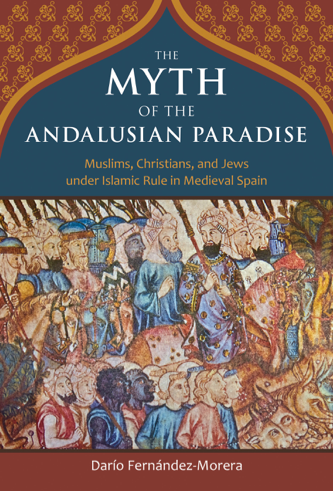
Darío Fernández-Morera, author of The Myth of the Andalusian Paradise: Muslims, Christians, and Jews Under Islamic Rule in Medieval Spain, on the real history of Islamic Spain in the Middle Ages

read more
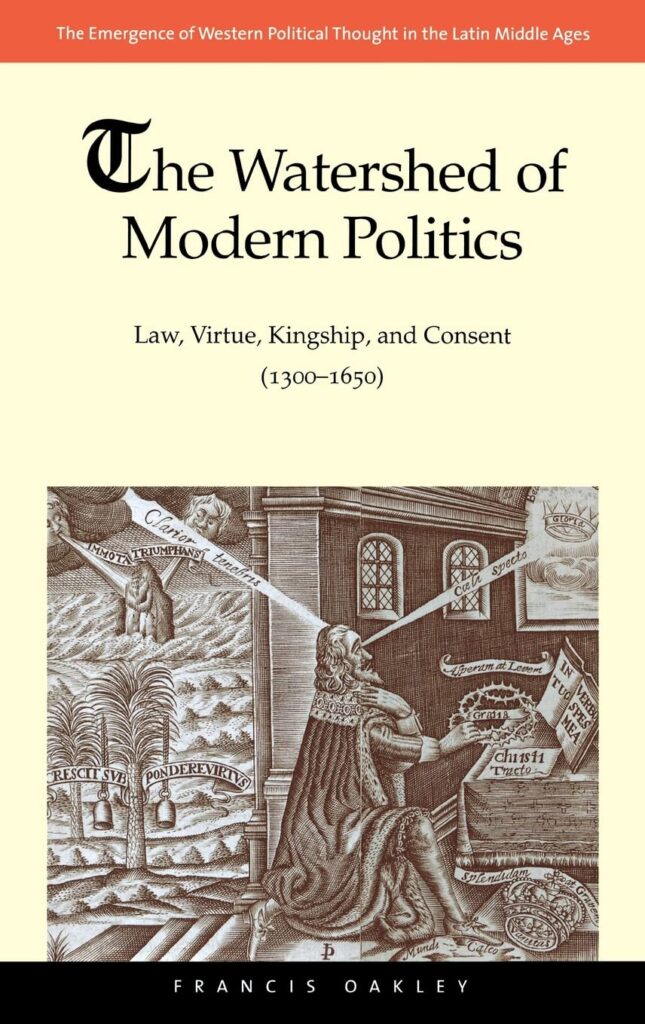
Francis Oakley, author of The Watershed of Modern Politics: Law, Virtue, Kingship, and Consent, on the enduring belief in sacral kingship and the secularization of politics in the late Middle Ages

read more
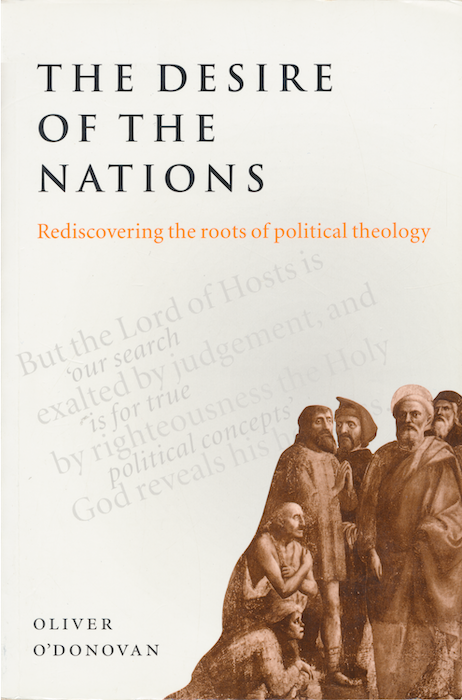
Oliver O’Donovan, author of The Desire of the Nations: Rediscovering the Roots of Political Theology, on why all political authority can only be properly understood by way of analogy with God’s kingship

read more
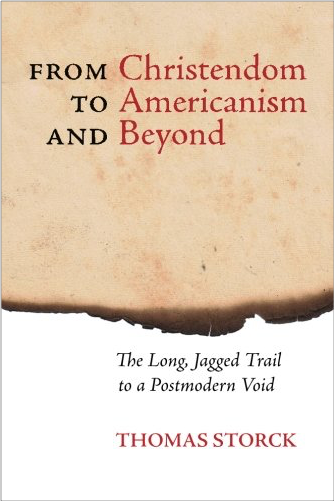
Thomas Storck, author of From Christendom to Americanism and Beyond, on the conflicts between “Americanism” and Catholic social teaching

read more
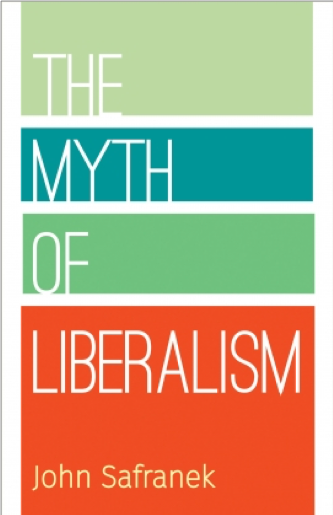
John Safranek, author of The Myth of Liberalism, on the self-contradictory character of modern liberalism

read more
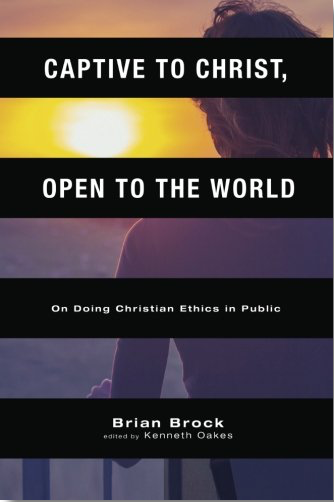
Brian Brock, author of Captive to Christ, Open to the World: On Doing Christian Ethics in Public, on the challenges and opportunities of being a “Church theologian” in a secular university

read more
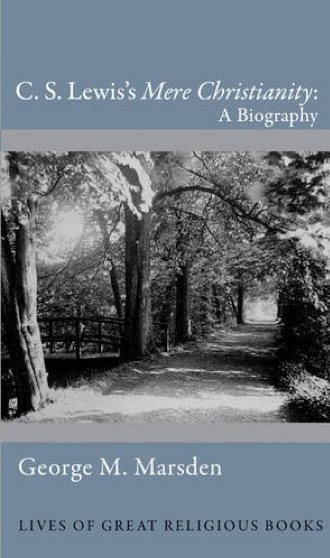
George Marsden, author of C. S. Lewis’s Mere Christianity: A Biography, on the birth and influential life of C. S. Lewis’s Mere Christianity

read more

Click on the tags below for listings of related readings or audio features.

Tags: AmericanismBrock, Brian R.Catholic social teachingChristian ethicsEthicsFernández-Morera, DaríoIslam—HistoryKingdom of GodKingshipLewis, C. S.LiberalismMarsden, George M.O'Donovan, OliverOakley, FrancisSafranek, JohnSpain—HistoryStorck, Thomas

Our latest Friday Feature:

A divided individual on stage


Recent Features

The 18 most recent Features we’ve released may be found here.


From Partners

List of all Features provided by our Partners.
News from Partners about events and publications.


Books being discussed:

Nicholas Carr, Superbloom: How Technologies of Connection Tear Us Apart

Thomas M. Ward, After Stoicism: Last Words of the Last Roman Philosopher

Steven Knepper, Robert Wyllie, Ethan Stoneman, Byung-Chul Han: A Critical Introduction


Lecturers to hear:

L. M. Sacasas on “Burnout Society”

Brad East on catechesis in “Screentopia”

John Médaille on authentic liberalism

MENU:
  • Home
  • Help
  • About Mars Hill Audio
  • Legacy Library
  • Give a membership
  • Sign up
  • Privacy Policy
  • Contact us


Since 1993 — with the help of hundreds of interviewees — we’ve been exploring the complex factors that have given modern Western culture its distinctive (and often disturbing) character. We also try to describe what cultural life — its practices, beliefs, and artifacts — might look like if it was the product of thoughtful Christian imaginations. We hope our growing treasury of conversations and commentary provides resources for faithfulness in an often perplexing moment.

Keep me informed

* indicates required
Mars Hill Audio
Go to Top
Darío Fernández-Morera on Islamic rule in medieval Spain
from the interview

“Scholars in Islamic Studies departments argue that jihad really means a self-striving for perfection . . . (and they may be right and they maybe know more about the actual meaning of jihad than those medieval scholars and medieval leaders did), but of course that has nothing to do with what actually happened. And all the documents from both Islamic sources and Christian sources and archeological evidence indicate that religion was the main motivating force of the invasion.”

Synopsis

Cultural critic Darío Fernández-Morera re-examines the conventional belief that medieval Islamic Spain was peaceful and culturally thriving. While the widespread account of Islamic Spain claims that Judaism, Christianity, and Islam lived harmoniously under the rule of educated and cultured Muslims, Morera identifies this narrative as a myth that likely emerged during the eighteenth century as an argument against what was seen as a repressive Catholic regime. Since then, many factors have perpetuated this account and served as obstacles to reliable scholarship in Islamic studies. Listen to this interview to hear more about the religious motivations of jihad and how the Islamic conquest of Spain interacted with the prevailing Christian culture.

close
Francis Oakley on the theme of sacral kingship
from the interview

“It’s quite an extraordinary thing; that you have notions of sacred monarchy worldwide in cultures that have no observable connection with each other. . . . In the ideology behind it there’s no clear distinction between nature/supernature, animate/inanimate, political/religious. Those distinctions just don’t belong.”

Synopsis

Historian Francis Oakley discusses how the theme of sacral kingship has been the normal form of government for human kind throughout history and how the liberal political theories of the modern west are, in fact, deviations from that norm. Part of the rationale behind sacral kingship is the very un-modern notion of cosmic harmony, that in reality there are no clear distinctions between nature and supernature, animate and inanimate, or politics and religion. In such a cosmology, the one who has the highest political authority is an integral mediator between nature, the divine, and culture; it is the ruler’s responsibility to insure that all are in accordance with each other for the purpose of securing a harmonious way of life for the people.

close
Oliver O’Donovan on the fatherhood and kingship of God
from the interview

“We are not invited as it were to evacuate the metaphor [of kingship and government]. Rather we should say, the governments we know are pale reflections in the order of creation — of what God does for the world and what God is in the world — very inadequate reflections . . . but not because they are too much government, but because they are very much too little government as God understands government.” 

Synopsis

In this excerpt from our archives, Oliver O’Donovan cautions against dismissing the particular manifestations of God’s word and God’s created order because of our own personal or social grievances to certain metaphors and institutions. Often, we too readily compare the metaphors God uses to reveal himself, such as father or king, to our own experiences of fathers and kings. This comparison limits the meaning of the revelation to our imperfect and finite experience; human fathers and human kings become the originals and God a mere likeness of them. Rather, argues O’Donovan, we should interpret these descriptions of God as the ideals informing how we ought to think about notions of fatherhood, kingship, governance, and so forth. God’s fatherhood and God’s kingship are the realities against which we measure all human examples.

close
Thomas Storck on the medieval understanding of economics
from the interview

“The idea of the craft guild (or occupational group, or vocational group) is not as absurd or as strange as it might seem, but is actually a very intelligent way of looking at an approach to economics, if you accept the idea that economics is not about personal enrichment. Economics is about supplying the human race with the things it needs and incidentally about providing the manufacturer . . . with what he needs to live a decent life.”

Synopsis

Author Thomas Storck explains how inimical the American ideals of freedom and the pursuit of one’s own happiness are to a just and generous economic life. In his book From Christendom to Americanism and Beyond, Storck examines the medieval understanding of economics as a subordinate aspect of human life in contrast to an American anthropology that promotes economics to the fore of human activity. Rather than considering economics as the pursuit of unlimited wealth, Storck argues that we need to retrieve the notion of economics as the process by which we provide what is needed for the community

close
John Safranek on the political theory of liberalism
from the interview

“Every law smuggles in some view of the good. There’s no law that’s ever been passed that isn’t attached to a view of the good. Aristotle noted — and this is kind of a fundamental point of ethics — every action done is done for the sake of some good. . . . No legislator says ‘I’m passing this law, because it makes no sense and it produces a lot of evil.’”

Synopsis

Philosopher and medical doctor John Safranek joins us to discuss the ways in which the political theory of liberalism deceptively masks what it can and cannot do. As a philosophy, liberalism aims to protect the freedom and autonomy of members of society. It does so, however, not by appealing to a higher good that transcends each individual, but by defending its members from possible infringements of their freedoms. However, when conflicts arise over competing moral claims, such as in the case of abortion or gay marriage, liberalism is unable to resolve these disputes, since, according to the tenets of liberal philosophy, we cannot appeal to a particular understanding of the good. As a result, words such as “freedom,” “autonomy,” and “dignity” become rhetorically charged terms, functioning as authoritative concepts while being ostensibly neutral.

close
Brian Brock on towards the place of religion in British public life compared to its American counterpart
from the interview

“I wanted to combine that martial image in which we’re not the warriors, we’re the booty, we’re the captives, with the idea that being so captive is an incorporation into Christ, being totally unthreatened by everything that goes on. . . . And that I think positions us differently in public conversation.”

Synopsis

Ethicist Brian Brock reflects on being a church theologian in a secular university in Great Britain and how this represents a greater tolerance in general towards the place of religion in British public life compared to its American counterpart. The American effort to separate the church from state affairs has lead to the bracketing of religious reasoning to private life in favor of a secular reason in public life. For Christians, this can often give rise to a state of being captive to the world and its language rather than to Christ and the language of the Church. Brock exhorts Christians to reconnect with the Christian tradition and not to shy away from thinking about social problems theologically.


close
George Marsden on his biography of C. S. Lewis’s "Mere Christianity"
from the interview

“Although there’s a strong element of rationality in [Lewis’s] defense of the faith, it’s also always surrounded with a strong imaginative sense and an empathetic, personal, affective sense of what the faith involves.”

Synopsis

Historian of American evangelicalism George Marsden talks about his biography of C. S. Lewis’s Mere Christianity. Originally presented as a series of radio talks for the BBC during World War II, Mere Christianity became one of the most popular books among American evangelicals after Lewis’s lifetime. Listen to the full interview to hear how this high church Anglican became an unlikely favorite among evangelicals in America.

close