PREVIEW
The player for this Journal volume is only available to current members or listeners with a legacy account. If you have an active membership, log in here. If you’d like to become a member — with access to all our audio programs — sign up here.
Guests heard on Volume 140
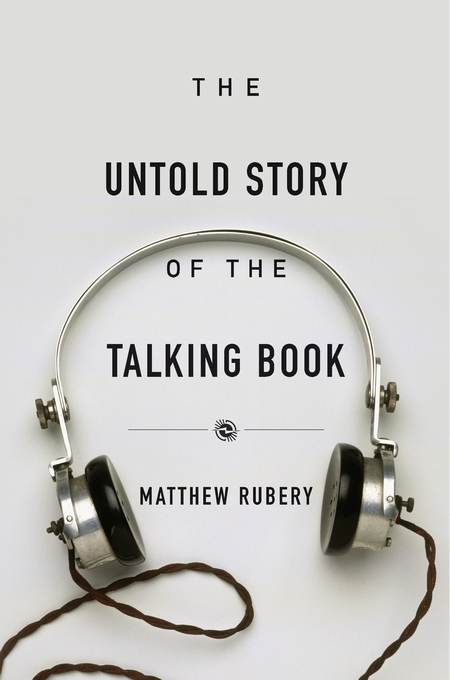
Matthew Rubery, author of The Untold Story of the Talking Book, on the history of the “talking book,” and on how reading aloud differs from listening to it being read
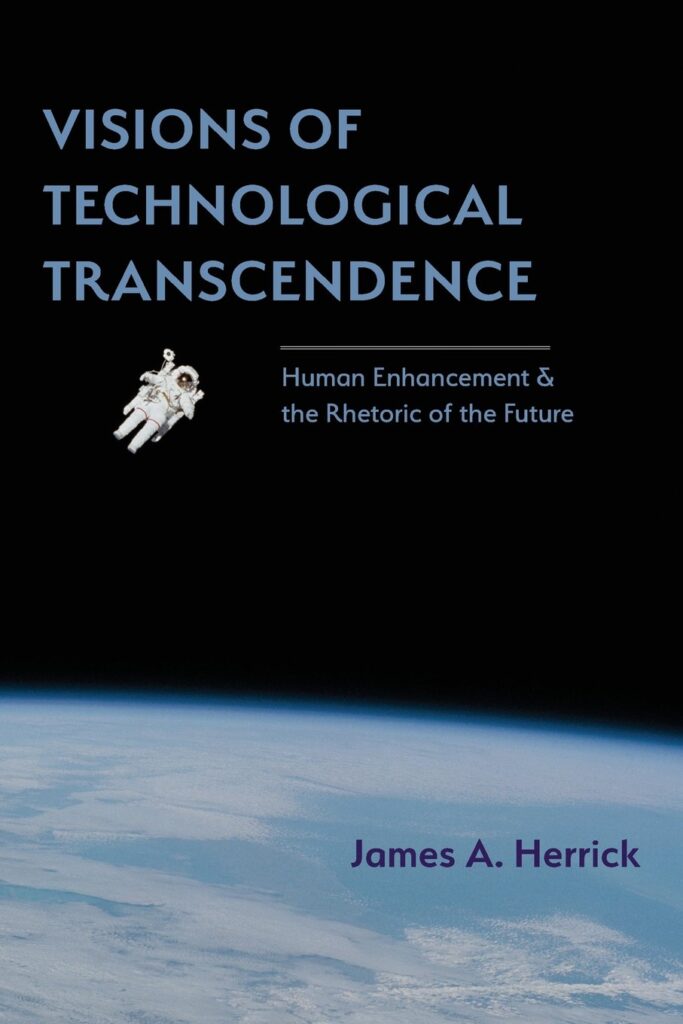
James A. Herrick, author of Visions of Technological Transcendence: Human Enhancement and the Rhetoric of the Future, on the “post-human” aspirations of the transhumanist movement, and how its plausibility is established by stories
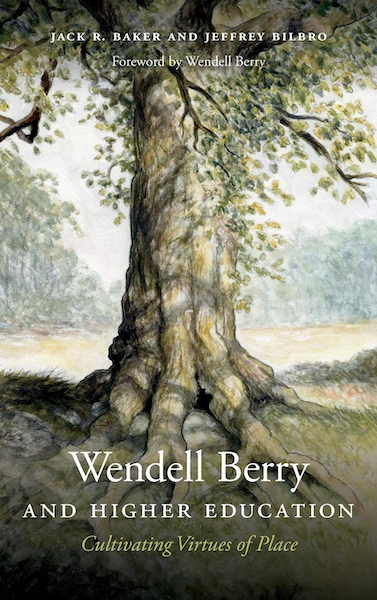
Jack Baker and Jeffrey Bilbro, authors of Wendell Berry and Higher Education: Cultivating Virtues of Place, on lessons that universities should heed from Wendell Berry’s essays, poetry, and fiction about commitment to living in a place
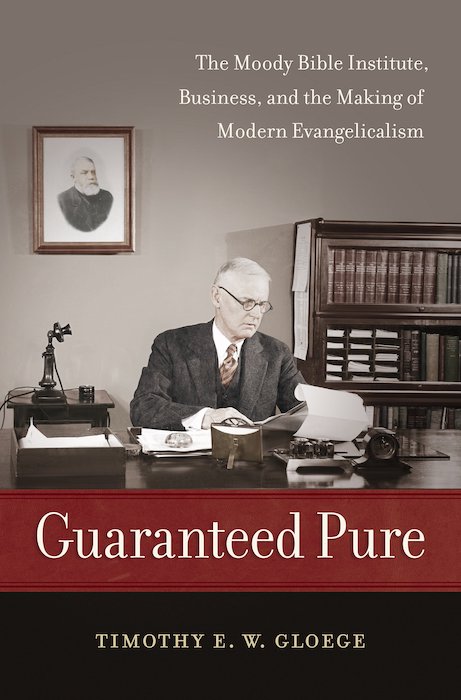
Timothy Gloege, author of Guaranteed Pure: The Moody Bible Institute, Business, and the Making of Modern Evangelicalism, on the influence of business methods on twentieth-century evangelicalism through the shaping of Moody Bible Institute
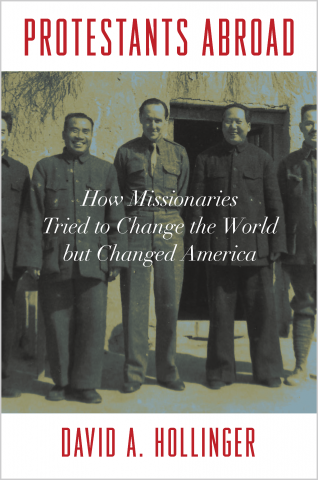
David Hollinger, author of Protestants Abroad: How Missionaries Tried to Change the World but Changed America, on how the sons and daughters of mid-twentieth-century missionaries to Asia came back to the U.S. and influenced government, journalism, and the academy
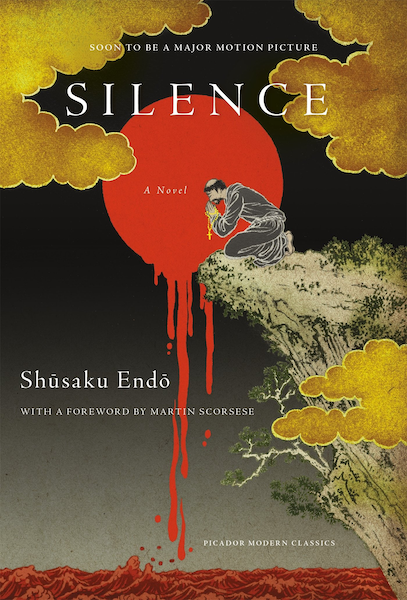
Barrett Fisher on the themes of the challenge of faithfulness as presented in Shusaku Endo’s Silence and in Martin Scorsese’s film version
Related reading and listening
- Modernity’s crisis of place — Craig Bartholomew reflects on the importance of place to our humanity. (58 minutes)
- A “cosmological omnibus” — George Grant recounts the fascinating history of Hernando Colón’s attempt in the 16th century to curate a universal library of the world’s knowledge. (41 minutes)
- The cost of “killing” God — In this October 2023 lecture, Carl Trueman explores the concept of “desecration” as a frame for understanding the nature of modernity in our time. (42 minutes)
- Theology and the imagination — Jeffrey Barbeau explains what made C. S. Lewis an effective “translator” of theology for non-theologians. (21 minutes)
- Films that lead to contemplation — FROM VOL. 162 David Paul Baird discusses some of the films on the Vatican’s list of recommended films. (25 minutes)
- Landscape and living memory — FROM VOL. 44 Gayle Brandow Samuels examines the ways in which trees have served as anchor-points for memory and identity in American culture. (9 minutes)
- City of God, City of Man — Architect Philip Bess discusses how our modern-day confusion and moral illiteracy are worked out visibly in the cities and buildings our architects create. (57 minutes)
- The de(con)struction of the humanities (and of truth) — Historian Gertrude Himmelfarb on the skeptical tendencies of the postmodern academy
- Universities as the hosts of reciprocating speech — Robert Jenson on how the Christian understanding of Truth in a personal Word shaped the Western university
- University or “utiliversity”? — In this essay, Reinhard Hütter examines in depth John Henry Newman’s The Idea of a University and argues that its insights and prescriptions are urgently relevant to the current status of higher education. (87 minutes)
- The “scandal” of theology in the university — Edward T. Oakes, S.J. explains why John Henry Newman’s eloquent defense of the nature of university education, The Idea of a University, continues to inspire, challenge, and even frustrate its sympathizers. (24 minutes)
- Setting the liberal arts free — In addressing the state of liberal arts education in the U.S., Gilbert Meilaender raises some core questions and makes some surprising proposals. (28 minutes)
- The establishment of nonbelief — FROM VOL. 10 George Marsden explains how and why American universities became places where religious concerns are excluded. (10 minutes)
- Students as arbiters of knowledge — FROM VOL. 94 Tim Clydesdale discusses the experience of freshmen year at college, suggesting that by that time students have been effectively inoculated against a love of knowledge. (21 minutes)
- Introducing Volume 165 — Ken Myers introduces listeners to Volume 165 of the Journal with short segments from each interview. (32 minutes)
- The temptations of talismanic technologies — Jeffrey Bilbro on the persistence of techno-utopianism
- Mars Hill Audio Journal, Volume 165 — FEATURED GUESTS: Jeffrey Bilbro, Daniel McInerny, Joseph Minich, Carl Elliott, Nadya Williams, and Don W. King
- The amplification of distraction — FROM VOL. 152 Jeffrey Bilbro advocates a Christian posture toward our contemporary digital media ecosystem that addresses its disorienting and disintegrating effects. (23 minutes)
- The reciprocity of all things — FROM VOL. 148 Jeffrey Bilbro explores the importance of sustainability through the essays, poetry and fiction of Wendell Berry. (13 minutes)
- What are students for? — FROM VOL. 140 Drawing from Wendell Berry’s works, Jack Baker and Jeffrey Bilbro discuss a vision of higher education that respects a multidimensional notion of place. (23 minutes)
- The avant garde of secularization — FROM VOL. 38 Alvin Kernan explains sweeping changes in American university education since the 19th century. (11 minutes)
- Christ-animated learning — FROM VOL. 142 Perry L. Glanzer and Nathan F. Alleman discuss the fragmentation of modern higher education and why we need theology to unify universities. 26 minutes)
- Two versions of Shadowlands — FROM VOL. 10 Marjorie Mead examines two film portrayals of C. S. Lewis, noting which best captures Lewis’s jovial personality and the nuances of his faith. (4 minutes)
- The Protestant project and indifference concerning God — Stanley Hauerwas on Alasdair MacIntyre’s critique of Protestant liberals
- Manners and morals — FROM VOL. 19 Film and literary critic Alan Jacobs discusses how modern audiences relate to the manners and morals portrayed in Jane Austen films. (16 minutes)
- The moral complicity of movie audiences — Film critic David Thomson explains why Alfred Hitchcock’s film Psycho achieves a kind of unique synergy with American culture, raising unsettling questions about alienation and identity. (33 minutes)
- A poet’s relationship to time — FROM VOL. 57 Poet Wilmer Mills (1969–2011) discusses how his agricultural and cross-cultural childhood in Brazil shaped his imagination and his relationship with modernity. (11 minutes)
- The importance of literary reading — FROM VOL. 70 Dana Gioia discusses the important role literary reading plays in society and the 2004 publication from the NEA about such reading. (13 minutes)
- Ideas made incarnate — In this lecture, Karen Swallow Prior examines the power of great literature to shape lives, nourish imaginations, and develop a vision of the good life. (43 minutes)
- Gratitude and stewardship as political postures — FROM VOL. 118 Mark Mitchell explores the consequences of four concepts that are sadly missing from most political debates today: creatureliness, gratitude, human scale, and place. (18 minutes)
- An embedded life — Following a move from one state to another, Gilbert Meilaender explores the tension between being simultaneously a sojourner and a body located in place and time. (30 minutes)
- Cultures of chance, cultures of control — Historian Jackson Lears explains how gambling springs from a longing for an experience of “unbidden beneficence,” a repudiation of the idea of control that marks modernity. (49 minutes)
- Impact of “infotainment” on community — Neil Gabler and C. John Sommerville discuss how the mentalities conveyed by our experience with communications media work against the nurturing of community. (36 minutes)
- On the Degeneration of Attentiveness — Critic Nicholas Carr talks about how technology-driven trends affect our cultural and personal lives. (56 minutes)
- Books worthy of a lifetime of encounters — FROM VOL. 69 Daniel Ritchie discusses why great books programs survive mainly in Christian institutions while declining in secular ones. (13 minutes)
- Mars Hill Audio Journal, Volume 162 — FEATURED GUESTS: Mark Noll, R. Jared Staudt, Paul Weston, William C. Hackett, Hans Boersma, and David Paul Baird
- Early evangelical response to C. S. Lewis — Historian Mark Noll discusses the reasons why American evangelicals were initially slow to warm to Lewis. (15 minutes)
- The Gospel as the foundation of dialogue — FROM VOL. 83 Professor Paul Weston discusses theologian Lesslie Newbigin’s time in India and how it influenced his thought and work. (17 minutes)
- Personhood, limits, and academic vocation — FROM VOL. 39 Marion Montgomery (1934–2002) offers a deep critique of the relationship of the academy to its community in an effort to diagnose how higher education has lost its way. (13 minutes)
- What higher education forgot — FROM VOL. 84 Harry L. Lewis discusses higher education’s amnesia about its purposes, and how that shortchanges students. (19 minutes)
- A Christian philosophy of integrated education — FROM VOL. 61 Michael L. Peterson discusses how Christianity could inform society’s understandings of education and human nature. (8 minutes)
- Education for human flourishing — Co-authors Paul Spears and Steven Loomis argue that Christians should foster education that does justice to humans in our fullness of being. (23 minutes)
- The social irrelevance of secular higher education — FROM VOL. 85 Professor C. John Sommerville describes the increasingly marginal influence of universities in our society, and why they seem to be of no substantive relevance to people outside the school. (13 minutes)
- The history of Christianity and higher education — FROM VOL. 50 In tracing Christianity’s relationship to the academy, Arthur F. Holmes points to Augustine as one of the first to embrace higher learning, believing God’s ordered creation to be open to study by the rational mind of man. (9 minutes)
- “Muscular Christianity” and sport as language — In light of this summer’s Olympic Games, we present two sports-related archive interviews: Clifford Putney on Protestant emphasis on fitness at the turn of the 19th century; and Andrei S. Markovits on Americans and soccer. (23 minutes)
- Creation’s goodness and human faithfulness — J. Matthew Bonzo and Michael R. Stevens on Wendell Berry’s understanding of how Creation is a gift with certain givenness
- Productivity or thrift? — Wendell Berry contrasts an economy of productivity (which invites extravagance) and an economy of thrift (which takes care of things)
- The destructive logic of short-term thinking — Wendell Berry on the perils of ignoring the nature of Nature
- Fixed certainties, fixed mysteries — FROM VOL. 42Science journalist John Horgan, author of The Undiscovered Mind: How the Human Brain Defies Replication, Medication, and Explanation, discusses the limits of neuroscience. (13 minutes)
- Herrick, James A. — FROM THE GUEST PAGE: James A. Herrick was for twenty years the Guy Vander Jagt Professor of Communication at Hope College in Holland, MI, where he taught from 1984 to 2020.
Tags:
Baker, JackBerry, WendellBilbro, JeffreyBooksEndo, ShusakuEvangelicalism—HistoryFilmFisher, BarrettGloege, TimothyHerrick, James A.Higher educationHollinger, DavidMissionariesPlaceProtestantismReadingRubery, MatthewScorsese, MartinTranshumanism