
PREVIEW
Guests heard on Volume 164
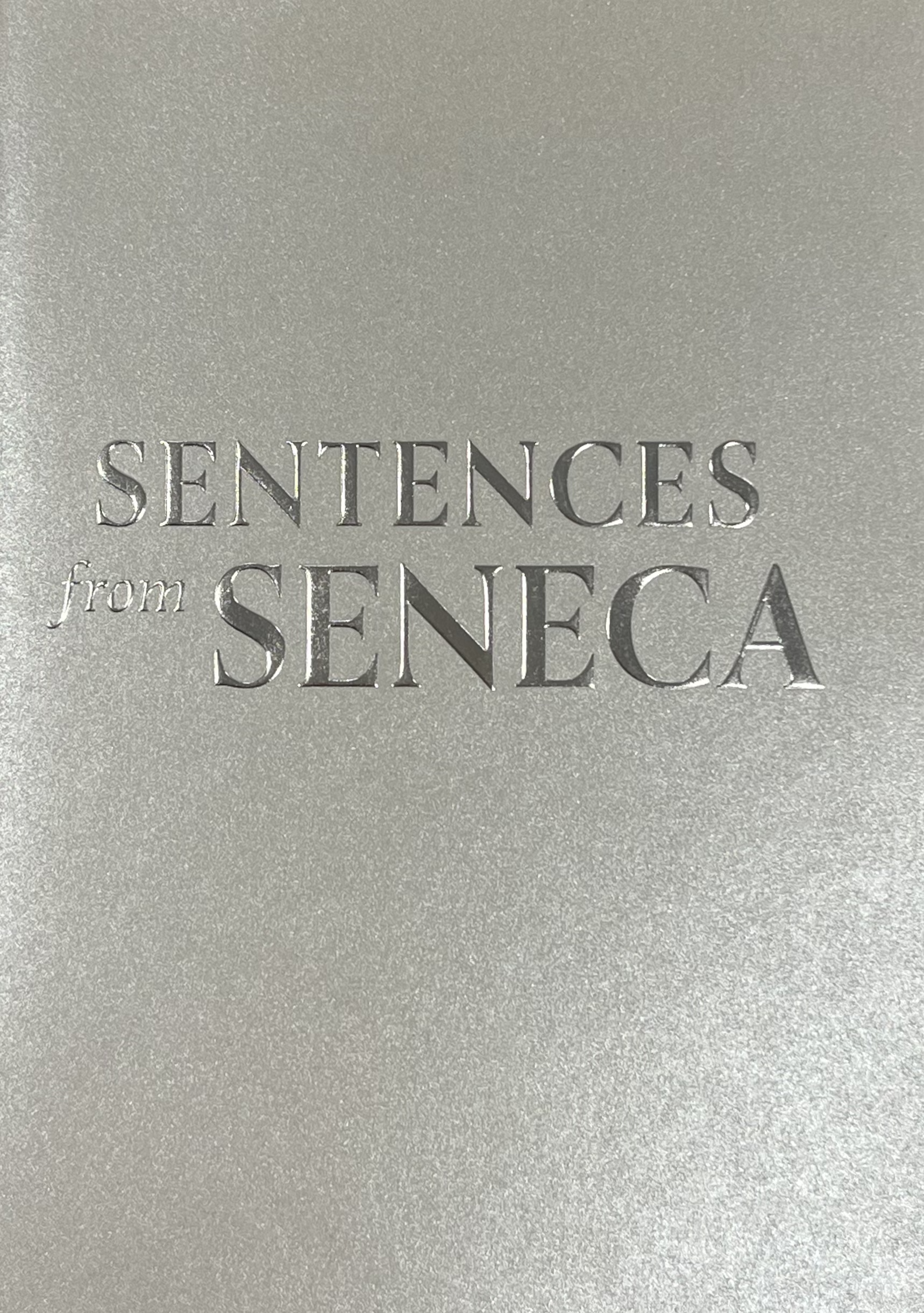
Dana Gioia, translator of Sentences of Seneca, on Seneca’s practical wisdom
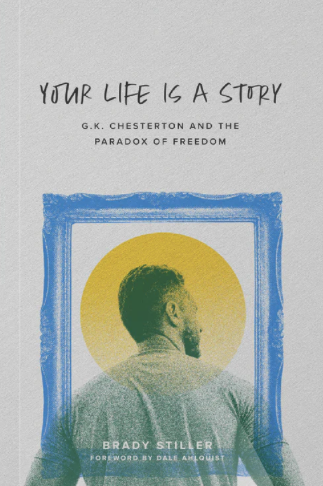
Brady Stiller, author of Your Life Is a Story: G. K. Chesterton and the Paradox of Freedom, on the grand cosmic story
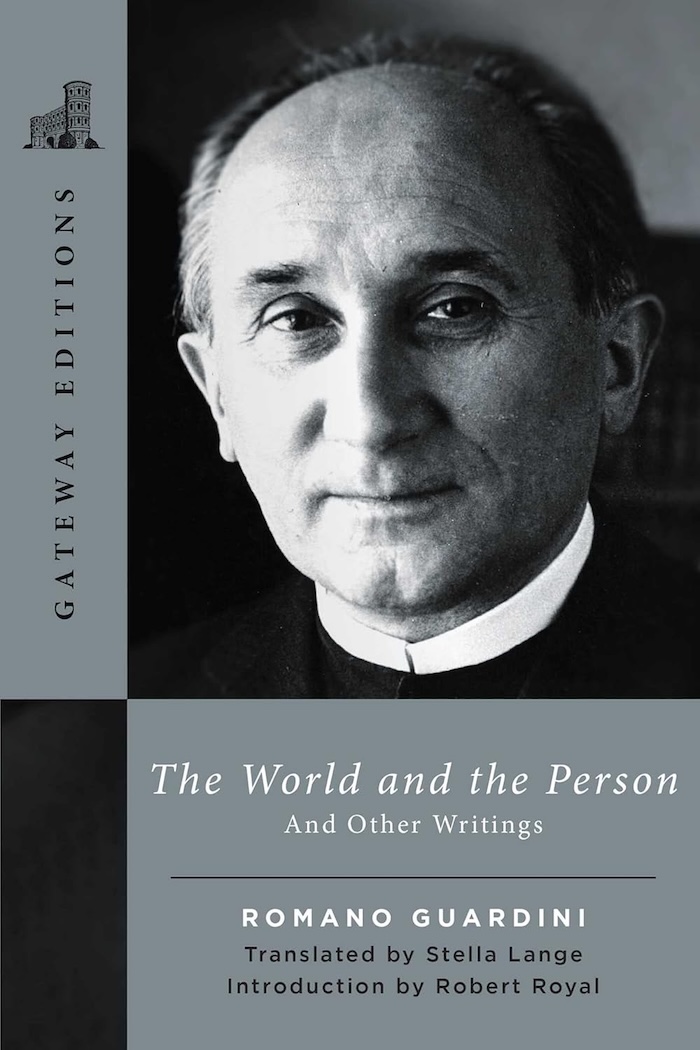
Robert Royal discusses Romano Guardini’s The World and the Person, And Other Writings
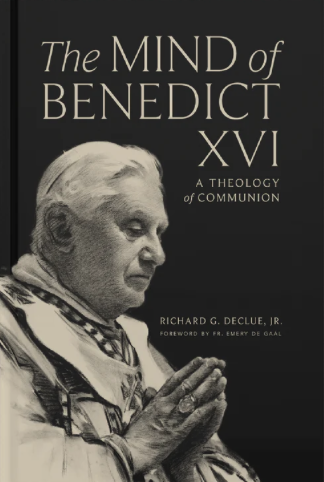
Richard DeClue, author of The Mind of Benedict XVI: A Theology of Communion, on the former pope’s priority on relationality
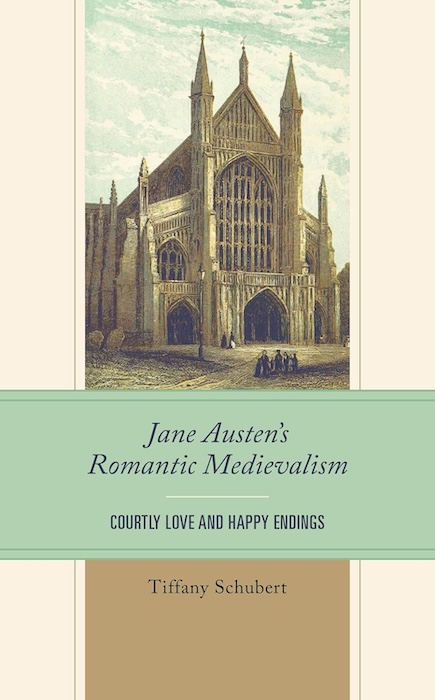
Tiffany Schubert, author of Jane Austen’s Romantic Medievalism: Courtly Love and Happy Endings, on the 18th-century sense of cultural superiority
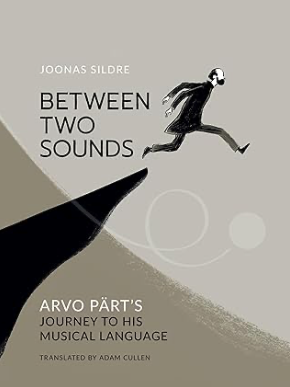
Joonas Sildre, author of Between Two Sounds: Arvo Pärt’s Journey to His Musical Language, on illustrating Pärt’s music (Archive Feature available)
Related reading and listening
- Watching, waiting, persevering — Romano Guardini on the necessarily eschatological character of Christian living
- Paradoxes of “nature” and “culture” — Robert Spaemann, on the destructive consequences of a merely naturalistic understanding of nature
- Rose without thorns — Ken Myers introduces various settings of “Ther is no rose of swych vertu,” a medieval carol that uses imagery of a rosebush to describe the Virgin Mary. (29 minutes)
- God also was a Cave-man — G. K. Chesterton on the convergence of omnipotence and impotence in Bethlehem
- “Investigations of divine works” — Greg Wilbur explains how closely connected music is to the order of the cosmos and how it even reveals attributes of God. (56 minutes)
- Cultural superiority and Medieval romance literature —
FROM VOL. 164 Tiffany Schubert argues that Jane Austen’s novels subtly incorporate some medieval literary conventions in ways that enable modern readers to experience a sense of wonder, romance, and the benevolence of Providence. (30 minutes) - The experience of a “real presence” in sacred music —
FROM VOL. 126 Jonathan Arnold explores why people of no religious commitment pay money to hear specifically sacred music. (22 minutes) - How music blesses and teaches —
FROM VOL. 64 Theologian and musician Jeremy Begbie explores what we learn about time, theology, and the structure of Creation from the experience of music. (28 minutes) - Mars Hill Audio Journal, Volume 166 — FEATURED GUESTS: William Cavanaugh, Kent Burreson, Beth Hoeltke, Jeffrey Barbeau, Jason Baxter, John Betz, and Bruce Herman
- Heaven and earth are full of His glory — Gerald R. McDermott examines the typological tradition of the Church, particularly through Jonathan Edwards’s thought, and he argues for a recovery of the Christian understanding of the universe as an “immense Trinitarian symbol.” (61 minutes)
- The founding of a choral ensemble —
FROM VOL. 119 Founder Peter Phillips recounts the history of his choral ensemble The Tallis Scholars. (23 minutes) - A beautiful human geometry — Musicologist Leopold Brauneiss compares Arvo Pärt’s compositional technique with Jungian archetypes
- A bridge between yesterday and today — Composer Arvo Pärt describes how he came to appropriate the mysteries of polyphony
- From the heart of silence — Conductor Paul Hillier on the sources of Arvo Pärt’s distinctive musical expression
- Prayer and complexity in Arvo Pärt’s music — In honor of Estonian composer Arvo Pärt’s 90th birthday, Ken Myers talks with Peter Bouteneff, about the singular qualities of Pärt’s music. (19 minutes)
- How to illustrate music and mystery —
FROM VOL. 164 Illustrator Joonas Sildre discusses his graphic biography of Estonian composer Arvo Pärt. (19 minutes) - Utopian dreams and cynicism — John Durham Peters discusses the history of the idea of communication, saying that our hopes are too high when we believe that the solution to social discord is just better communication. (49 minutes)
- Pathways of the Mind: The Joy of the Essay — Alan Jacobs thinks Christians should embrace the potential in the literary form of the essay, because of the way it corresponds to the navigation and journey of a Christian life. (48 minutes)
- How the Church promotes the cause of freedom — Oliver O’Donovan: “We discover we are free when we are commanded by that authority which commands us according to the law of our being, disclosing the secrets of the heart.”
- What is beyond our choosing? — D. C. Schindler on our nihilistic quest for freedom
- The danger of not defining “freedom” — Richard Bauckham insists that an adequate understanding of freedom requires recognition of God as the ground of true human freedom
- Power to the people — Nathan O. Hatch on the DIY spirit of early American Christianity
- Free for obedience — Glenn W. Olsen on Augustine’s understanding of freedom
- What Ockham severed — Jean-Charles Nault on the advent of sheer freedom
- A Christian understanding of human nature —
FROM VOL. 35 Robert C. Roberts and Mark R. Talbot discuss the need for Christian psychologists to draw from Christianity’s deep tradition of understanding human nature. (15 minutes) - Lives of generosity — Jonathan Wilson distinguishes between two fundamental ways of viewing Creation: a true Christian account of the world and a “survival of the fittest” one. (21 minutes)
- What we can know about God’s nature — Bruce McCormack outlines the history of the development of the doctrine of the Trinity. He shows how early Christians’ understanding of the nature of God moved from a focus on His oneness to a more full apprehension of His Triune nature. (66 minutes)
- What it means to be a creature — Fred Sanders offers a Trinitarian analysis of the doctrinal significance of the biblical Adam, explaining how his creaturehood is paradigmatic for human beings and their relationship with the Triune God. (46 minutes)
- Creation and redemption as trinitarian projects — Colin Gunton on Christ and Spirit in creation and redemption
- Reflecting the being of God in communion — Colin Gunton on the relationality at the heart of Creation
- The whole world in his Hands — Colin Gunton on the trinitarian emphasis in St. Irenaeus’s doctrine of Creation
- Manners and morals —
FROM VOL. 19 Film and literary critic Alan Jacobs discusses how modern audiences relate to the manners and morals portrayed in Jane Austen films. (16 minutes) - Awakening before what is great — Romano Guardini on the proper posture of one in the presence of greatness
- The hatred of logos — D. C. Schindler draws on Plato to argue that in its very form, social media evidences a general contempt for logos — reason and language — which defines man. (26 minutes)
- Speaking the word in love — In this lecture, D. C. Schindler examines core insights from Ferdinand Ulrich on the central vocation of man and the meaning of being. (32 minutes)
- The profound drama of human sexuality — In this lecture, D. C. Schindler explains the cosmological significance of human sexuality and why it is paradigmatic of the relationship between nature and freedom. (32 minutes)
- Personhood and the gift of the self — In this lecture, D. C. Schindler examines the concept of self-gift which was central to Karol Wojtyła’s thought. (39 minutes)
- Sacramental Poetics — Poet and Eastern Orthodox believer Scott Cairns explains how a good poem functions like an icon: it assists the process of our becoming aware of what is real, and it is generative in the ways it keeps opening up new understandings. (56 minutes)
- Schubert, Tiffany — FROM THE GUEST PAGE: Tiffany Schubert is Associate Professor of Trivium and Humanities at Wyoming Catholic College.
- Seeing Creation Anew: The Life & Poetry of Gerard Manley Hopkins — Dana Gioia examines Gerard Manley Hopkins‘s poetic genius and dedication to Christ in spite of his personal trials and difficult cultural context. (55 minutes)
- To see people as people — Anthony Bradley argues that a recovery of Christian personalism is needed to counter the dehumanization, polarization, and tribalism of our day. (45 minutes)
- The idiom for the revelation of mystery — Dana Gioia on the foundational place of poetry in Christian faith
- Breaking the frozen sea — Dana Gioia on how poetry enchants
- Seneca’s moral courage — Dana Gioia explains how Seneca’s family was interwoven with the Roman governing class, ultimately leading to the philospher’s death at the hands of Emperor Nero. (27 minutes)
- John Donne’s Passion in Life, Faith, & Verse — Poet Dana Gioia discusses the remarkable life of poet John Donne and how his spiritual and intellectual struggles created the conditions for his unique poetic voice. (53 minutes)
- The importance of literary reading —
FROM VOL. 70 Dana Gioia discusses the important role literary reading plays in society and the 2004 publication from the NEA about such reading. (13 minutes) - Longfellow’s appeal —
FROM VOL. 53 Poet and critic Dana Gioia explains why Henry Wadsworth Longfellow (1807-1882) is one of the three great American poets. (30 minutes) - Sacramental correspondence —
FROM VOL. 51 Poet Dana Gioia discusses the state of contemporary poetry and the sacramental relationship between language and reality. (15 minutes) - Stiller, Brady — FROM THE GUEST PAGE: Brady Stiller was the first researcher to study materials of the G.K. Chesterton Collection at its new home at the Notre Dame London Global Gateway in the U.K.
- DeClue, Richard — FROM THE GUEST PAGE: Richard G. DeClue, Jr., S.Th.D. is Professor of Theology at the Word on Fire Institute, where he leads the Theology for Evangelists Community.