PREVIEW
You are unauthorized to view this page.
Guests heard on Volume 42
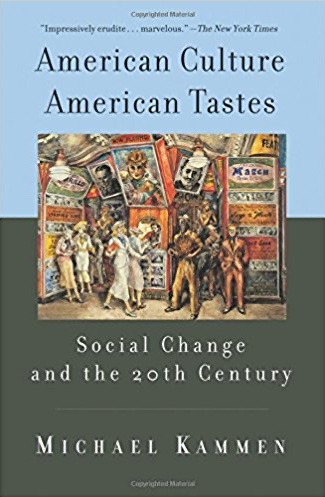
Michael Kammen, author of American Culture, American Tastes: Social Change in the 20th Century, on the historical transition from popular to mass culture (Friday Feature available)
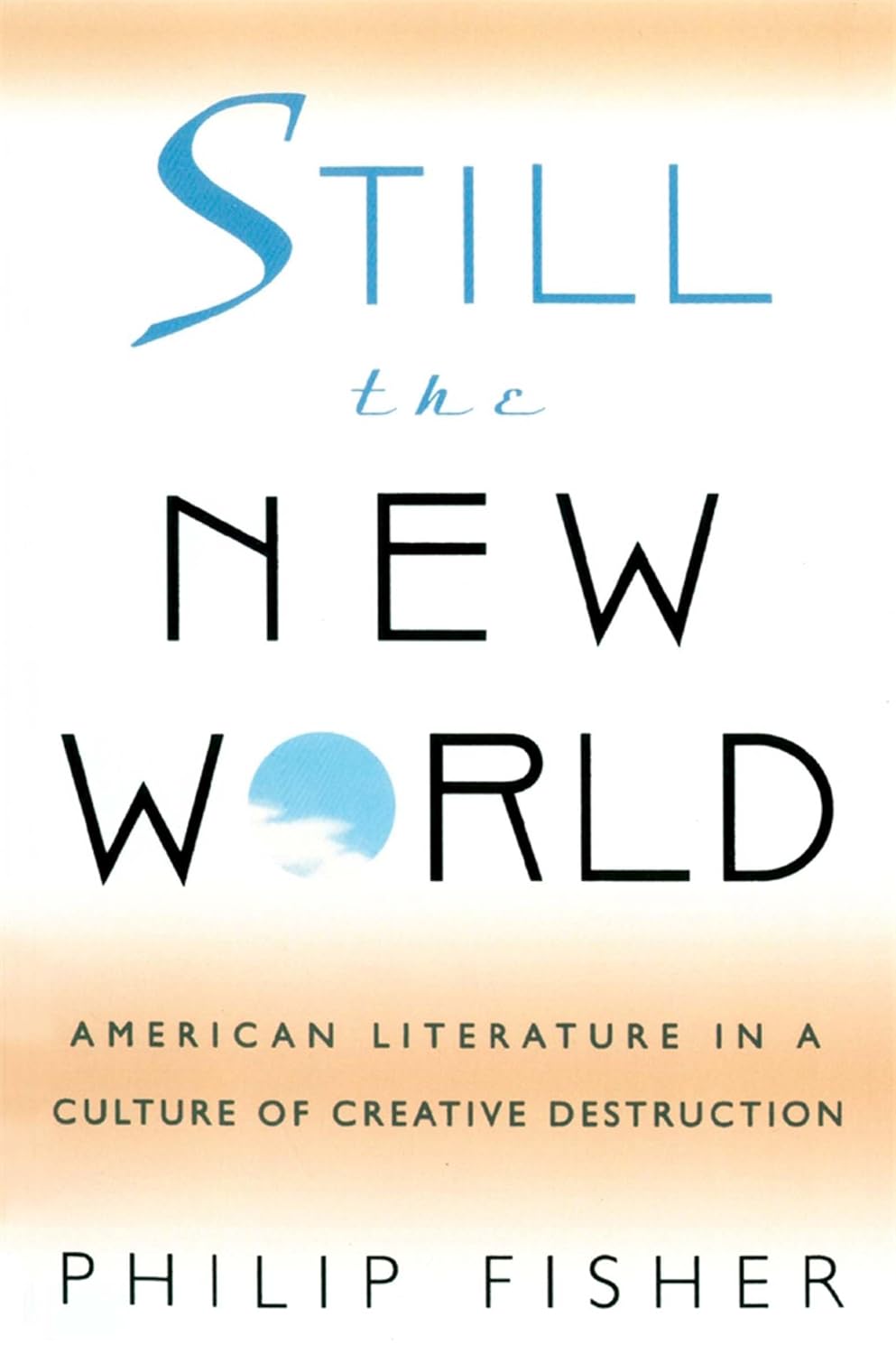
Philip Fisher, author of Still the New World: American Literature in a Culture of Creative Destruction, on how to understand culture and anti-culture (Friday Feature available)
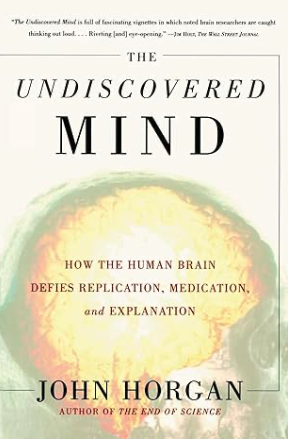
John Horgan, author of The Undiscovered Mind: How the Human Brain Defies Replication, Medication, and Explanation, on the limits of neuroscience (Archive Feature available)
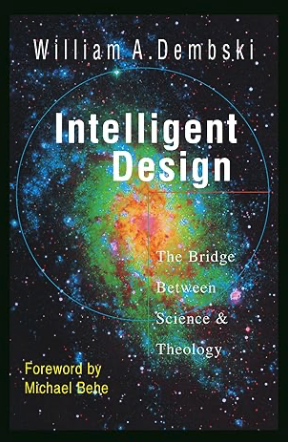
William Dembski, author of Intelligent Design: The Bridge Between Science and Theology, on detecting intelligent design through “specified complexity”
William Dembski on the influence of Michael Polanyi (1891–1976)
Steven Garber on the breadth of Michael Polanyi’s thought
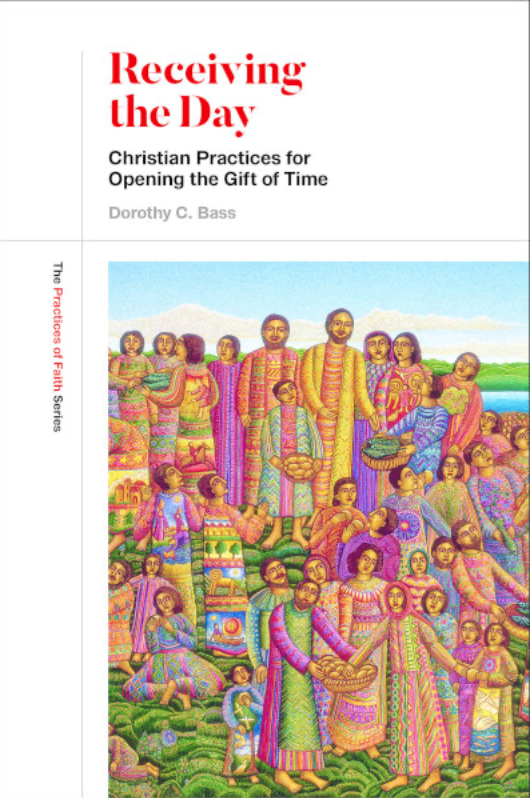
Dorothy Bass, author of Receiving the Day: Christian Practices for Opening the Gift of Time, on the need to restore form to our experience of time (Friday Feature available)
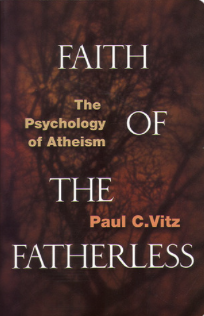
Paul Vitz, author of Faith of the Fatherless: The Psychology of Atheism, on Freud’s “projection theory”
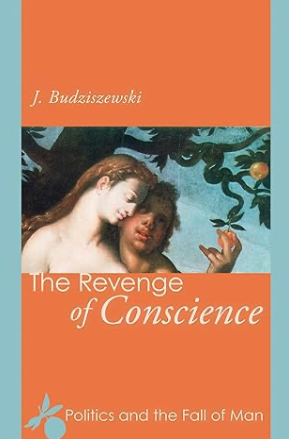
J. Budziszewski, author of The Revenge of Conscience: Politics and the Fall of Man, on sin and political philosophy
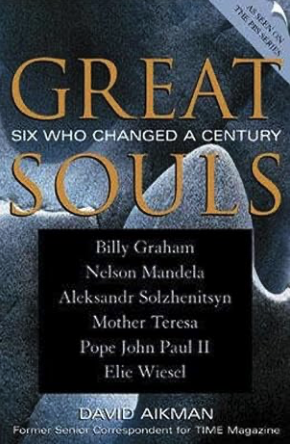
David Aikman, author of Great Souls: Six Who Changed a Century, on the heroism of Aleksandr Solzhenitsyn (Friday Feature available)
Related reading and listening
- Paradoxes of “nature” and “culture” — Robert Spaemann, on the destructive consequences of a merely naturalistic understanding of nature
- Christian culture and the myth of the secular — Ken Myers draws on T. S. Eliot to argue that Western civilization has broken down, not into a multiplicity of cultures, but into a “post-culture.” (47 minutes)
- How to make war on nothingness? — David Bentley Hart argues that if it rejects Christ, the only remaining option for a post-Christian culture is conscious or “narcotic” nihilism, which takes the form of absolute, meaningless volition. (66 minutes)
- A sampling of newly published lectures — Ken Myers introduces listeners to four recently released lectures, courtesy of our Partners. The lecturers are Jennifer Frey, Gary Saul Morson, N. T. Wright, and Andrew Kern. (27 minutes)
- “If there is no God, all is permitted” — Gary Saul Morson explores the consequences of belief and disbelief in God through Russian literature. (51 minutes)
- Grace and Christian realism — Jennifer Frey explores Thomist elements in Flannery O’Connor’s theology and writing, with a particular emphasis on a Thomist understanding of art. (39 minutes)
- A “cosmological omnibus” — George Grant recounts the fascinating history of Hernando Colón’s attempt in the 16th century to curate a universal library of the world’s knowledge. (41 minutes)
- To be at home in the world — D. C. Schindler examines how rituals enable us to experience time in a meaningful way — how they actually make time habitable for us. (41 minutes)
- A letter from Ken Myers — Ken Myers examines the cultural implications of the Incarnation and the deep-seated dualism of modernity that divorces spirituality from our material experience. (22 minutes)
- How music blesses and teaches — FROM VOL. 64 Theologian and musician Jeremy Begbie explores what we learn about time, theology, and the structure of Creation from the experience of music. (28 minutes)
- The pathos of sin — FROM VOL. 15 Poet Robert Pinsky discusses his translation of Dante’s Inferno. (9 minutes)
- Existential preparation for reading literature — FROM VOL. 128 Rod Dreher recounts how he thought he was reading Dante’s Commedia, when in reality the poem was reading him. (18 minutes)
- An icon of the whole world — Jason Baxter explains how Dante includes a panoply of characters and creatures in his Comedia, offering a prismatic view of all of Creation in its glory. (20 minutes)
- The soul’s awakening — FROM VOL. 145 Jason Baxter discusses the great psychological subtlety in Dante’s Divine Comedy. (20 minutes)
- How literature shaped Lewis — FROM VOL. 155 Jason Baxter explains how reading medieval literature enabled C. S. Lewis to become a “naturalized citizen of the Middle Ages.” (25 minutes)
- Ontology and reality in fiction — Katy Carl discusses Catholic novelist Graham Greene’s skill in portraying the struggle between spiritual belief and doubt. (27 minutes)
- Sacred and Profane Love: Graham Greene and the Catholic Imagination — Katy Carl discusses novelist Graham Greene’s fiction and spiritual struggles in light of the concept of the Catholic imagination. (49 minutes)
- Alert to the magic in the world — Junius Johnson discusses the importance of teaching stories, particularly fairy stories, in classical education. (25 minutes)
- “Emerging adulthood” — FROM VOL. 100 Christian Smith discusses the aimless cultural world of emerging adulthood and on how it makes the idea of objective moral order implausible. (17 minutes)
- Rand’s influence on conservatism — FROM VOL. 100 History professor Jennifer Burns discusses the life and legacy of “goddess of the market” Ayn Rand. (17 minutes)
- Harbinger of disorder — Mark Mitchell on Michael Polanyi’s recognition of the dangerous dead-end of materialistic reductionism
- Media as agencies of order — Media theorist John Durham Peters wants us to reexamine the purposes of media and how fundamental media are. (59 minutes)
- What adolescence misses — FROM VOL. 94 Mark Bauerlein talks about the ways of learning and living practiced by contemporary youth, how they impact the acquisition and use of knowledge and form intellectual habits, and what this means for the future of our society. (16 minutes)
- Mars Hill Audio Journal, Volume 165 — FEATURED GUESTS: Jeffrey Bilbro, Daniel McInerny, Joseph Minich, Carl Elliott, Nadya Williams, and Don W. King
- Living in a tool-i-fied world — Joseph Minich on how the ubiquity of technology makes atheism entirely plausible
- The amplification of distraction — FROM VOL. 152 Jeffrey Bilbro advocates a Christian posture toward our contemporary digital media ecosystem that addresses its disorienting and disintegrating effects. (23 minutes)
- Immediately yours — Todd Gitlin on the effect of media on our sense of time
- When time loses its shape — Dorothy Bass explains how practicing a Christian way of living each day, week, and year helps to reorient us to time in ways that honor creation, our communities, and our embodied lives. (22 minutes)
- Postmodern culture and the gospel — FROM VOL. 6 Roger Lundin discusses the ethical and theological consequences of our postmodern culture. (9 minutes)
- Antagonism or fruitfulness? — FROM VOL. 108 Jean Porter describes how natural law justifies legal and moral authority within the life of the human person. (17 minutes)
- The moral complicity of movie audiences — Film critic David Thomson explains why Alfred Hitchcock’s film Psycho achieves a kind of unique synergy with American culture, raising unsettling questions about alienation and identity. (33 minutes)
- Politics and the good — FROM VOL. 160 D. C. Schindler argues that political order cannot be disentangled from the social, and that fundamental questions of what humans are and what the good is cannot be bracketed from politics. (30 minutes)
- Personhood and the gift of the self — In this lecture, D. C. Schindler examines the concept of self-gift which was central to Karol Wojtyła’s thought. (39 minutes)
- A poet’s relationship to time — FROM VOL. 57 Poet Wilmer Mills (1969–2011) discusses how his agricultural and cross-cultural childhood in Brazil shaped his imagination and his relationship with modernity. (11 minutes)
- “The Emersonian elixir” — FROM VOL. 20 Robert Richardson and Roger Lundin discuss how Ralph Waldo Emerson’s legacy lingers in American culture. (18 minutes)
- The importance of literary reading — FROM VOL. 70 Dana Gioia discusses the important role literary reading plays in society and the 2004 publication from the NEA about such reading. (13 minutes)
- Flannery at 100 — In honor of Flannery O’Connor’s 100th birthday, we have gathered here an aural feast of interviews with O’Connor scholars and aficionados discussing her life, work, and faith. (3 hours, 28 minutes)
- Ideas made incarnate — In this lecture, Karen Swallow Prior examines the power of great literature to shape lives, nourish imaginations, and develop a vision of the good life. (43 minutes)
- Ethical issues in neurobiological interventions — William Hurlbut explores current neurobiological advancements and the ethics and dangers of biotechnology interventions that go beyond therapy. (62 minutes)
- From culture war to culture care — In this 2016 lecture, artist Makoto Fujimura asks what would it look like for Christians to be stewards of beauty and human flourishing in all areas of life and culture. (48 minutes)
- Insights into O’Connor’s development as a writer — FROM VOL. 160 Jessica Hooten Wilson discusses her experience studying and organizing Flannery O’Connor’s unfinished third novel, Why Do the Heathen Rage? (27 minutes)
- Excluding cranks and dabblers — Drusilla Scott on Michael Polanyi’s insistence that the “community of science” required authority
- How discovery happens — Esther Lightcap Meek on Michael Polanyi’s account of scientific discovery
- The personal element in all knowing — Mark Mitchell connects key aspects of Michael Polanyi’s conception of knowledge with Matthew Crawford’s insistence that real knowing involves more than technique. (34 minutes)
- An impoverished anthropology — FROM VOL. 146 Mark Mitchell asks whether there is anything that truly binds Americans together beyond their commitment to self-creation. (34 minutes)
- Making contact with reality — FROM VOL. 139 Esther Lightcap Meek discusses the realism of philosopher and chemist Michael Polanyi. (23 minutes)
- Knowing the world through the body — FROM VOL. 76 Professor Martin X. Moleski explains why Michael Polanyi (1891-1976) left his career in science to become a philosopher. (16 minutes)
- Steward of knowledge vs. autonomous knower — FROM VOL. 66 Esther Lightcap Meek challenges the modernist view of knowledge, which prefers the figure of the autonomous knower to the figure of a steward of knowledge acquired in part from others. (15 minutes)
- Etiquette and ethics — In this essay, Judith Martin (a.k.a. Miss Manners) argues that etiquette is “civilization’s first necessity” and an indispensable societal virtue. (21 minutes)
- America as the Republic of Entertainment — Neal Gabler on the modern devotion to pleasure
Tags:
Aikman, DavidAtheismBass, DorothyBudziszewski, J.ConscienceCultureDembski, WilliamEmerson, Ralph WaldoFisher, PhilipFreud, SigmundGarber, StevenGiftHorgan, JohnKammen, MichaelLiteratureNeurosciencePolanyi, MichaelPolitical philosophyPopular cultureScience and religionSinSolzhenitsyn, AleksandrTimeVitz, Paul