
PREVIEW
You are unauthorized to view this page.
Guests heard on Volume 43
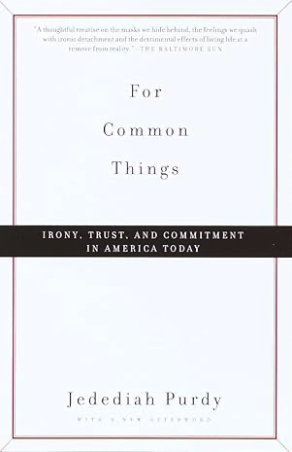
Jedediah Purdy, author of For Common Things: Irony, Trust, and Commitment in America Today, on the ironic mood and its effect on public life
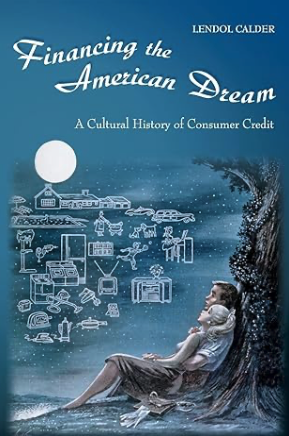
Lendol Calder, author of Financing the American Dream: A Cultural History of Consumer Credit, on the cultural significance of consumer credit
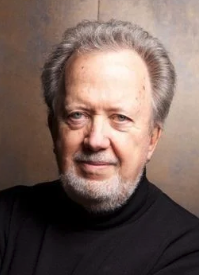
John Nelson, founder and director of Soli Deo Gloria, on funding the arts for the glory of God
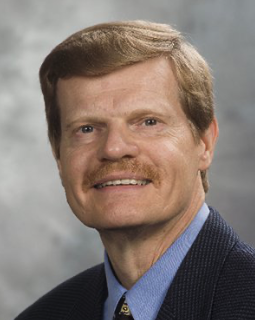
Composer George Arasimowicz on crafting a tone poem about the life of Peter

John Nelson on composing music on biblical lives

James Calvin Schaap, author of Romey’s Place, on writing and the challenge to piety
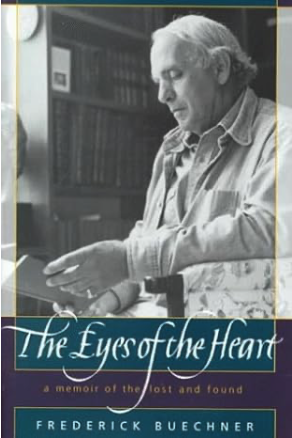
Frederick Buechner, author of The Eyes of the Heart: A Memoir of the Lost and Found, on the ministry of memoirs and the importance of remembering

Kay Hymowitz, author of Ready or Not: Why Treating Children as Small Adults Endangers Their Future and Ours, on mistaken ideas of adulthood and childhood
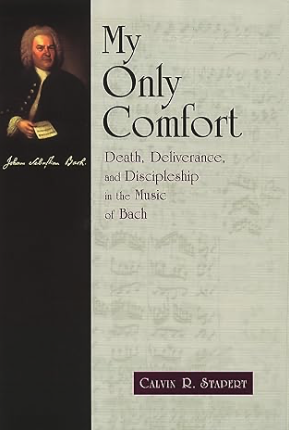
Calvin Stapert, author of My Only Comfort: Death, Deliverance, and Discipleship in the Music of Bach, on the choral music of Bach
Related reading and listening
- The roots of J. S. Bach’s fruitfulness — Music historian Markus Rathey explains why and how J. S. Bach composed his choral works as he did. (54 minutes)
- Celebrating Christmas with Bach (through Epiphany) — Ken Myers offers a detailed introduction to J. S. Bach’s Christmas Oratorio, a work composed to be sung on six occasions from Dec. 25th to Jan. 6th
- Rose without thorns — Ken Myers introduces various settings of “Ther is no rose of swych vertu,” a medieval carol that uses imagery of a rosebush to describe the Virgin Mary. (29 minutes)
- Christmas music from Luther to Bach — Tova Leigh-Choate on the roots of Bach’s Christmas Oratorio
- “Investigations of divine works” — Greg Wilbur explains how closely connected music is to the order of the cosmos and how it even reveals attributes of God. (56 minutes)
- Nun komm der Heiden Heiland — Ken Myers looks at the history of an Advent hymn written by St. Ambrose in the fourth century, adapted by Martin Luther in the sixteenth century, and transformed by J. S. Bach and many others in the years since. (21 minutes)
- Buying and selling holidays, identities, and ourselves — We present four interviews on American consumerism, with Leigh Eric Schmidt, David Lyon, Thomas Frank, and Sam Van Eman. (46 minutes)
- The experience of a “real presence” in sacred music —
FROM VOL. 126 Jonathan Arnold explores why people of no religious commitment pay money to hear specifically sacred music. (22 minutes) - How music blesses and teaches —
FROM VOL. 64 Theologian and musician Jeremy Begbie explores what we learn about time, theology, and the structure of Creation from the experience of music. (28 minutes) - Mars Hill Audio Journal, Volume 166 — FEATURED GUESTS: William Cavanaugh, Kent Burreson, Beth Hoeltke, Jeffrey Barbeau, Jason Baxter, John Betz, and Bruce Herman
- The founding of a choral ensemble —
FROM VOL. 119 Founder Peter Phillips recounts the history of his choral ensemble The Tallis Scholars. (23 minutes) - A beautiful human geometry — Musicologist Leopold Brauneiss compares Arvo Pärt’s compositional technique with Jungian archetypes
- A bridge between yesterday and today — Composer Arvo Pärt describes how he came to appropriate the mysteries of polyphony
- From the heart of silence — Conductor Paul Hillier on the sources of Arvo Pärt’s distinctive musical expression
- Prayer and complexity in Arvo Pärt’s music — In honor of Estonian composer Arvo Pärt’s 90th birthday, Ken Myers talks with Peter Bouteneff, about the singular qualities of Pärt’s music. (19 minutes)
- How to illustrate music and mystery —
FROM VOL. 164 Illustrator Joonas Sildre discusses his graphic biography of Estonian composer Arvo Pärt. (19 minutes) - Money, status, and satisfaction —
FROM VOL. 44 David Myers and Robert Frank discuss the tenuous relationship between wealth and happiness. (22 minutes) - Landscape and living memory —
FROM VOL. 44 Gayle Brandow Samuels examines the ways in which trees have served as anchor-points for memory and identity in American culture. (9 minutes) - “Emerging adulthood” —
FROM VOL. 100 Christian Smith discusses the aimless cultural world of emerging adulthood and on how it makes the idea of objective moral order implausible. (17 minutes) - Teen consumers and influencers —
FROM VOL. 62 Alissa Quart explains how advertisers exploit the normal developmental characteristics of preteens and teens in order to sell them products. (12 minutes) - “Beginner adult” or “special kind of child”? —
FROM VOL. 44 Thomas Hine takes an historical — rather than a psychological — approach to the development of the concept of the teenager. (10 minutes) - Teenage agency —
FROM VOL. 68 Murray Milner, Jr., explores how the current structure of schools and education leads almost inevitably to a culture of consumption among teenagers. (19 minutes) - Students as arbiters of knowledge —
FROM VOL. 94 Tim Clydesdale discusses the experience of freshmen year at college, suggesting that by that time students have been effectively inoculated against a love of knowledge. (21 minutes) - What adolescence misses —
FROM VOL. 94 Mark Bauerlein talks about the ways of learning and living practiced by contemporary youth, how they impact the acquisition and use of knowledge and form intellectual habits, and what this means for the future of our society. (16 minutes) - Helping boys become virtuous men — Teacher and chaplain Mark Perkins describes forms of formation that take the body seriously 50 minutes
- Mars Hill Audio Journal, Volume 165 — FEATURED GUESTS: Jeffrey Bilbro, Daniel McInerny, Joseph Minich, Carl Elliott, Nadya Williams, and Don W. King
- When therapy hurts rather than heals —
FROM VOL. 30 Reinder Van Til speaks about his own experiences and the experiences of others who were unjustly accused of abuse during the heyday of the psychotherapy movement known as Recovered Memory Therapy (RMT). (12 minutes) - An ancient liturgical form — Calvin Stapert on the long history of recounting Christ’s sufferings musically
- The St. Matthew Passion: A Listener’s Guide — In this lecture, Paul Munson guides listeners into a deeper theological and musical appreciation of J. S. Bach’s St. Matthew Passion. (1 hour 48 minutes)
- Music that conveys spiritual truths —
FROM VOL. 137 Musicologist Michael Marissen discusses the masterful way in which J. S. Bach uses musical idiom and quotation by way of theological counterpoint to the texts of his sacred vocal works. (13 minutes) - Mars Hill Audio Journal, Volume 164 — FEATURED GUESTS: Dana Gioia, Brady Stiller, Robert Royal, Richard DeClue, Tiffany Schubert, and Joonas Sildre
- Gratitude and stewardship as political postures —
FROM VOL. 118 Mark Mitchell explores the consequences of four concepts that are sadly missing from most political debates today: creatureliness, gratitude, human scale, and place. (18 minutes) - How advertising detaches us from the world —
FROM VOL. 13 Historian and cultural critic Jackson Lears discusses the power of advertising to reinforce and shape cultural attitudes about material goods. (9 minutes) - On the Degeneration of Attentiveness — Critic Nicholas Carr talks about how technology-driven trends affect our cultural and personal lives. (56 minutes)
- Defined by what we buy —
FROM VOL. 48 Gary Cross argues that Americans are uniquely susceptible to the temptation to define ourselves by what we buy. (10 minutes) - On Eugenics in America — Christine Rosen explores early eugenics support in the early 1900s and current “participatory evolution” practices. (50 minutes)
- Humans as biological hardware — In this essay, Brad Littlejohn and Clare Morell decry how modern technology tends to hack the human person in pursuit of profit. (55 minutes)
- Music, silence, and the order of Creation — In this lecture, Ken Myers explains how it is that our participation in harmonic beauty in music is a kind of participation in the life of God, in Whom all order and beauty coheres and is sustained. (61 minutes)
- Angelic voices: saying or singing? — Pope Benedict XVI on the intrinsically musical character of angelic utterance
- The physical beauty of music — Music can be likened to a cathedral, says professional guitarist Gordon Kreplin, when it creates through silence and sound a meditative space into which one may enter and encounter God. (14 minutes)
- Music and the meaning of Creation — In this 2018 lecture, Ken Myers advocates for a recovery of the pre-Enlightenment idea of the intelligibility of music. (61 minutes)
- Counterpoint as a “spirited discussion” — In this essay, John Ahern explains the beauty and order of counterpoint, the accumulation of multiple melodies that come together in a harmonious whole. (20 minutes)
- The Decline of Formal Speech and Why It Matters — John McWhorter examines the reasons behind the decline in articulate speech and writing in the late 20th century, and the implications of this change across many areas of culture. (55 minutes)
- Forms as portals to reality — Ken Myers explains the ancient classical and Christian view that music embodies an order and forms that correspond to the whole of created reality, in its transcendence and materiality. (54 minutes)
- A theology of eating —
FROM VOL. 113 Theologian Norman Wirzba examines the relationship between food and faith. (24 minutes) - How music reflects and continues the created order — Musician, composer, and teacher Greg Wilbur explores how music reflects the created order of the cosmos. (55 minutes)
- The unintended consequences of the Reformation —
FROM VOL. 114 Historian Brad Gregory discusses the unintended consequences of the Reformation, consequences which continue to trouble us. (26 minutes) - Infrastructures of addiction — Christopher Lasch on the subversive effects of the expectation of novelty
- Creation as beauty and gift —
FROM VOL. 67 David Bentley Hart describes how the Christian understanding of Creation as beauty and gift, as the outward expression of the delight the Trinity has in itself, reveals a vision of reality different from the pagan or fatalist vision of reality. (12 minutes) - Genealogy of a work of praise — For Good Friday, Ken Myers tells the history of the text and music behind the popular hymn, “O Sacred Head, now wounded.” (27 minutes)