
PREVIEW
Guests heard on Volume 67
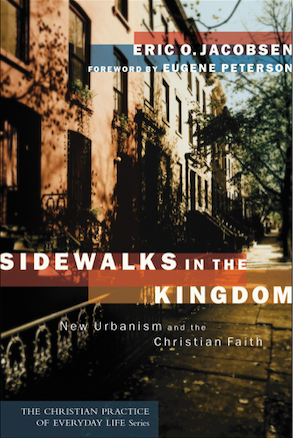
Eric O. Jacobsen, author of Sidewalks in the Kingdom: New Urbanism and the Christian Faith, on urban churches and taking the concrete realities of community seriously
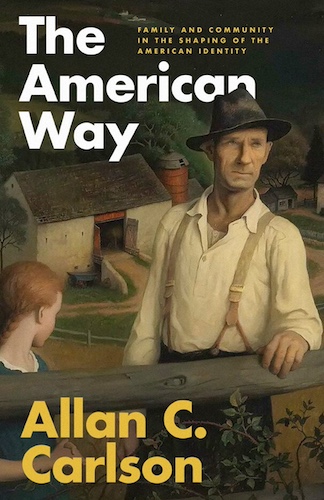
Allan C. Carlson, author of The “American Way”: Family and Community in the Shaping of the American Identity, on the family in American culture and in government policy
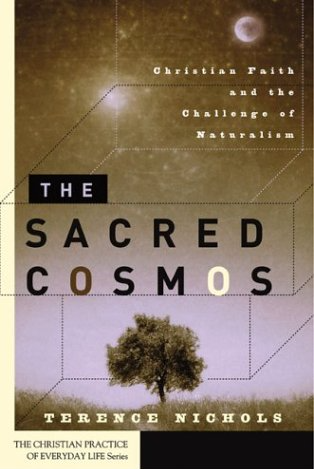
Terence L. Nichols, author of The Sacred Cosmos: Christian Faith and the Challenge of Naturalism, on a sacramental view of Creation as an alternative to naturalism
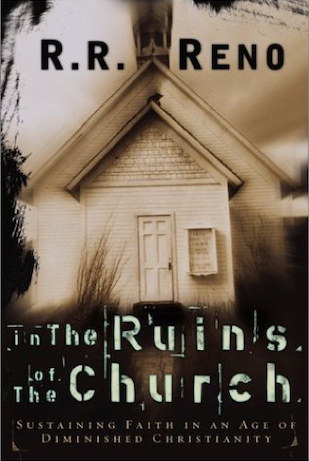
R. R. Reno, author of In the Ruins of the Church: Sustaining Faith in an Age of Diminished Christianity, on spiritual lethargy and sloth and the need for a more heroic vision for spiritual possibility
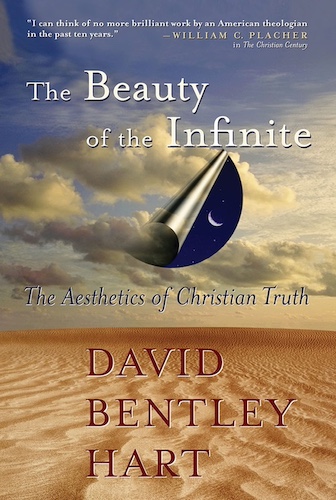
David Bentley Hart, author of The Beauty of the Infinite: The Aesthetics of Christian Truth, on a Christian understanding of beauty rooted in the reality of the divine gift that is Creation (Archive Feature available)
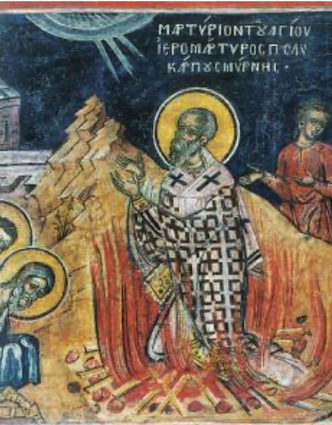
J. A. C. Redford and Scott Cairns, on the making of “The Martyrdom of Polycarp”
Related reading and listening
- When myth becomes fact — In this 1976 interview, Clyde Kilby (1902–1986) discusses C. S. Lewis’s critique of scientism and rationalism, his belief in the primacy of the imagination, and his mythic vision. (37 minutes)
- Paradoxes of “nature” and “culture” — Robert Spaemann, on the destructive consequences of a merely naturalistic understanding of nature
- Christian culture and the myth of the secular — Ken Myers draws on T. S. Eliot to argue that Western civilization has broken down, not into a multiplicity of cultures, but into a “post-culture.” (47 minutes)
- How to make war on nothingness? — David Bentley Hart argues that if it rejects Christ, the only remaining option for a post-Christian culture is conscious or “narcotic” nihilism, which takes the form of absolute, meaningless volition. (66 minutes)
- Reason and the love of truth —
FROM VOL. 97 James Peters discusses historical understandings of reason and rationality and how they differ from the modern notion of rationality. (21 minutes) - The contested idea of beauty in art —
FROM VOL.58 Ted Prescott describes the turn that the role of art in the West took in the 19th century in response to the weight of the “canons” and philosophy of beauty developed during the 17th and 18th centuries. (23 minutes) - A sampling of newly published lectures — Ken Myers introduces listeners to four recently released lectures, courtesy of our Partners. The lecturers are Jennifer Frey, Gary Saul Morson, N. T. Wright, and Andrew Kern. (27 minutes)
- The inward eye, cosmic truth, and making well — Andrew Kern takes his listeners along an “interlinear” reading of a portion of St. Augustine’s Confessions that explores the differences between how God makes and how we create. (38 minutes)
- A humanist urban vision for Chicago — Philip Bess imagines what metropolitan Chicago might look like in one hundred years if it were designed according to classical humanist principles and with an overt acknowledgement of sacred order. (93 minutes)
- In tune with the muses of Zion — Ken Myers on the Christmas music of Michael Praetorius
- “Investigations of divine works” — Greg Wilbur explains how closely connected music is to the order of the cosmos and how it even reveals attributes of God. (56 minutes)
- Nun komm der Heiden Heiland — Ken Myers looks at the history of an Advent hymn written by St. Ambrose in the fourth century, adapted by Martin Luther in the sixteenth century, and transformed by J. S. Bach and many others in the years since. (21 minutes)
- A letter from Ken Myers — Ken Myers examines the cultural implications of the Incarnation and the deep-seated dualism of modernity that divorces spirituality from our material experience. (22 minutes)
- The beauty of truth and goodness —
FROM VOL. 141 James Matthew Wilson talks about how cultivating the desire to perceive the interior life of things sustains the basic human capacity for recognizing truth, pursuing wisdom, and contemplating beauty. (23 minutes) - The primacy of the Body of Christ —
FROM VOL. 134 Philip Turner reflects on how Christian ethics is misplaced if it has as its central concern individual moral behavior or social justice. (28 minutes) - How music blesses and teaches —
FROM VOL. 64 Theologian and musician Jeremy Begbie explores what we learn about time, theology, and the structure of Creation from the experience of music. (28 minutes) - Theology and the imagination — Jeffrey Barbeau explains what made C. S. Lewis an effective “translator” of theology for non-theologians. (21 minutes)
- Mars Hill Audio Journal, Volume 166 — FEATURED GUESTS: William Cavanaugh, Kent Burreson, Beth Hoeltke, Jeffrey Barbeau, Jason Baxter, John Betz, and Bruce Herman
- Creation, in harmony with the Logos — Rowan Williams on the Logos and the diverse logoi that mirror it
- An icon of the whole world — Jason Baxter explains how Dante includes a panoply of characters and creatures in his Comedia, offering a prismatic view of all of Creation in its glory. (20 minutes)
- The soul’s awakening —
FROM VOL. 145 Jason Baxter discusses the great psychological subtlety in Dante’s Divine Comedy. (20 minutes) - How communities remember who they are — Oliver O’Donovan on the necessity of tradition in sustaining communal identity
- How common loves shape communities — Oliver O’Donovan discusses how communities mediate love and knowledge to their members and what challenges arise as a community’s traditions are confronted by sin, error, and plurality. (Lecture 2 of 3; 49 minutes)
- Cosmic realities in the built world — Christopher and Christine Perrin discuss the implications of architect Christopher Alexander’s (1936–2022) discovery of patterns of building that cohere with the the created cosmos and with ourselves as human creatures. (59 minutes)
- The “book” of Creation — Alan Noble explains why the modern world makes it profoundly difficult to experience Creation as revelation, and he encourages unmediated encounters with Creation that lead to meditation. (52 minutes)
- Life more abundantly — Jeanne Schindler advocates for a return to an understanding and prioritizing of sensory experience — real engagement with the real world — as foundational to learning and living. (35 minutes)
- Heaven and earth are full of His glory — Gerald R. McDermott examines the typological tradition of the Church, particularly through Jonathan Edwards’s thought, and he argues for a recovery of the Christian understanding of the universe as an “immense Trinitarian symbol.” (61 minutes)
- An invitation to a feast — Christina Bieber Lake explains how poetry is an invitation to experience the beauty and goodness of Creation as gift. (44 minutes)
- Stewarding God’s creation —
FROM VOL. 116 Fred Bahnson talks about how a Christian understanding of God’s redemptive work on the earth should influence our practices of growing and sharing food. (19 minutes) - Prayer and complexity in Arvo Pärt’s music — In honor of Estonian composer Arvo Pärt’s 90th birthday, Ken Myers talks with Peter Bouteneff, about the singular qualities of Pärt’s music. (19 minutes)
- Money, status, and satisfaction —
FROM VOL. 44 David Myers and Robert Frank discuss the tenuous relationship between wealth and happiness. (22 minutes) - “Earth-shaking” and “heart-breaking” beauty —
FROM VOL. 151 Junius Johnson warns that the pursuit of beauty is both perilous and an experience that points to the desire for God. (25 minutes) - Landscape and living memory —
FROM VOL. 44 Gayle Brandow Samuels examines the ways in which trees have served as anchor-points for memory and identity in American culture. (9 minutes) - City of God, City of Man — Architect Philip Bess discusses how our modern-day confusion and moral illiteracy are worked out visibly in the cities and buildings our architects create. (57 minutes)
- “Emerging adulthood” —
FROM VOL. 100 Christian Smith discusses the aimless cultural world of emerging adulthood and on how it makes the idea of objective moral order implausible. (17 minutes) - Media as agencies of order — Media theorist John Durham Peters wants us to reexamine the purposes of media and how fundamental media are. (59 minutes)
- Thinking Together — Alan Jacobs discusses some principles he’s compiled to help us think well (and charitably) in our cultural context, and he warns us to be attentive to the ways technology displaces previously fixed communities. (53 minutes)
- Man as “both mystic and hobbit” — D. C. Schindler explores how building is a quintessential human activity and an expression of our view of the meaning of reality. (47 minutes)
- Mars Hill Audio Journal, Volume 165 — FEATURED GUESTS: Jeffrey Bilbro, Daniel McInerny, Joseph Minich, Carl Elliott, Nadya Williams, and Don W. King
- What are students for? —
FROM VOL. 140 Drawing from Wendell Berry’s works, Jack Baker and Jeffrey Bilbro discuss a vision of higher education that respects a multidimensional notion of place. (23 minutes) - Real Food, Real Communities — Corby Kummer extols the virtues of the Slow Food movement, which seeks to honor, protect, and sustain traditional foods and ingredients from specific cultures and regions. (48 minutes)
- Clips from five extended interviews — We are pleased to share clips from five interviews that we’ve recently produced as full-length Conversations. (30 minutes)
- Breaking out of the immanent frame — Norman Wirzba on the true character of Creation and of our creatureliness
- Good News for All Creation — Theologian Norman Wirzba helps us rethink the category of nature in terms of the Christian doctrine of creation. (66 minutes)
- Shared Practices, Strong Communities — Christine Pohl reflects on why a deliberate commitment to certain shared practices is necessary for the sustaining of community. (57 minutes)
- Art and whateverism — Jed Perl on why great art is triumphantly intolerant
- “The search for shared ends” — Oliver O’Donovan examines whether and to what extent there might be the possibility of a unifying Christian perspective on political doctrine or policy. (59 minutes)
- Postmodern culture and the gospel —
FROM VOL. 6 Roger Lundin discusses the ethical and theological consequences of our postmodern culture. (9 minutes) - Ten, seven, and the rhythm of God’s love — Joseph Cardinal Ratzinger on the meaningfulness of numbers in Creation and Scripture
- Lives of generosity — Jonathan Wilson distinguishes between two fundamental ways of viewing Creation: a true Christian account of the world and a “survival of the fittest” one. (21 minutes)