PREVIEW
The player for this Journal volume is only available to current members or listeners with a legacy account. If you have an active membership, log in here. If you’d like to become a member — with access to all our audio programs — sign up here.
Guests heard on Volume 70
W. Wesley McDonald, author of Russell Kirk and the Age of Ideology, on the significance of Russell Kirk’s themes of the “permanent things” and “the moral imagination”
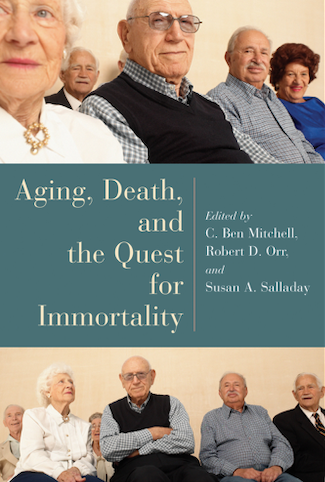
C. Ben Mitchell, co-editor of Aging, Death, and The Quest for Immortality, on law, wisdom, and the possibilities of pastoral guidance on bioethical decisions
Carl Elliott, author of Better Than Well: American Medicine Meets the American Dream, on the medical industry’s move from healing to enhancing self-esteem and identity formation
Richard Weikart, author of From Darwin to Hitler: Evolutionary Ethics, Eugenics, and Racism in Germany, on the rise of “evolutionary ethics,” the embrace toward ethical relativism, and the slide toward eugenics (Archive Feature available)
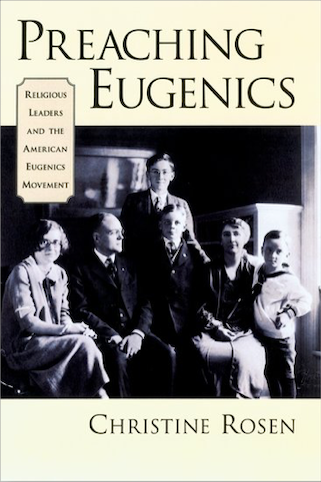
Christine Rosen, author of Preaching Eugenics: Religious Leaders and the American Eugenics Movement, on how and why early twentieth-century American religious leaders encouraged eugenics in the name of moral progress
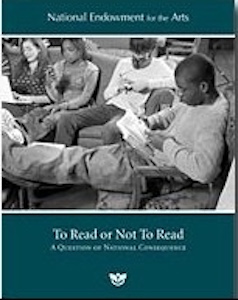
Dana Gioia, on the decline in literary reading in America and on the cultural loss it signifies (Archive Feature available)
C. Ben Mitchell on the benefits of living in multi-generational communities and on why and how the Church should be more welcoming toward the elderly
Related reading and listening
- Buying and selling holidays, identities, and ourselves — We present four interviews on American consumerism, with Leigh Eric Schmidt, David Lyon, Thomas Frank, and Sam Van Eman. (46 minutes)
- Theology and the imagination — Jeffrey Barbeau explains what made C. S. Lewis an effective “translator” of theology for non-theologians. (21 minutes)
- Teen consumers and influencers — FROM VOL. 62 Alissa Quart explains how advertisers exploit the normal developmental characteristics of preteens and teens in order to sell them products. (12 minutes)
- Introducing Volume 165 — Ken Myers introduces listeners to Volume 165 of the Journal with short segments from each interview. (32 minutes)
- Mars Hill Audio Journal, Volume 165 — FEATURED GUESTS: Jeffrey Bilbro, Daniel McInerny, Joseph Minich, Carl Elliott, Nadya Williams, and Don W. King
- Archaic, but still compelling — Carl Elliott on the persistence of honor as a motivation for speaking out
- The amplification of distraction — FROM VOL. 152 Jeffrey Bilbro advocates a Christian posture toward our contemporary digital media ecosystem that addresses its disorienting and disintegrating effects. (23 minutes)
- Art and whateverism — Jed Perl on why great art is triumphantly intolerant
- The moral complicity of movie audiences — Film critic David Thomson explains why Alfred Hitchcock’s film Psycho achieves a kind of unique synergy with American culture, raising unsettling questions about alienation and identity. (33 minutes)
- Seeing Creation Anew: The Life & Poetry of Gerard Manley Hopkins — Dana Gioia examines Gerard Manley Hopkins‘s poetic genius and dedication to Christ in spite of his personal trials and difficult cultural context. (55 minutes)
- “The Emersonian elixir” — FROM VOL. 20 Robert Richardson and Roger Lundin discuss how Ralph Waldo Emerson’s legacy lingers in American culture. (18 minutes)
- The idiom for the revelation of mystery — Dana Gioia on the foundational place of poetry in Christian faith
- Breaking the frozen sea — Dana Gioia on how poetry enchants
- Seneca’s moral courage — Dana Gioia explains how Seneca’s family was interwoven with the Roman governing class, ultimately leading to the philospher’s death at the hands of Emperor Nero. (27 minutes)
- John Donne’s Passion in Life, Faith, & Verse — Poet Dana Gioia discusses the remarkable life of poet John Donne and how his spiritual and intellectual struggles created the conditions for his unique poetic voice. (53 minutes)
- The importance of literary reading — FROM VOL. 70 Dana Gioia discusses the important role literary reading plays in society and the 2004 publication from the NEA about such reading. (13 minutes)
- Longfellow’s appeal — FROM VOL. 53 Poet and critic Dana Gioia explains why Henry Wadsworth Longfellow (1807-1882) is one of the three great American poets. (30 minutes)
- Sacramental correspondence — FROM VOL. 51 Poet Dana Gioia discusses the state of contemporary poetry and the sacramental relationship between language and reality. (15 minutes)
- Mars Hill Audio Journal, Volume 164 — FEATURED GUESTS: Dana Gioia, Brady Stiller, Robert Royal, Richard DeClue, Tiffany Schubert, and Joonas Sildre
- Ideas made incarnate — In this lecture, Karen Swallow Prior examines the power of great literature to shape lives, nourish imaginations, and develop a vision of the good life. (43 minutes)
- Ethical issues in neurobiological interventions — William Hurlbut explores current neurobiological advancements and the ethics and dangers of biotechnology interventions that go beyond therapy. (62 minutes)
- Against hacking babies — Oliver O’Donovan raises questions about IVF and the technologically ordered motive for efficiency
- On the Degeneration of Attentiveness — Critic Nicholas Carr talks about how technology-driven trends affect our cultural and personal lives. (56 minutes)
- Defined by what we buy — FROM VOL. 48 Gary Cross argues that Americans are uniquely susceptible to the temptation to define ourselves by what we buy. (10 minutes)
- Eugenics and the rise of “evolutionary ethics” — FROM VOL. 70 Richard Weikart describes evolutionary ethics and examines the ties between national racism and the eugenics movements of the late nineteenth and early twentieth centuries. (16 minutes)
- On Eugenics in America — Christine Rosen explores early eugenics support in the early 1900s and current “participatory evolution” practices. (50 minutes)
- Humans as biological hardware — In this essay, Brad Littlejohn and Clare Morell decry how modern technology tends to hack the human person in pursuit of profit. (55 minutes)
- A richer, deeper view of human dignity — FROM VOL. 98 Moral philosopher Gilbert Meilaender examines the question of human dignity and its place within political discourse. (25 minutes)
- “Detachment as a whole way of life” — FROM VOL. 85 Professor Christopher Shannon discusses how early twentieth-century social scientists encouraged the American idea that individual identity works against communal membership. (17 minutes)
- “What’s the point of a life like that?” — Given recent legal developments in the UK, Canada, and elsewhere regarding assisted suicide, we present two interviews focused on the “right to die” movement. (27 minutes)
- Privacy and a right to kill — FROM VOL. 60 Russell Hittinger explains the legal history behind the “right to privacy” and how it was used in landmark cases involving abortion and physician-assisted suicide. (33 minutes)
- Cosmetic surgery and human perfectibility — Elizabeth Haiken examines the shift that occurred in 20th century America from a focus on developing character to a focus on developing “personality” and achieving physical perfection. (19 minutes)
- Chameleon karma: the fate of plasticity — Cultural historian Jeffrey L. Meikle on how the ubiquity of plastic affected the moral imagination of 20th-century Americans
- Torrential winds of doctrine — Joseph Cardinal Ratzinger on the “dictatorship of relativism”
- Getting outside of our heads — FROM VOL. 128Philosopher and motorcycle mechanic Matthew Crawford explores what forms the self, arguing that individuality is an earned competence achieved through habits of submission to various tasks, traditions, and authorities. (20 minutes)
- Prudence in politics — FROM VOL. 146
Henry T. Edmondson, III talks about Flannery O’Connor’s understanding of political life, which was influenced by a range of thinkers including Aristotle, Thomas Aquinas, Eric Voegelin, and Russell Kirk. (19 minutes)
- On The Abolition of Man — FROM VOL. 154 Michael Ward explains why The Abolition of Man is one of Lewis’s most important but also most difficult books. (36 minutes)
- Why not hatcheries? — Ethicist Paul Ramsey (1913–1988) challenges “the unchecked employment of powers the biological revolution places in human hands.”
- The logic of “making” babies — Gilbert Meilaender on the temptation to instrumentalize our bodies
- On babies and words — Leon Kass on the re-configuring of human origins
- Medical tools and the shaping of identity — C. Ben Mitchell and Carl Elliott examine how we form judgments about bioethical questions, and how various medical capabilities form us. (27 minutes)
- Gioia, Dana — FROM THE GUEST PAGE: Dana Gioia is the former Poet Laureate of California. An internationally recognized poet and critic, he is the author of six collections of verse.
- Elliott, Carl — FROM THE GUEST PAGE: Carl Elliott trained in medicine before completing a PhD in philosophy. He is currently a professor of philosophy at the University of Minnesota.
- Weikart, Richard — FROM THE GUEST PAGE: Richard Weikart is Professor Emeritus of Modern European History at California State University, Stanislaus.
- Rosen, Christine — FROM THE GUEST PAGE: Christine Rosen is a Senior Fellow at the American Enterprise Institute, where she focuses on American history, society and culture, technology and culture, and feminism.
- Life, liberty, and the defense of dignity — In a 2003 interview, Leon Kass discussed his book Life, Liberty, and the Defense of Dignity: The Challenge for Bioethics. The unifying theme in the book’s essays is the threat of dehumanization in one form or another. (36 minutes)
- Music without emotivism — Julian Johnson discusses how novel, historically speaking, is the idea of complete relativism in musical judgment. (33 minutes)
- A remedy for relativism — Geoffrey Wainwright analyzes Joseph Cardinal Ratzinger’s thought on how the crisis of relativism in the West manifests in society and the arts, showing how Ratzinger grounded his response in a deep theology of worship and liturgy. (78 minutes)
- Promethean medicine? — Stanley Hauerwas on medicine and limits
- On medicine and the meaning of suffering — Guests Susan Bergman and Christopher Shannon discuss the meaning of suffering and how we might suffer well with Christ. (19 minutes)