
PREVIEW
Guests heard on Volume 77
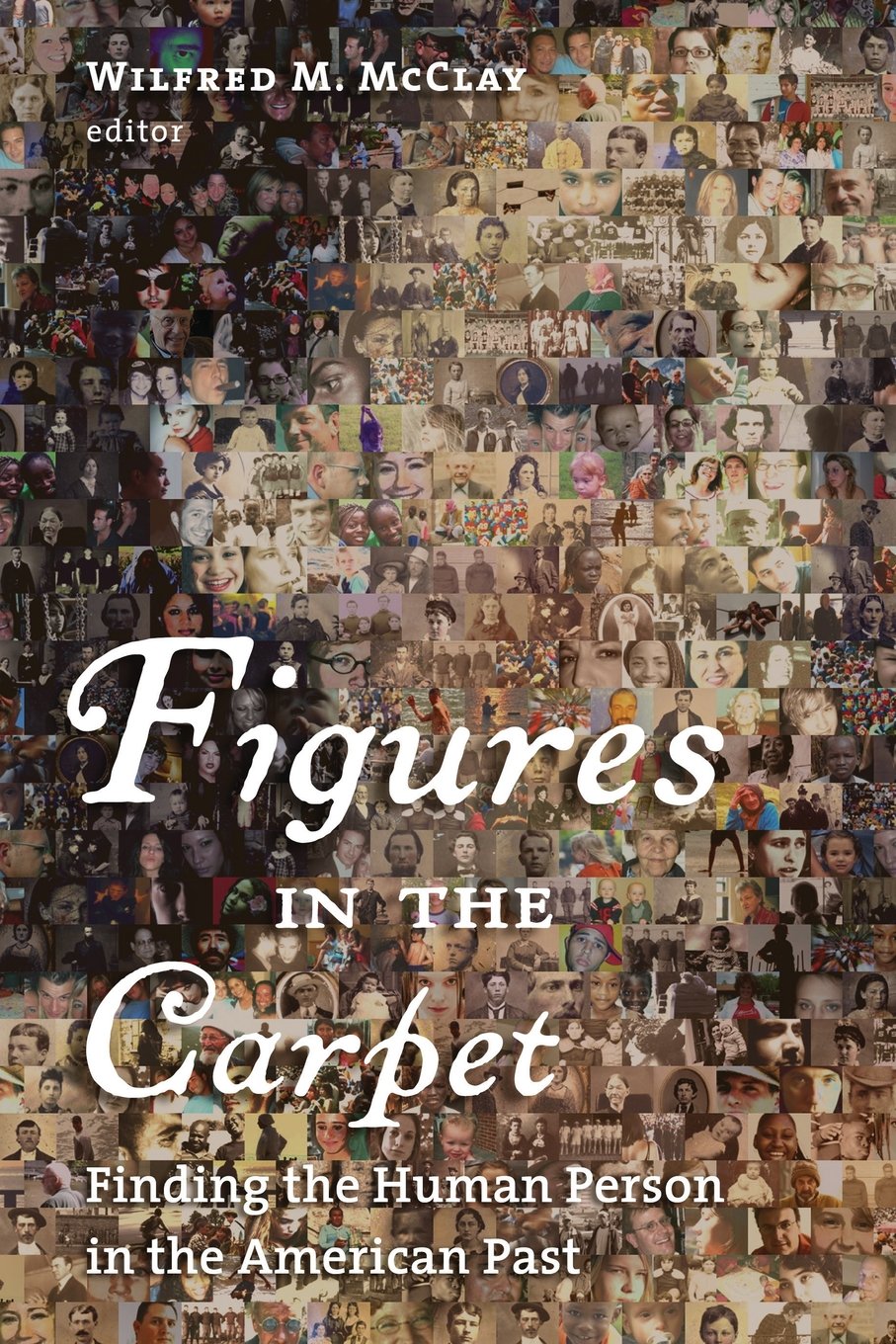
Eric Miller, author of the essay “Pilgrim in an Unknown Land: Christopher Lasch’s Journey,” published in an anthology Wilfred McClay edited, titled Figures in the Carpet: Finding the Human Person in the American Past, on the conserving radicalism and revolutionary traditionalism of Christopher Lasch
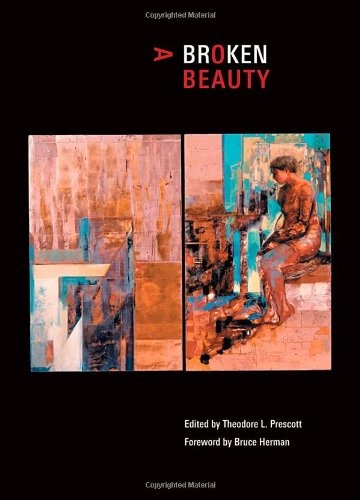
Lisa de Boer, author of the essay “A Comic Vision? Northern Renaissance Art and the Human Figure,” in the collection A Broken Beauty, on the depiction of everyday humanity in northern European post-Renaissance painting
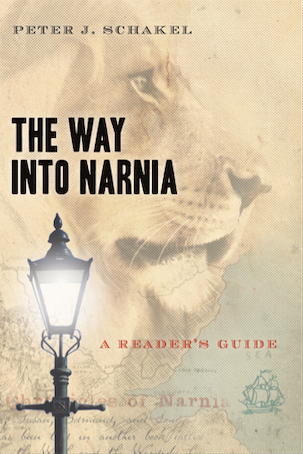
Peter J. Schakel, author of The Way into Narnia: A Reader’s Guide on seeing The Chronicles of Narnia as fairy tales, not just Christian allegory
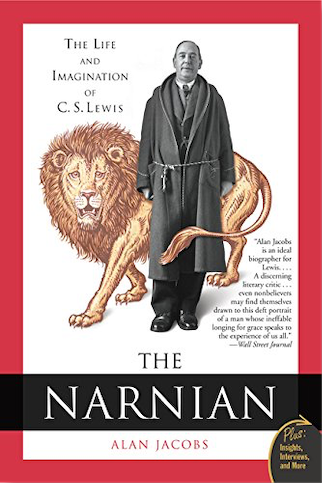
Alan Jacobs, author of The Narnian: The Life and Imagination of C. S. Lewis, on how The Chronicles of Narnia reveal much of C. S. Lewis’s thinking on almost everything, and on how Lewis’s imagination was prepared to write such books (extended interview)
Related reading and listening
- The true places aren’t on any map — Clyde Kilby on C. S. Lewis’s claim that the Gospel is the greatest myth
- Savoring the taste of Reality — C. S. Lewis on the transporting, illuminating capacity of Myth
- When myth becomes fact — In this 1976 interview, Clyde Kilby (1902–1986) discusses C. S. Lewis’s critique of scientism and rationalism, his belief in the primacy of the imagination, and his mythic vision. (37 minutes)
- A great Reality at the core of things — Clyde Kilby on the nature and need for myths
- “A Myth Retold” — Literary critic Thomas Howard explains why he considers C. S. Lewis’s Till We Have Faces to be one of the author’s richest and most rewarding works. (18 minutes)
- A humanist urban vision for Chicago — Philip Bess imagines what metropolitan Chicago might look like in one hundred years if it were designed according to classical humanist principles and with an overt acknowledgement of sacred order. (93 minutes)
- Silence at the end of history — Alan Jacobs examines several literary imaginings of “the last days” and argues that such narration is profoundly inadequate and perhaps even presumptuous. (51 minutes)
- Theology and the imagination — Jeffrey Barbeau explains what made C. S. Lewis an effective “translator” of theology for non-theologians. (21 minutes)
- Mars Hill Audio Journal, Volume 166 — FEATURED GUESTS: William Cavanaugh, Kent Burreson, Beth Hoeltke, Jeffrey Barbeau, Jason Baxter, John Betz, and Bruce Herman
- How literature shaped Lewis —
FROM VOL. 155 Jason Baxter explains how reading medieval literature enabled C. S. Lewis to become a “naturalized citizen of the Middle Ages.” (25 minutes) - How communities remember who they are — Oliver O’Donovan on the necessity of tradition in sustaining communal identity
- How common loves shape communities — Oliver O’Donovan discusses how communities mediate love and knowledge to their members and what challenges arise as a community’s traditions are confronted by sin, error, and plurality. (Lecture 2 of 3; 49 minutes)
- Mystery novels with theological concerns — In these interviews from 1993, mystery author P. D. James speaks about the philosophical and theological issues woven into her novels, and Alan Jacobs discusses James’s novel The Children of Men. (23 minutes)
- The Heav’ns and All the Powers Therein — In this extended interview, Michael Ward makes a compelling case that the qualities attributed to the seven planets in the cosmology of antiquity and the Middle Ages are embodied in C. S. Lewis’s seven books about Narnia. (68 minutes)
- City of God, City of Man — Architect Philip Bess discusses how our modern-day confusion and moral illiteracy are worked out visibly in the cities and buildings our architects create. (57 minutes)
- Thinking Together — Alan Jacobs discusses some principles he’s compiled to help us think well (and charitably) in our cultural context, and he warns us to be attentive to the ways technology displaces previously fixed communities. (53 minutes)
- Mars Hill Audio Journal, Volume 165 — FEATURED GUESTS: Jeffrey Bilbro, Daniel McInerny, Joseph Minich, Carl Elliott, Nadya Williams, and Don W. King
- Clips from five extended interviews — We are pleased to share clips from five interviews that we’ve recently produced as full-length Conversations. (30 minutes)
- Wayfaring, but not strange — Alan Jacobs on being on the way
- Pathways of the Mind: The Joy of the Essay — Alan Jacobs thinks Christians should embrace the potential in the literary form of the essay, because of the way it corresponds to the navigation and journey of a Christian life. (48 minutes)
- A mixed reception —
FROM VOL. 162 Mark Noll discusses early critical reception of C. S. Lewis’s work in America. (29 minutes) - “A man after reality” —
FROM VOL. 30 Clyde Kilby discusses C. S. Lewis‘s critique of scientism and rationalism, and his belief in the primacy of the imagination. (15 minutes) - Two versions of Shadowlands —
FROM VOL. 10 Marjorie Mead examines two film portrayals of C. S. Lewis, noting which best captures Lewis’s jovial personality and the nuances of his faith. (4 minutes) - How the Enlightenment blinded us — Alasdair MacIntyre on the dependence of rationality on a lived tradition
- Manners and morals —
FROM VOL. 19 Film and literary critic Alan Jacobs discusses how modern audiences relate to the manners and morals portrayed in Jane Austen films. (16 minutes) - Cultivating the Virtue of Reverence — Paul Woodruff (1943–2023) discusses the importance of reverence as a virtue that enriches relationships, elevates civic life, and helps leaders to wield power wisely. (53 minutes)
- “The Emersonian elixir” —
FROM VOL. 20 Robert Richardson and Roger Lundin discuss how Ralph Waldo Emerson’s legacy lingers in American culture. (18 minutes) - “Detachment as a whole way of life” —
FROM VOL. 85 Professor Christopher Shannon discusses how early twentieth-century social scientists encouraged the American idea that individual identity works against communal membership. (17 minutes) - “Prophet of holiness” — Timothy Larsen discusses a new edition of George MacDonald‘s Diary of An Old Soul, a slim book of poem-prayers to be read daily as a devotional aid. (30 minutes)
- A regard for the whole person —
FROM VOL. 16 Alan Jacobs discusses the clinical stories of neurologist Oliver Sacks, whose ability to bring out the dignity and personhood of his “characters” (patients) rivals that of many novelists. (11 minutes) - Aslan, the Christ-figure of Narnia — Alex Markos explores the transformational power of Aslan as the Christ figure in C. S. Lewis’s Chronicles of Narnia. (31 minutes)
- Immersion in a different time —
FROM VOL. 17 Literary critic Alan Jacobs considers the author Patrick O’Brian as perhaps the best historical novelist ever. (13 minutes) - Recovering the primacy of contemplation — Augusto Del Noce finds in St. Augustine resources to diagnose the fatal flaw in progressivism
- Mars Hill Audio Journal, Volume 162 — FEATURED GUESTS: Mark Noll, R. Jared Staudt, Paul Weston, William C. Hackett, Hans Boersma, and David Paul Baird
- Early evangelical response to C. S. Lewis — Historian Mark Noll discusses the reasons why American evangelicals were initially slow to warm to Lewis. (15 minutes)
- “A state of divine carelessness” —
FROM VOL. 121 Daniel Gabelman attempts to correct the notion that George MacDonald prizes seriousness and sobriety. (20 minutes) - “Reading Lewis with blinders on” — Chris Armstrong explains how C. S. Lewis’s work is grounded deeply in the Christian humanist tradition. (45 minutes)
- On The Abolition of Man —
FROM VOL. 154 Michael Ward explains why The Abolition of Man is one of Lewis’s most important but also most difficult books. (36 minutes) - Seeking control, in white magic and The Green Book — Alan Jacobs on C. S. Lewis’s critique of the modern pursuit of god-like control
- Education, reason, and the Good — Justin Buckley Dyer and Micah J. Watson on C. S. Lewis’s argument about natural law
- Orienting reason and passions — In an essay titled “The Abolition of Mania” (Modern Age, Spring 2022), Michael Ward applies C. S. Lewis’s insights to the polarization that afflicts modern societies. (16 minutes)
- Life without limits? — Robert Westbook on Christopher Lasch’s critique of the modern rejection of limits
- Infrastructures of addiction — Christopher Lasch on the subversive effects of the expectation of novelty
- The past as presence, not souvenir — Historian Christopher Lasch on the importance of recognizing our dependence on the past
- A prophetic pilgrim — Historian Eric Miller charts Christopher Lasch’s intellectual journey in search of a vision that could direct Americans toward the higher hopes and nobler purposes that might lead to a flourishing common life. (57 minutes)
- “How deep the problems go” —
FROM VOL. 103 Eric Miller discusses the late historian and social critic Christopher Lasch’s intense commitment to understand the logic of American cultural confusion. (20 minutes) - Miller, Eric — FROM THE GUEST PAGE: Eric Miller is Professor of History and the Humanities at Geneva College, in Beaver Falls, PA, where he directs the college’s honors program.
- Rejecting “two-tiered” Thomism —
FROM VOL. 155 David Bentley Hart on how “two-tier Thomism” deviates from historic Christian understanding of the relationship between God and Creation. (42 minutes) - Jacobs, Alan — FROM THE GUEST PAGE: Alan Jacobs is Distinguished Professor of Humanities in the Honors Program at Baylor University and a Senior Fellow of the Institute for Advanced Studies in Culture.
- Bridges with structural flaws —
FROM VOL. 4 What made The Bridges of Madison County so popular, and so flawed? Alan Jacobs offers some insights. (14 minutes)