PREVIEW
The player for this Journal volume is only available to current members or listeners with a legacy account. If you have an active membership, log in here. If you’d like to become a member — with access to all our audio programs — sign up here.
Guests heard on Volume 84
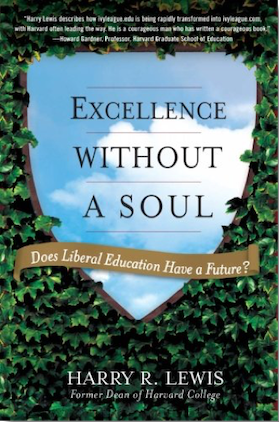
Harry L. Lewis, author of Excellence Without a Soul: How a Great University Forgot Education, on higher education’s amnesia about its purposes, and how that shortchanges students (Archive Feature available)
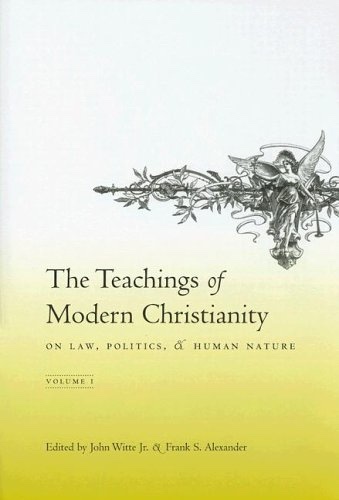
Nicholas Wolterstorff, author of “Abraham Kuyper (1837-1920)” published in the anthology The Teachings of Modern Christianity on Law, Politics, and Human Nature, Vol. 1, on Abraham Kuyper (1837-1927), the French Revolution, worldviews, and “sphere sovereignty”
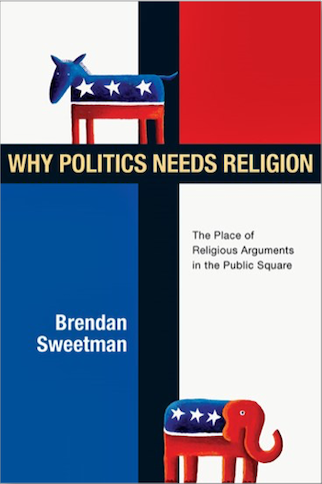
Brendan Sweetman, author of Why Politics Needs Religion: The Place of Religious Arguments in the Public Square, on why religious worldviews should not be excluded from political life
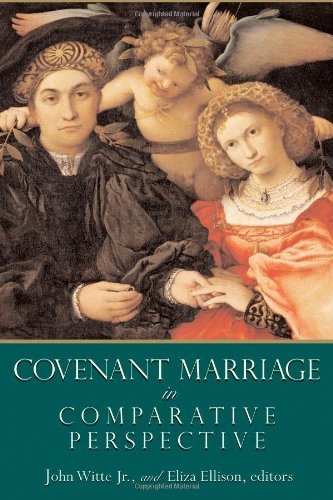
James Turner Johnson, author of “Marriage As Covenant in Early Protestant Thought: Its Development and Implications,” published in the anthology Covenant Marriage in Comparative Perspective, on the development of Christian thought about the meaning of marriage
David Martin, author of On Secularization: Towards a Revised General Theory, on how the 1960s replayed themes of the 1890s and 1930s
Edward Ericson, Jr., editor of The Solzhenitsyn Reader: New and Essential Writings, 1947-2005, on Aleksandr Solzhenitsyn’s beginnings and legacy
Bonus: Harry L. Lewis, author of Excellence Without a Soul: How a Great University Forgot Education, on how colleges and universities can help students grow into adulthood
Related reading and listening
- The Bride of Christ — John Cavadini explores the different views of Origen and Augustine as to the nature and mission of the Church, and he calls for a recovery of the identity of the Church as the Bride of Christ. (38 minutes)
- Reason and the love of truth — FROM VOL. 97 James Peters discusses historical understandings of reason and rationality and how they differ from the modern notion of rationality. (21 minutes)
- Early ambivalence toward anti-Nazi resistance — FROM VOL.107 Biographer Ferdinand Schlingensiepen talks about the memory of Dietrich Bonhoeffer in the post-war period of Germany, and how his popularity changed over the years. (15 minutes)
- “If there is no God, all is permitted” — Gary Saul Morson explores the consequences of belief and disbelief in God through Russian literature. (51 minutes)
- A “cosmological omnibus” — George Grant recounts the fascinating history of Hernando Colón’s attempt in the 16th century to curate a universal library of the world’s knowledge. (41 minutes)
- Silence at the end of history — Alan Jacobs examines several literary imaginings of “the last days” and argues that such narration is profoundly inadequate and perhaps even presumptuous. (51 minutes)
- Politics and idolatry — FROM VOL. 109 Theologian William Cavanaugh explains how the modern state is a unique kind of political entity, inviting a new kind of idolatry. (26 minutes)
- The modern invention of “religion” — FROM VOL. 101 Theologian William Cavanaugh examines the emptiness of the myth of religious violence. (22 minutes)
- The de(con)struction of the humanities (and of truth) — Historian Gertrude Himmelfarb on the skeptical tendencies of the postmodern academy
- Universities as the hosts of reciprocating speech — Robert Jenson on how the Christian understanding of Truth in a personal Word shaped the Western university
- University or “utiliversity”? — In this essay, Reinhard Hütter examines in depth John Henry Newman’s The Idea of a University and argues that its insights and prescriptions are urgently relevant to the current status of higher education. (87 minutes)
- The “scandal” of theology in the university — Edward T. Oakes, S.J. explains why John Henry Newman’s eloquent defense of the nature of university education, The Idea of a University, continues to inspire, challenge, and even frustrate its sympathizers. (24 minutes)
- Setting the liberal arts free — In addressing the state of liberal arts education in the U.S., Gilbert Meilaender raises some core questions and makes some surprising proposals. (28 minutes)
- The establishment of nonbelief — FROM VOL. 10 George Marsden explains how and why American universities became places where religious concerns are excluded. (10 minutes)
- Students as arbiters of knowledge — FROM VOL. 94 Tim Clydesdale discusses the experience of freshmen year at college, suggesting that by that time students have been effectively inoculated against a love of knowledge. (21 minutes)
- Secularization and anarchy — Joseph Cardinal Ratzinger on the necessary connection between law, ethics, and worship
- What are students for? — FROM VOL. 140 Drawing from Wendell Berry’s works, Jack Baker and Jeffrey Bilbro discuss a vision of higher education that respects a multidimensional notion of place. (23 minutes)
- The avant garde of secularization — FROM VOL. 38 Alvin Kernan explains sweeping changes in American university education since the 19th century. (11 minutes)
- Christ-animated learning — FROM VOL. 142 Perry L. Glanzer and Nathan F. Alleman discuss the fragmentation of modern higher education and why we need theology to unify universities. 26 minutes)
- The life of the city in poetry — FROM VOL. 1 Ken Myers talks with W. H. Auden’s biographer and literary executor, Edward Mendelson, about political and social themes in Auden’s poetry. (7 minutes)
- Lex Rex, or Vox Populi Lex, or Rex Lex? — Law professor Li-ann Thio on the theological roots of belief in the rule of law
- The theological significance of current events — FROM VOL. 65 George Marsden discusses how Jonathan Edwards (1703–1758) understood world history and the American experience. (14 minutes)
- Countering American apathy toward history — FROM VOL. 124 Historian John Fea discusses how American and Protestant individualism continues to influence our orientation toward the past. (22 minutes)
- Privacy and a right to kill — FROM VOL. 60 Russell Hittinger explains the legal history behind the “right to privacy” and how it was used in landmark cases involving abortion and physician-assisted suicide. (33 minutes)
- Faith that is more than “chemically pure” — Romano Guardini on sustaining a Christian understanding of all of Creation
- Virgil and purposeful history — In this lecture from June 2019, classical educator Louis Markos examines Book II of The Aeneid to argue that Virgil had an eschatological view of history. (68 minutes)
- Counterpoint as a “spirited discussion” — In this essay, John Ahern explains the beauty and order of counterpoint, the accumulation of multiple melodies that come together in a harmonious whole. (20 minutes)
- The Bully Pulpit: Presidential Rhetoric and True Leadership — Elvin Lim talks about the decline of the content of presidential rhetoric and its consequences to democracy. (49 minutes)
- A metaphysics of realism, relationality, and personalism — John Milbank gives a survey and critique of the efforts of 20th and 21st century theologians to articulate a Trinitarian ontology that reflects reality and counters secularization. (61 minutes)
- Books worthy of a lifetime of encounters — FROM VOL. 69 Daniel Ritchie discusses why great books programs survive mainly in Christian institutions while declining in secular ones. (13 minutes)
- Personhood, limits, and academic vocation — FROM VOL. 39 Marion Montgomery (1934–2002) offers a deep critique of the relationship of the academy to its community in an effort to diagnose how higher education has lost its way. (13 minutes)
- What higher education forgot — FROM VOL. 84 Harry L. Lewis discusses higher education’s amnesia about its purposes, and how that shortchanges students. (19 minutes)
- A Christian philosophy of integrated education — FROM VOL. 61 Michael L. Peterson discusses how Christianity could inform society’s understandings of education and human nature. (8 minutes)
- Education for human flourishing — Co-authors Paul Spears and Steven Loomis argue that Christians should foster education that does justice to humans in our fullness of being. (23 minutes)
- The social irrelevance of secular higher education — FROM VOL. 85 Professor C. John Sommerville describes the increasingly marginal influence of universities in our society, and why they seem to be of no substantive relevance to people outside the school. (13 minutes)
- The history of Christianity and higher education — FROM VOL. 50 In tracing Christianity’s relationship to the academy, Arthur F. Holmes points to Augustine as one of the first to embrace higher learning, believing God’s ordered creation to be open to study by the rational mind of man. (9 minutes)
- Prudence in politics — FROM VOL. 146
Henry T. Edmondson, III talks about Flannery O’Connor’s understanding of political life, which was influenced by a range of thinkers including Aristotle, Thomas Aquinas, Eric Voegelin, and Russell Kirk. (19 minutes)
- Only a dying civilization neglects its dead — Historian Dermot Quinn discusses the work of fellow historian Christopher Dawson (1889–1970). (15 minutes)
- Christopher Dawson: Chronicler of Christendom’s Rise and Fall — Dermot Quinn discusses historian Christopher Dawson’s meta-historical perspective and his wisdom about what makes cultures healthy or unhealthy. (54 minutes)
- Insisting that political leaders are incapable of obeying Christ — Oliver O’Donovan on the unintended consequences of the First Amendment to the U.S. Constitution.
- An unwitting agent for the secularization of America — Mark Noll, Nathan Hatch, and George Marsden explain how a prominent Christian Founding Father added momentum to the secularization of America
- From democracy to bureaucracy — Historian John Lukacs on the challenges of living at the End of an Age
- Ideas and historical consequences — Historian John Lukacs (1924–2019) discusses the relationship between institutions and character, popular sentiment versus public opinion, the distinction between patriotism and nationalism, and the very nature of studying history. (36 minutes)
- The historian’s communal role as storyteller — FROM VOL. 127 Historian Christopher Shannon discusses how American academic historical writing presents a grand narrative of progressivism, which it defends by subscribing to an orthodoxy of objective Reason. (21 minutes)
- Three historians on history — FROM VOL. 31
This Archive Feature presents interviews with three historians who discuss changes in historical studies. (33 minutes)
- When is civil disobedience necessary? — Douglas Farrow examines the relation between “the kings of the earth” and the law of Christ, particularly when governmental law is exercised without reference to natural or divine law. (49 minutes)
- The gift of objective reality — Moral philosopher Oliver O’Donovan makes an argument for the consistency of the idea of law when it is conceived in a theological context. (40 minutes)
- The past as presence, not souvenir — Historian Christopher Lasch on the importance of recognizing our dependence on the past
- “How deep the problems go” — FROM VOL. 103Eric Miller discusses the late historian and social critic Christopher Lasch’s intense commitment to understand the logic of American cultural confusion. (20 minutes)
- The dance of law and freedom — Calvin Stapert on the experience of joyous order in Bach’s music