
PREVIEW
Guests heard on Volume 93
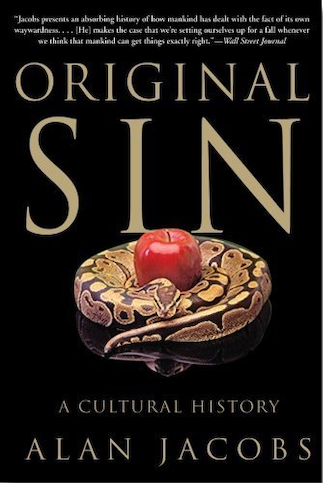
Alan Jacobs, author of Original Sin: A Cultural History, on practical consequences of belief in original sin (and the five distinct components of that belief)
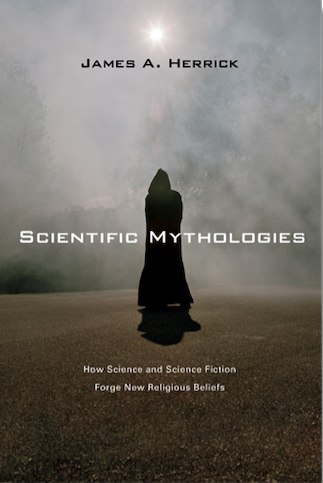
James A. Herrick, author of Scientific Mythologies: How Science and Science Fiction Forge New Religious Beliefs, on redemptive myths advanced by science fiction and speculative science and on evolution as a religion
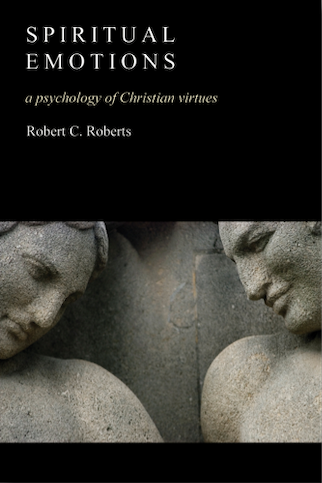
Robert C. Roberts, author of Spiritual Emotions: A Psychology of Christian Virtues, on the role of emotions in ethical and spiritual life
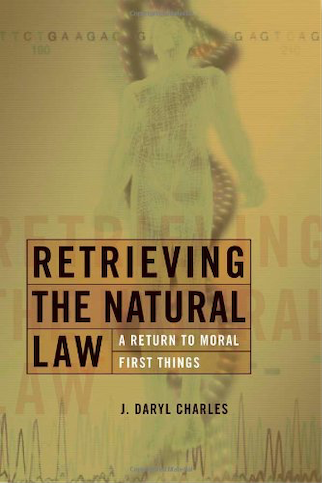
J. Daryl Charles, author of Retrieving the Natural Law: A Return to Moral First Things, on the commitment by the magisterial Reformers to the idea of natural law
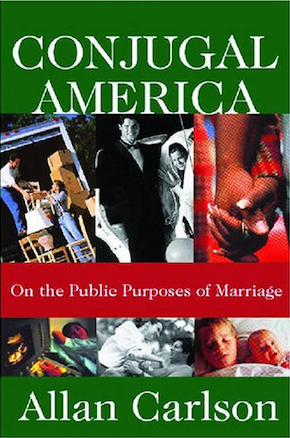
Allan C. Carlson, author of Conjugal America, on how the industrial revolution changed the shape of households (including their floor plans) and the understanding of marriage

Sheila O’Connor-Ambrose, author of Marriage: The Dream that Refuses to Die, on the work of Elizabeth Fox-Genovese in defending marriage against the various claims of individualism
Related reading and listening
- The true places aren’t on any map — Clyde Kilby on C. S. Lewis’s claim that the Gospel is the greatest myth
- Knowing and living our metaphysical totality — Clyde Kilby on the power of myth to bring together “the slender hints of the knowable”
- Savoring the taste of Reality — C. S. Lewis on the transporting, illuminating capacity of Myth
- When myth becomes fact — In this 1976 interview, Clyde Kilby (1902–1986) discusses C. S. Lewis’s critique of scientism and rationalism, his belief in the primacy of the imagination, and his mythic vision. (37 minutes)
- A great Reality at the core of things — Clyde Kilby on the nature and need for myths
- “A Myth Retold” — Literary critic Thomas Howard explains why he considers C. S. Lewis’s Till We Have Faces to be one of the author’s richest and most rewarding works. (18 minutes)
- Paradoxes of “nature” and “culture” — Robert Spaemann, on the destructive consequences of a merely naturalistic understanding of nature
- How to make war on nothingness? — David Bentley Hart argues that if it rejects Christ, the only remaining option for a post-Christian culture is conscious or “narcotic” nihilism, which takes the form of absolute, meaningless volition. (66 minutes)
- A sampling of newly published lectures — Ken Myers introduces listeners to four recently released lectures, courtesy of our Partners. The lecturers are Jennifer Frey, Gary Saul Morson, N. T. Wright, and Andrew Kern. (27 minutes)
- The just war tradition and whole-life discipleship — Daniel M. Bell, Jr. discusses the just war tradition, a tradition which is often invoked by figures who, upon closer inspection, tend to lack a robust understanding of its history and criteria. (57 minutes)
- Grace and Christian realism — Jennifer Frey explores Thomist elements in Flannery O’Connor’s theology and writing, with a particular emphasis on a Thomist understanding of art. (39 minutes)
- Silence at the end of history — Alan Jacobs examines several literary imaginings of “the last days” and argues that such narration is profoundly inadequate and perhaps even presumptuous. (51 minutes)
- The primacy of the Body of Christ —
FROM VOL. 134 Philip Turner reflects on how Christian ethics is misplaced if it has as its central concern individual moral behavior or social justice. (28 minutes) - Mystery novels with theological concerns — In these interviews from 1993, mystery author P. D. James speaks about the philosophical and theological issues woven into her novels, and Alan Jacobs discusses James’s novel The Children of Men. (23 minutes)
- Modern fictional “heroes” —
FROM VOL. 141 Susanna Lee discusses moral authority in the heroes of hard-boiled crime fiction. (24 minutes) - Technophiliac obsessions —
FROM VOL. 141 Literary and media scholar Grant Wythoff talks about the “father of science fiction,” Hugo Gernsback. (26 minutes) - The Heav’ns and All the Powers Therein — In this extended interview, Michael Ward makes a compelling case that the qualities attributed to the seven planets in the cosmology of antiquity and the Middle Ages are embodied in C. S. Lewis’s seven books about Narnia. (68 minutes)
- Ontology and reality in fiction — Katy Carl discusses Catholic novelist Graham Greene’s skill in portraying the struggle between spiritual belief and doubt. (27 minutes)
- Sacred and Profane Love: Graham Greene and the Catholic Imagination — Katy Carl discusses novelist Graham Greene’s fiction and spiritual struggles in light of the concept of the Catholic imagination. (49 minutes)
- Money, status, and satisfaction —
FROM VOL. 44 David Myers and Robert Frank discuss the tenuous relationship between wealth and happiness. (22 minutes) - Thinking Together — Alan Jacobs discusses some principles he’s compiled to help us think well (and charitably) in our cultural context, and he warns us to be attentive to the ways technology displaces previously fixed communities. (53 minutes)
- The reciprocity of all things —
FROM VOL. 148 Jeffrey Bilbro explores the importance of sustainability through the essays, poetry and fiction of Wendell Berry. (13 minutes) - Clips from five extended interviews — We are pleased to share clips from five interviews that we’ve recently produced as full-length Conversations. (30 minutes)
- Wayfaring, but not strange — Alan Jacobs on being on the way
- Pathways of the Mind: The Joy of the Essay — Alan Jacobs thinks Christians should embrace the potential in the literary form of the essay, because of the way it corresponds to the navigation and journey of a Christian life. (48 minutes)
- Shared Practices, Strong Communities — Christine Pohl reflects on why a deliberate commitment to certain shared practices is necessary for the sustaining of community. (57 minutes)
- Georges Bernanos & the Mystery of the Human Person — Translator J. C. Whitehouse praises French novelist Georges Bernanos’s profundity in exploring the depths of the human soul through the vehicle of fiction. (58 minutes)
- A Christian understanding of human nature —
FROM VOL. 35 Robert C. Roberts and Mark R. Talbot discuss the need for Christian psychologists to draw from Christianity’s deep tradition of understanding human nature. (15 minutes) - Passing on the virtues to the next generation — Theologian and ethicist Stanley Hauerwas reflects on being a godparent and the responsibility to cultivate and talk about Christian virtue. (21 minutes)
- A life well lived — In this essay, Stanley Hauerwas explains the breadth and depth of Alasdair MacIntyre’s thought, the goal of which was to help people to act intelligibly and live morally worthy lives. (40 minutes)
- It takes a character (and a village) — Herbert McCabe, O.P. on the Aristotelian, Thomistic, and MacIntyrean account of the moral life
- Manners and morals —
FROM VOL. 19 Film and literary critic Alan Jacobs discusses how modern audiences relate to the manners and morals portrayed in Jane Austen films. (16 minutes) - Antagonism or fruitfulness? —
FROM VOL. 108 Jean Porter describes how natural law justifies legal and moral authority within the life of the human person. (17 minutes) - Natural law as “performance” —
FROM VOL. 124 R. J. Snell discusses how novel ideas about natural law focus less on moral propositions and concepts and more on the thrust for meaning and value. (27 minutes) - The collapse of public life —
FROM VOL. 154 D. C. Schindler explains how liberalism sought to make way for individuals to function together without any orientation to an explicit common good. (37 minutes) - Flannery at 100 — In honor of Flannery O’Connor’s 100th birthday, we have gathered here an aural feast of interviews with O’Connor scholars and aficionados discussing her life, work, and faith. (3 hours, 28 minutes)
- Excluding cranks and dabblers — Drusilla Scott on Michael Polanyi’s insistence that the “community of science” required authority
- How discovery happens — Esther Lightcap Meek on Michael Polanyi’s account of scientific discovery
- Making contact with reality —
FROM VOL. 139 Esther Lightcap Meek discusses the realism of philosopher and chemist Michael Polanyi. (23 minutes) - Knowing the world through the body —
FROM VOL. 76 Professor Martin X. Moleski explains why Michael Polanyi (1891-1976) left his career in science to become a philosopher. (16 minutes) - Lex Rex, or Vox Populi Lex, or Rex Lex? — Law professor Li-ann Thio on the theological roots of belief in the rule of law
- “The system will be first” —
FROM VOL. 27 Robert Kanigel describes the transformation of work due to Frederick Winslow Taylor’s concept of scientific management. (11 minutes) - Souls in cyberspace —
FROM VOL. 25 Douglas Groothuis examines the worldview and mythology behind the creation and marketing of the Internet. (13 minutes) - Metaphysical impulses beneath techno-utopianism —
FROM VOL. 38 Erik Davis describes his research on how humans’ fascination with technology is permeated with “mythic energy” and gnostic aspirations. (11 minutes) - Countering American apathy toward history —
FROM VOL. 124 Historian John Fea discusses how American and Protestant individualism continues to influence our orientation toward the past. (22 minutes) - “Detachment as a whole way of life” —
FROM VOL. 85 Professor Christopher Shannon discusses how early twentieth-century social scientists encouraged the American idea that individual identity works against communal membership. (17 minutes) - The fraught marriage of liberty and equality — In this essay, Patrick Deneen examines Alexis de Tocqueville’s complex and insightful portrait of “democratic man” living in the context of perpetual societal tension between the excesses of liberty and equality. (39 minutes)
- Privacy and a right to kill —
FROM VOL. 60 Russell Hittinger explains the legal history behind the “right to privacy” and how it was used in landmark cases involving abortion and physician-assisted suicide. (33 minutes) - Nature’s intelligibility — In this lecture, Christopher Blum argues that scientists need to regain a full appreciation of nature’s intelligibility, as they are apt to lose sight of reality due to the reductionism produced by their theories. (31 minutes)
- A regard for the whole person —
FROM VOL. 16 Alan Jacobs discusses the clinical stories of neurologist Oliver Sacks, whose ability to bring out the dignity and personhood of his “characters” (patients) rivals that of many novelists. (11 minutes)