
The contested idea of beauty in art
A sampling of newly published lectures
Ken Myers introduces listeners to four recently released lectures, courtesy of our Partners. The lecturers are Jennifer Frey, Gary Saul Morson, N. T. Wright, and Andrew Kern. (27 minutes)
Mars Hill Audio Journal, Volume 166
FEATURED GUESTS: William Cavanaugh, Kent Burreson, Beth Hoeltke, Jeffrey Barbeau, Jason Baxter, John Betz, and Bruce Herman

Art that witnesses, consoles, and strengthens
Artist Margaret Adams Parker explores the human need to lament and reveals how various “arts of lament” console, strengthen, bear witness to those who engage with them. (51 minutes)
Films that lead to contemplation
Mars Hill Audio Journal, Volume 165
FEATURED GUESTS: Jeffrey Bilbro, Daniel McInerny, Joseph Minich, Carl Elliott, Nadya Williams, and Don W. King
“The greatest works of art are endless”
Daniel McInerny argues that more robust reflection about how we attend to art enables us to discover deeper meaning in it and to experience greater sensory and intellectual joy. (16 minutes)
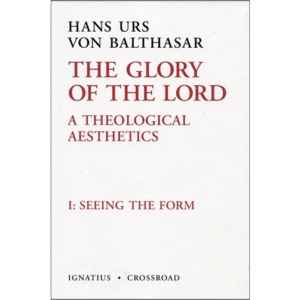
From enthusiasm to discernment
Hans Urs von Balthasar on how the assumption that taste is entirely subjective is a function of immaturity
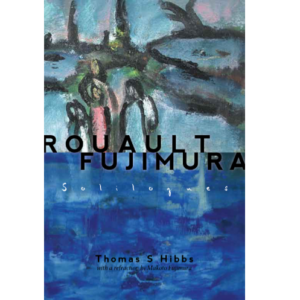
Abstraction, immanence, & the cultural landscape
Artist, philosopher, and art historian discuss the tension between self-expression, transcendence, and the material world.
Only religion can save the arts
Camille Paglia: “For the fine arts to revive, they must recover their spiritual center.”
Beauty, Spirit, & Embodiment: A Christian View of Art
Adrienne Chaplin explains why a Christian approach to art must involve various levels of inquiry and not be limited to discussions of worldview or meaning alone. (46 minutes)
The troubled marriage of art and democracy
Historian David Smith explains the idealistic (and naïve) political motivations behind the establishing of the National Endowment for the Arts, founded in 1965. (52 minutes)
From culture war to culture care
In this 2016 lecture, artist Makoto Fujimura asks what would it look like for Christians to be stewards of beauty and human flourishing in all areas of life and culture. (48 minutes)

The powerful presence of the body
The Body Worlds exhibit and Western art
Human nature through the eyes of Lucian Freud
Depicting the human form
The abolition of the fine arts
In this lecture, R. V. Young examines why people are increasingly unable to discriminate between base and fine art, arguing why this issue is of particular concern to Christians. (41 minutes)
Developing a Christian aesthetic
In the inaugural lecture for the Eliot Society, titled “Faithful Imaginations in a Meaningful Creation,” Ken Myers addresses the question of the relationship between the arts and the Church. (59 minutes)
