The true places aren’t on any map
Clyde Kilby on C. S. Lewis’s claim that the Gospel is the greatest myth
When myth becomes fact
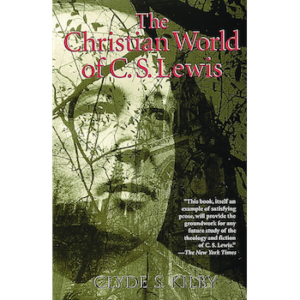
In this 1976 interview, Clyde Kilby (1902–1986) discusses C. S. Lewis’s critique of scientism and rationalism, his belief in the primacy of the imagination, and his mythic vision. (37 minutes)
“A Myth Retold”
Literary critic Thomas Howard explains why he considers C. S. Lewis’s Till We Have Faces to be one of the author’s richest and most rewarding works. (18 minutes)
Theology and the imagination
Jeffrey Barbeau explains what made C. S. Lewis an effective “translator” of theology for non-theologians. (21 minutes)
Mars Hill Audio Journal, Volume 166
FEATURED GUESTS: William Cavanaugh, Kent Burreson, Beth Hoeltke, Jeffrey Barbeau, Jason Baxter, John Betz, and Bruce Herman
How literature shaped Lewis
The Heav’ns and All the Powers Therein
In this extended interview, Michael Ward makes a compelling case that the qualities attributed to the seven planets in the cosmology of antiquity and the Middle Ages are embodied in C. S. Lewis’s seven books about Narnia. (68 minutes)
Mars Hill Audio Journal, Volume 165
FEATURED GUESTS: Jeffrey Bilbro, Daniel McInerny, Joseph Minich, Carl Elliott, Nadya Williams, and Don W. King
A mixed reception
“A man after reality”
Two versions of Shadowlands
“Prophet of holiness”
Timothy Larsen discusses a new edition of George MacDonald's Diary of An Old Soul, a slim book of poem-prayers to be read daily as a devotional aid. (30 minutes)
Aslan, the Christ-figure of Narnia
Alex Markos explores the transformational power of Aslan as the Christ figure in C. S. Lewis’s Chronicles of Narnia. (31 minutes)
Mars Hill Audio Journal, Volume 162
FEATURED GUESTS: Mark Noll, R. Jared Staudt, Paul Weston, William C. Hackett, Hans Boersma, and David Paul Baird
Early evangelical response to C. S. Lewis
Historian Mark Noll discusses the reasons why American evangelicals were initially slow to warm to Lewis. (15 minutes)
“A state of divine carelessness”
“Reading Lewis with blinders on”
Chris Armstrong explains how C. S. Lewis’s work is grounded deeply in the Christian humanist tradition. (45 minutes)