
The roots of J. S. Bach’s fruitfulness
Music historian Markus Rathey explains why and how J. S. Bach composed his choral works as he did. (54 minutes)
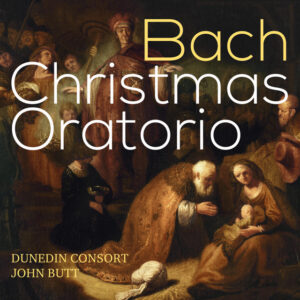
Celebrating Christmas with Bach (through Epiphany)
Ken Myers offers a detailed introduction to J. S. Bach’s Christmas Oratorio, a work composed to be sung on six occasions from Dec. 25th to Jan. 6th

Rose without thorns
Ken Myers introduces various settings of “Ther is no rose of swych vertu,” a medieval carol that uses imagery of a rosebush to describe the Virgin Mary. (29 minutes)
Anticipation and festivity
Tova Leigh-Choate on the earliest forms of musical celebration during Advent and Christmas
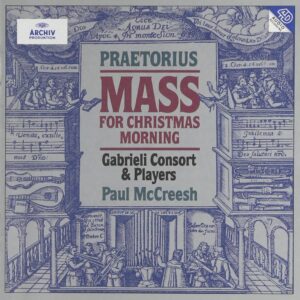

Gifts for a baby King
Ken Myers introduces listeners to various musical compositions created for Epiphany (January 6), the Church’s feast day celebrating the revelation of Christ to the world. (25 minutes)
“The angels sang, and the shepherds too”
Ken Myers introduces listeners to the Christmas musical compositions of French composer Marc-Antoine Charpentier (c.1645–1704). (19 minutes)
In dulci jubilo
Ken Myers introduces some of the music for the season composed by Michael Praetorius (1571–1621), best known for his settings of Es ist ein Ros entsprungen (“Lo how a rose e’er blooming”) and In dulci jubilo. (18 minutes)
The mysteries and glory of Christmas and its music
Ken Myers presents examples of music from five centuries that capture some sense of the astonishing fact of the Nativity of our Lord. (15 minutes)
The mysteries and glory of Christmas and its music
Ken Myers presents examples of music from five centuries that captures some sense of the astonishing fact of the Nativity of our Lord. (26 minutes)
Mars Hill Audio Journal, Volume 41
FEATURED GUESTS: Harry Blamires, David Healy, Paul Gutjahr, Christine Pohl, Francis Fukuyama, Paul Corby Finney, and J. A. C. Redford