
Reason and the love of truth

The primacy of the Body of Christ
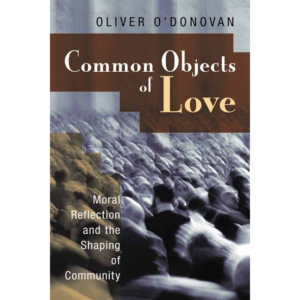
How communities remember who they are
Oliver O’Donovan on the necessity of tradition in sustaining communal identity

How common loves shape communities
Oliver O'Donovan discusses how communities mediate love and knowledge to their members and what challenges arise as a community’s traditions are confronted by sin, error, and plurality. (Lecture 2 of 3; 49 minutes)

Money, status, and satisfaction
Landscape and living memory

Thinking Together
Alan Jacobs discusses some principles he’s compiled to help us think well (and charitably) in our cultural context, and he warns us to be attentive to the ways technology displaces previously fixed communities. (53 minutes)

Mars Hill Audio Journal, Volume 165
FEATURED GUESTS: Jeffrey Bilbro, Daniel McInerny, Joseph Minich, Carl Elliott, Nadya Williams, and Don W. King

What are students for?

Real Food, Real Communities
Corby Kummer extols the virtues of the Slow Food movement, which seeks to honor, protect, and sustain traditional foods and ingredients from specific cultures and regions. (48 minutes)

Clips from five extended interviews
We are pleased to share clips from five interviews that we’ve recently produced as full-length Conversations. (30 minutes)
Shared Practices, Strong Communities
Christine Pohl reflects on why a deliberate commitment to certain shared practices is necessary for the sustaining of community. (57 minutes)

“The search for shared ends”
Oliver O’Donovan examines whether and to what extent there might be the possibility of a unifying Christian perspective on political doctrine or policy. (59 minutes)

Antagonism or fruitfulness?

The collapse of public life

The personal element in all knowing
Mark Mitchell connects key aspects of Michael Polanyi’s conception of knowledge with Matthew Crawford’s insistence that real knowing involves more than technique. (34 minutes)

Impact of “infotainment” on community
Neil Gabler and C. John Sommerville discuss how the mentalities conveyed by our experience with communications media work against the nurturing of community. (36 minutes)
The digital revolution and community

Education that counters alienation
In this lecture, Jeanne Schindler explores how digital technologies warp not only education but our experience of being human. (30 minutes)