
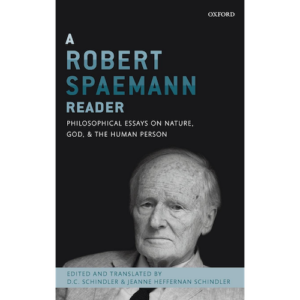
Paradoxes of “nature” and “culture”
Robert Spaemann, on the destructive consequences of a merely naturalistic understanding of nature
Christian culture and the myth of the secular
Ken Myers draws on T. S. Eliot to argue that Western civilization has broken down, not into a multiplicity of cultures, but into a “post-culture.” (47 minutes)
How to make war on nothingness?
David Bentley Hart argues that if it rejects Christ, the only remaining option for a post-Christian culture is conscious or “narcotic” nihilism, which takes the form of absolute, meaningless volition. (66 minutes)
A letter from Ken Myers
Ken Myers examines the cultural implications of the Incarnation and the deep-seated dualism of modernity that divorces spirituality from our material experience. (22 minutes)
“Emerging adulthood”

Media as agencies of order
Media theorist John Durham Peters wants us to reexamine the purposes of media and how fundamental media are. (59 minutes)
Postmodern culture and the gospel

Antagonism or fruitfulness?
“The Emersonian elixir”
The importance of literary reading

From culture war to culture care
In this 2016 lecture, artist Makoto Fujimura asks what would it look like for Christians to be stewards of beauty and human flourishing in all areas of life and culture. (48 minutes)

Etiquette and ethics
In this essay, Judith Martin (a.k.a. Miss Manners) argues that etiquette is “civilization’s first necessity” and an indispensable societal virtue. (21 minutes)
“Detachment as a whole way of life”
Courtesy as a theological issue

Is American culture now story-less?
From our archives, Michael Kammen compares popular and mass culture, and Philip Fisher analyzes the idea that new cultural forms inevitably dissolve old ones. (26 minutes)
A fearful darkness in mind, heart, and spirit
Roberta Bayer draws on the work of George Parkin Grant (1918–1988) to argue that our “culture of death” must be countered with an understanding of reality based in love, redemptive suffering, and a recognition of limitations to individual control. (33 minutes)
Only a dying civilization neglects its dead
Historian Dermot Quinn discusses the work of fellow historian Christopher Dawson (1889–1970). (15 minutes)
Christopher Dawson: Chronicler of Christendom’s Rise and Fall
Dermot Quinn discusses historian Christopher Dawson’s meta-historical perspective and his wisdom about what makes cultures healthy or unhealthy. (54 minutes)
“How deep the problems go”
On moral authority and medicine
Continuing our time travel back to 1992, we hear two more interviews from the pilot tape for the Mars Hill Tapes, with sociologist James Davison Hunter and bioethicist Nigel Cameron. (28 minutes)
