
To be at home in the world
D. C. Schindler examines how rituals enable us to experience time in a meaningful way — how they actually make time habitable for us. (41 minutes)

Man as “both mystic and hobbit”
D. C. Schindler explores how building is a quintessential human activity and an expression of our view of the meaning of reality. (47 minutes)
The hatred of logos
D. C. Schindler draws on Plato to argue that in its very form, social media evidences a general contempt for logos — reason and language — which defines man. (26 minutes)
Politics and the good
The collapse of public life
Truth, goodness, and beauty (and why they matter)
The interiority of reality
The dramatic ecstasy of reason
Speaking the word in love
In this lecture, D. C. Schindler examines core insights from Ferdinand Ulrich on the central vocation of man and the meaning of being. (32 minutes)
The profound drama of human sexuality
In this lecture, D. C. Schindler explains the cosmological significance of human sexuality and why it is paradigmatic of the relationship between nature and freedom. (32 minutes)
Personhood and the gift of the self
In this lecture, D. C. Schindler examines the concept of self-gift which was central to Karol Wojtyła’s thought. (39 minutes)
Governments officially committed to ignorance
In this lecture, D. C. Schindler explains why authority, properly understood, is essential to genuinely human life. (39 minutes)
Knowing by heart
D. C. Schindler reflects on Plato’s idea of “conversion” in education, assuming the symbol of the heart as the center of man. (39 minutes)
The gift of meaningful work
In this lecture, D. C. Schindler argues that genuine work is inherently meaningful and facilitates an encounter with reality and therefore, ultimately, with God. (36 minutes)
Is liberalism compatible with religious freedom?
D. C. Schindler relies on two Thomistic axioms to illustrate why liberalism — which claims to offer a minimalist conception of the common good — is ultimately incompatible with a Catholic understanding of religious freedom. (34 minutes)
Political community and the good
D. C. Schindler on why political life is inevitably “a particular interpretation of the highest human good”
In the image of our devices?
In light of the history of the meaning of intellectus, D. C. Schindler questions the use of the word “intelligence” to describe systems employing large language models. (18 minutes)
Mars Hill Audio Journal, Volume 160
FEATURED GUESTS:
Jessica Hooten Wilson, Kyle Hughes, Gil Bailie, D. C. Schindler, Paul Tyson, and Holly Ordway
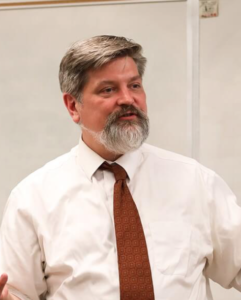
Schindler, D. C.
FROM THE GUEST PAGE:
Dr. Schindler’s work sheds light on contemporary cultural challenges by drawing on the resources of the classical Christian tradition.
