
Disengagement from the world
Nicholas Carr encourages us to consider how automation technologies impact our ability to engage with the world and whether — like a good tool — they present a more inviting world or close us off from that world. (30 minutes)
Modernity’s crisis of place
Craig Bartholomew reflects on the importance of place to our humanity. (58 minutes)

How music blesses and teaches
Landscape and living memory

Passing on the virtues to the next generation
Theologian and ethicist Stanley Hauerwas reflects on being a godparent and the responsibility to cultivate and talk about Christian virtue. (21 minutes)

How social media truncates relationships
In this lecture, Felicia Wu Song explains how social media industrializes and monetizes our relationships, forming us in modes of relationships and identity that are detrimental to ourselves and to society. (41 minutes)
Knowing the world through the body
The collaboration of bodies and minds
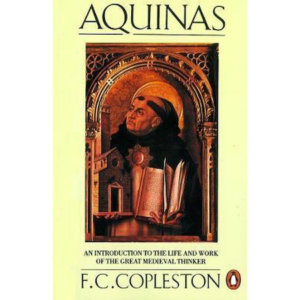
F. C. Copleston on Aquinas’s confidence in the embodied nature of knowledge

An embedded life
Following a move from one state to another, Gilbert Meilaender explores the tension between being simultaneously a sojourner and a body located in place and time. (30 minutes)
Voluntarily silencing ourselves
Souls in cyberspace

Life in a frictionless, synthetic world
Music, silence, and the order of Creation
In this lecture, Ken Myers explains how it is that our participation in harmonic beauty in music is a kind of participation in the life of God, in Whom all order and beauty coheres and is sustained. (61 minutes)

Cosmetic surgery and human perfectibility
Elizabeth Haiken examines the shift that occurred in 20th century America from a focus on developing character to a focus on developing “personality” and achieving physical perfection. (19 minutes)

Beauty, the body, and the “true self”
Where mortals dwell
“Broken Bodies Redeemed”
Today’s Feature presents a reading of a 2007 article by Gilbert Meilaender that explores the significance for bioethics of the mystery of human being as body and soul. (39 minutes)
Thinking Christianly about the body
Theologian and ethicist Gilbert Meilaender discusses some of the themes he explores in two of his books: Body, Soul and Bioethics; and Bioethics: A Primer for Christians. (19 minutes)
What is at stake for us in a self-driving future?
Matthew Crawford vividly details the “personal knowledge” acquired in interaction with physical things, their mecho-systems, and the people who care for them. (16 minutes)
