
Christian culture and the myth of the secular
Ken Myers draws on T. S. Eliot to argue that Western civilization has broken down, not into a multiplicity of cultures, but into a “post-culture.” (47 minutes)
“Only a real world can save us”
Oliver O’Donovan explores how the “religion” of modernity lacks a coherent world in which one may participate with full human agency and moral purpose. (Lecture 3 of 3; 61 minutes)
Knowing and doing the good
Oliver O’Donovan raises several key questions and complications involved in the task of taking concrete and practical action toward a recognized moral good. (Lecture 3 of 3; 63 minutes)
Moral knowledge of reality
Oliver O'Donovan argues that admiration is the fundamental form of knowing the world, as we cannot know fully those elements of reality (“bare facts”) that contain no significance for us. (Lecture 2 of 3; 55 minutes)
A life well lived
In this essay, Stanley Hauerwas explains the breadth and depth of Alasdair MacIntyre’s thought, the goal of which was to help people to act intelligibly and live morally worthy lives. (40 minutes)
Politics and the good
Truth, goodness, and beauty (and why they matter)

Ideas made incarnate
In this lecture, Karen Swallow Prior examines the power of great literature to shape lives, nourish imaginations, and develop a vision of the good life. (43 minutes)
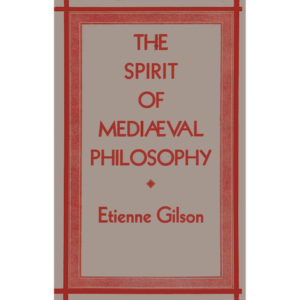
The confident optimism in true Christian asceticism
Philosopher Étienne Gilson on the essential goodness of Creation
The gift of meaningful work
In this lecture, D. C. Schindler argues that genuine work is inherently meaningful and facilitates an encounter with reality and therefore, ultimately, with God. (36 minutes)
The relationship between prudence and reality
In this lecture, Ken Myers explains how the virtue of prudence is fundamentally connected with a deep and anchored understanding of reality. (54 minutes)
Festivity and the goodness of Creation
Drawing on Josef Pieper’s ideas, Ken Myers explains why the spirit of festivity is the spirit of worship, and that “entertainment” is ultimately an artificial, contrived, and empty effort to achieve festivity. (25 minutes)
A fearful darkness in mind, heart, and spirit
Roberta Bayer draws on the work of George Parkin Grant (1918–1988) to argue that our “culture of death” must be countered with an understanding of reality based in love, redemptive suffering, and a recognition of limitations to individual control. (33 minutes)
The historian’s communal role as storyteller
The sacramental vision of G. K. Chesterton
Keeping “the good” in the common good
D. C. Schindler on the metaphysical character of real community
Mars Hill Audio Journal, Volume 100
FEATURED GUESTS: Jennifer Burns, Christian Smith, Dallas Willard, Peter Kreeft, P. D. James, James Davison Hunter, Paul McHugh, Ted Prescott, Ed Knippers, Martha Bayles, Dominic Aquila, Gilbert Meilaender, Neil Postman, and Alan Jacobs