
Volume 106 excerpts
Hear excerpts of interviews with Adam Briggle, John C. Médaille, Christopher Page, Christian Smith, Herman Daly, and Thomas Hibbs (33 minutes)
“Ecce homo”
In this lecture, Orthodox theologian John Behr draws from the book of Genesis and early Church Fathers Irenaeus, Ignatius, Maximus to answer the question, What is a human being? (53 minutes)

The construction of the empty self
Angela Franks explains the history of the modern concept of identity as a project and shows how it falls short of a holistic Christian view of the self. (minutes)
The mystery and dignity of the human person
Jens Zimmermann reflects on why a defense of personhood is a crucial task for the future of humanity. (47 minutes)

Implications of an “absent” God
David L. Schindler (1943–2022) explores the implications for a civilization that discards the reality that being is grounded in God. (66 minutes)
David Cayley, R.I.P.
David Cayley (1946–2026) describes Ivan Illich’s insights into the “instrumental attitude” that defines modernity, in particular the blurring of the distinction between mechanisms and organisms. (39 minutes)
The utopian pursuit of endless youth
The plausibility of “post-human” aspirations
Quiet misanthropy vs. Christian humanism
Bishop Robert Barron explores the misanthropic and inherently unstable anthropology at the heart of the modern university and offers an alternative for human flourishing. (46 minutes)
The “two-foldness” of human nature
In this lecture, Marc Barnes critiques the current reigning system of gender for its ironies, internal inconsistencies, and failure to satisfy or “work” on its own terms. (32 minutes)
The nature of things
In this 2026 lecture, Mary Harrington explores modernity’s “Thomophobic epistemological straitjacket” that bans serious inquiry into the nature of things. (41 minutes)

We are not “stochastic parrots”
In this essay, Talbot Brewer argues that our understanding of the nature of words and their relationship to human nature is “teetering” due to artificial intelligence chatbot systems and large language models (LLMs). (42 minutes)
Catechesis in “Screentopia”
In this lecture, Brad East builds a case for why he believes digital technology is the greatest threat facing American Christians today. (57 minutes)
Truth lives in language
Craig Gay reflects on how language is not merely a tool for humans to use, but is a part of our very being as creatures made in the image of the God who is the living Word. (52 minutes)
How tech is making us less human
Christine Rosen argues that we must reckon with serious moral and ethical questions raised by the acceleration of "artificial intelligence" into almost every area of life. (31 minutes)
Human beings as “word-bearers”
In this lecture, D. C. Schindler argues that misology — hatred for reason and contempt for language — is a deep cause of our current cultural crisis. (56 minutes)
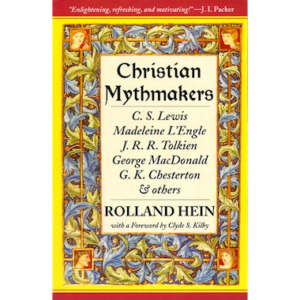
Knowing and living our metaphysical totality
Clyde Kilby on the power of myth to bring together “the slender hints of the knowable”
Modernity’s crisis of place
Craig Bartholomew reflects on the importance of place to our humanity. (58 minutes)
The inward eye, cosmic truth, and making well
Andrew Kern takes his listeners along an “interlinear” reading of a portion of St. Augustine’s Confessions that explores the differences between how God makes and how we create. (38 minutes)
