
Disengagement from the world
Nicholas Carr encourages us to consider how automation technologies impact our ability to engage with the world and whether — like a good tool — they present a more inviting world or close us off from that world. (30 minutes)
The “sovereign uselessness of moral reflection”
Calling on the wisdom of St. Augustine, Oliver O’Donovan reminds his listeners that all knowledge participates in the eternal Logos of God and is rooted in love, not disinterested moral judgement.(Lecture 1 of 3; 52 minutes)
Beyond a reasonable doubt
From a 1980 interview with Ken Myers, Mortimer J. Adler discusses his argument that belief in the existence of God is rational. (14 minutes)
Heaven and earth are full of His glory
Gerald R. McDermott examines the typological tradition of the Church, particularly through Jonathan Edwards’s thought, and he argues for a recovery of the Christian understanding of the universe as an “immense Trinitarian symbol.” (61 minutes)
A false dichotomy
In this conversation from 2009, Dallas Willard (1934–2013) discusses the truth of spiritual knowledge and its epistemological validity. (63 minutes)

Humility and moral knowledge
Harbinger of disorder
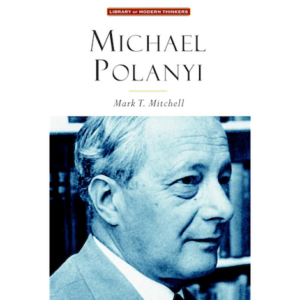
Mark Mitchell on Michael Polanyi’s recognition of the dangerous dead-end of materialistic reductionism
Universities as the hosts of reciprocating speech
Robert Jenson on how the Christian understanding of Truth in a personal Word shaped the Western university
The vice of curiosity
Stanley Hauerwas on the warning from Paul Griffiths about desiring to own knowledge
University or “utiliversity”?
In this essay, Reinhard Hütter examines in depth John Henry Newman’s The Idea of a University and argues that its insights and prescriptions are urgently relevant to the current status of higher education. (87 minutes)
Thinking Together
Alan Jacobs discusses some principles he’s compiled to help us think well (and charitably) in our cultural context, and he warns us to be attentive to the ways technology displaces previously fixed communities. (53 minutes)
Students as arbiters of knowledge
Pathways of the Mind: The Joy of the Essay
Alan Jacobs thinks Christians should embrace the potential in the literary form of the essay, because of the way it corresponds to the navigation and journey of a Christian life. (48 minutes)
In the Image of Our Devices
Nicholas Carr considers how automation technologies impact our ability to engage with the world. (66 minutes)
How paintings convey meaning
Moral knowledge of reality
Oliver O'Donovan argues that admiration is the fundamental form of knowing the world, as we cannot know fully those elements of reality (“bare facts”) that contain no significance for us. (Lecture 2 of 3; 55 minutes)
The recovery of an integrated ecology
In this essay, Michael Hanby unpacks the summons of Laudato si’ to an ecological way of life based on a proper understanding of creation in its fullness and integrity. (57 minutes)
Sacramental Poetics
Poet and Eastern Orthodox believer Scott Cairns explains how a good poem functions like an icon: it assists the process of our becoming aware of what is real, and it is generative in the ways it keeps opening up new understandings. (56 minutes)
