
The personal element in all knowing
Mark Mitchell connects key aspects of Michael Polanyi’s conception of knowledge with Matthew Crawford’s insistence that real knowing involves more than technique. (34 minutes)
Making contact with reality
Knowing the world through the body
Steward of knowledge vs. autonomous knower
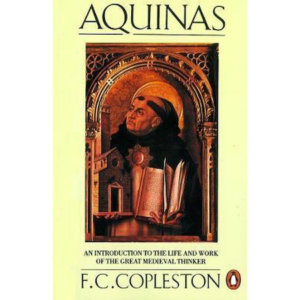
The collaboration of bodies and minds
F. C. Copleston on Aquinas’s confidence in the embodied nature of knowledge
Wonder, being, skepticism, and reason
The need to recollect ourselves as whole persons
In this 2016 lecture, John F. Crosby explores key personalist insights found in the thinking of John Henry Newman and Romano Guardini. (60 minutes)
“A sign of contradiction”
In this lecture, Daniel Gibbons compares and contrasts understandings of sacramental poetics proposed by Augustine, Aquinas, and Sydney. (36 minutes)
Nature’s intelligibility
In this lecture, Christopher Blum argues that scientists need to regain a full appreciation of nature’s intelligibility, as they are apt to lose sight of reality due to the reductionism produced by their theories. (31 minutes)
Submission to mathematical truth
In this lecture, Carlo Lancellotti argues that integration of the moral, cognitive, and aesthetic aspects of mathematics is needed in a robust liberal arts mathematics curriculum. (25 minutes)
Embodied knowledge
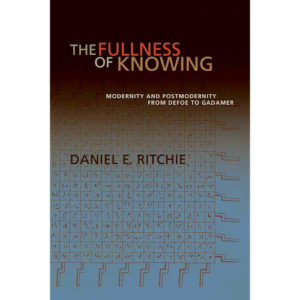
Touch’d with a coal from heav’n
Daniel Ritchie finds in the poetry of William Cowper (1731–1800) an anticipation of Michael Polanyi’s epistemology
How we know the world
Daniel Ritchie argues that poet and hymnodist William Cowper was ahead of his time in critiquing the Enlightenment's reductionist view of knowledge. (16 minutes)
William Cowper: Reconciling the Heart with the Head
Daniel E. Ritchie discusses the life and work of poet William Cowper (1731–1800), comparing his commitment to understanding reality through personal knowledge, intuition, and rigorous contemplation with the thought of Michael Polanyi. (43 minutes)
Approaches to knowing
The integration of theoretical and mythic intelligence
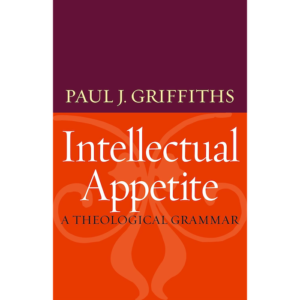
The ecstasy of the act of knowing
Theologian Paul Griffiths situates our creaturely knowing within the framework of the relation between God and Creation
On The Abolition of Man
A.I., power, control, & knowledge
Ken Myers shares some paragraphs from Langdon Winner‘s seminal book, Autonomous Technology: Technics-out-of-Control as a Theme in Political Thought (1977) and from Roger Shattuck‘s Forbidden Knowledge: From Prometheus to Pornography (1996). An interview with Shattuck is also presented. (31 minutes)
Deconstructing the myths of modernity
In order to counter modernity's fragmentation, Paul Tyson argues that we must recover a foundation of reality based on meaning and being. (35 minutes)
