St. Maximus, St. Augustine, and literature
Justin Johnson argues that the anthropology and ontology of St. Maximus the Confessor provide a “user-friendly Augustinian framework” to teach literature. (59 minutes)

Wendell Berry’s legacy enduring wisdom
Jeff Bilbro discusses the 50th anniversary edition of Wendell Berry’s (1934–2026) The Unsettling of America (56 minutes)
Love isn’t a technique
Christian Smith on how we become more fully human when we enhance the personhood of other
A liturgically ordered (and Christ-formed) cosmos
David L. Schindler on how the renewing of our minds requires the recognition of love in the order of Creation
Implications of an “absent” God
David L. Schindler (1943–2022) explores the implications for a civilization that discards the reality that being is grounded in God. (66 minutes)
Excerpts from Volume 112
Hear excerpts from interviews with Christian Smith, David L. Schindler, Sara Anson Vaux, Melvyn Bragg, Timothy Larsen, and Ralph C. Wood. (34 minutes)
God at the center of all
George Marsden discusses the unique philosophical and theological insights Jonathan Edwards (1703–1758) had into his own era. (35 minutes)
A sampling of newly published lectures
Ken Myers introduces listeners to four recently released lectures, courtesy of our Partners. The lecturers are Jennifer Frey, Gary Saul Morson, N. T. Wright, and Andrew Kern. (27 minutes)

The just war tradition and whole-life discipleship
Daniel M. Bell, Jr. discusses the just war tradition, a tradition which is often invoked by figures who, upon closer inspection, tend to lack a robust understanding of its history and criteria. (57 minutes)
The epistemology of love
In this lecture, N. T. Wright examines the epistemology of love and how it counters the reductionism of Enlightenment and Epicurean ways of knowing. (63 minutes)
Knowing and doing the good
Oliver O’Donovan raises several key questions and complications involved in the task of taking concrete and practical action toward a recognized moral good. (Lecture 3 of 3; 63 minutes)
Moral knowledge of reality
Oliver O'Donovan argues that admiration is the fundamental form of knowing the world, as we cannot know fully those elements of reality (“bare facts”) that contain no significance for us. (Lecture 2 of 3; 55 minutes)
To see people as people
Anthony Bradley argues that a recovery of Christian personalism is needed to counter the dehumanization, polarization, and tribalism of our day. (45 minutes)
The sovereignty of love
In this 2022 lecture, Oliver O’Donovan explains the historical background — and present consequences — of the assertion by Jesus of two great commands. (67 minutes)
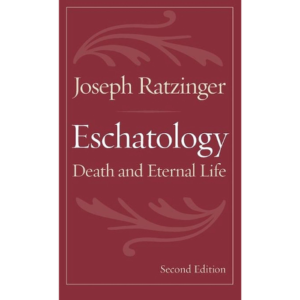
Christology and human relationality
Joseph Ratzinger on how the longing for eternity expressed in human love is an analogue of Trinitarian love
The basic act and order of things
David L. Schindler (1943–2022) insists that the reduction of love to a matter of private and personal sentiment, piety, or good will — is one of the fundamental disorders of modern culture. Christians should know better. (39 minutes)
Loving relationships in community
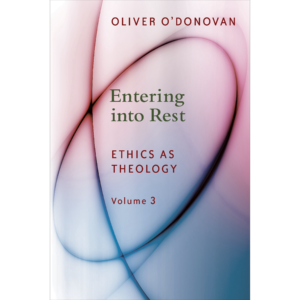
In conversation with moral philosopher Oliver O’Donovan, and with readings from his book, Entering into Rest, Ken Myers explores a central theme in O’Donovan’s work: that we are created to enjoy loving relationships in community. (27 minutes)