
Christian culture and the myth of the secular
Ken Myers draws on T. S. Eliot to argue that Western civilization has broken down, not into a multiplicity of cultures, but into a “post-culture.” (47 minutes)
Mars Hill Audio Journal, Volume 166
FEATURED GUESTS: William Cavanaugh, Kent Burreson, Beth Hoeltke, Jeffrey Barbeau, Jason Baxter, John Betz, and Bruce Herman
University or “utiliversity”?
In this essay, Reinhard Hütter examines in depth John Henry Newman’s The Idea of a University and argues that its insights and prescriptions are urgently relevant to the current status of higher education. (87 minutes)

Man as “both mystic and hobbit”
D. C. Schindler explores how building is a quintessential human activity and an expression of our view of the meaning of reality. (47 minutes)
Metaphysics and sub-creation
Gratitude, vitalism, and the timid rationalist
In this lecture, Matthew Crawford draws a distinction between an orientation toward receiving life as gift and a timid and cramped rationalism that views man as an object to be synthetically remade. (52 minutes)

Metaphysical impulses beneath techno-utopianism
A metaphysics of realism, relationality, and personalism
John Milbank gives a survey and critique of the efforts of 20th and 21st century theologians to articulate a Trinitarian ontology that reflects reality and counters secularization. (61 minutes)
Everything about everything comes from God
Theologian Andrew Davison discusses how the idea of participation informs our understanding of God, of Creation, of being, of knowing, of loving, of law, of economics, etc. (28 minutes)
Earthly things in relation to heavenly realities
In this lecture, Ken Myers argues that the end of education is to train students to recognize what is really real. The things of this earth are only intelligible in light of heavenly realities. (59 minutes)
On Earth as it is in Heaven
Mars Hill Audio Journal, Volume 158
FEATURED GUESTS:
David Setran, Vigen Guroian, Michael Dominic Taylor, Thomas Pfau, Jason Paone, and Matthew Levering
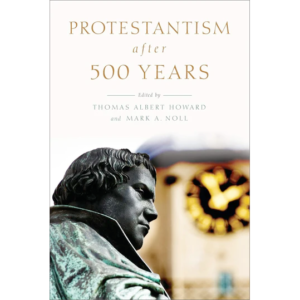
Once there was no “secular”
Carlos Eire on the metaphysical assumptions championed in the sixteenth century
Faith born of wonder
Theologian Andrew Davison echoes a theme in the work of G. K. Chesterton, describing the work of apologetics as awakening a sense of wonder in the reality of Creation as a beautiful gift. (23 minutes)
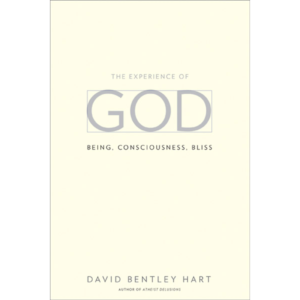
Shrinking sources of causality
David Bentley Hart on the loss of a recognition of inherent meaning in the natural world
Cosmology without God
Modern science is practiced in the context of beliefs that are intrinsically metaphysical and theological, even though practitioners of science claim (and usually genuinely believe) that their disciplines are philosophically neutral. David Alcalde challenges such claims within a sub-field of astrophysics. (21 minutes)
The reality that science cannot see
Philosopher Paul Tyson illustrates features of daily life that science cannot “see,” such as love, friendship, justice, and hope, and argues that such things are nonetheless real. (20 minutes)
Recovering the meaning of reason
James Peters discusses how Plato, Aristotle, Augustine, Pascal, and many others understood the nature and purpose of reason quite differently from the common modern understanding. Also, D. C. Schindler explains how consciousness and reason necessarily involve reaching outside of ourselves. (24 minutes)
Why “Creation” is more than “origins”
In this archive interview from Volume 121 of the Journal, Michael Hanby talks about why we shouldn’t assume that science can ever be philosophically and theologically neutral. (32 minutes)
James Matthew Wilson: “T. S. Eliot: Culture and Anarchy”
James Matthew Wilson examines T. S. Eliot’s cultural conservatism and religious conversion in light of his intellectual and familial influences. (79 minutes)
