
Christian culture and the myth of the secular
Ken Myers draws on T. S. Eliot to argue that Western civilization has broken down, not into a multiplicity of cultures, but into a “post-culture.” (47 minutes)
Modernity’s crisis of place
Craig Bartholomew reflects on the importance of place to our humanity. (58 minutes)

The epistemology of love
In this lecture, N. T. Wright examines the epistemology of love and how it counters the reductionism of Enlightenment and Epicurean ways of knowing. (63 minutes)
The cost of “killing” God
In this October 2023 lecture, Carl Trueman explores the concept of “desecration” as a frame for understanding the nature of modernity in our time. (42 minutes)
Cultural superiority and Medieval romance literature
A flood of images
Oliver O’Donovan describes the distinctive character of publicity in modernity, which drowns us in a flood of ever-changing representations that do not serve the common good. (37 minutes)
Publicity and representative images in society
Oliver O’Donovan describes the nature of publicity as the force that mediates our communication with one another, creating common interests and then rapidly subsuming them into newer ones.(Lecture 3 of 3; 57 minutes)

Mordor versus the Shire
In this lecture, Heidi White explains how the modern project is a diabolical inversion of Christendom and calls for Christians to build lives and a culture that can counter it. (53 minutes)
“Only a real world can save us”
Oliver O’Donovan explores how the “religion” of modernity lacks a coherent world in which one may participate with full human agency and moral purpose. (Lecture 3 of 3; 61 minutes)

A poet’s relationship to time
Dickinson and modern malaise
Modernity and the shaping of America

Mars Hill Audio Journal, Volume 163
FEATURED GUESTS: Andrew Youngblood, R. J. Snell, Nicholas Denysenko, Nigel Biggar, Robert McNamara, and David Cayley
Science’s need for philosophy and revelation
D. Stephen Long explores a consistent theme in the work of theologian Hans Urs von Balthasar: the relationship between Christianity, modernity, and secularity. (46 minutes)
Augusto Del Noce’s critique of modernity
The integration of theoretical and mythic intelligence
A fearful darkness in mind, heart, and spirit
Roberta Bayer draws on the work of George Parkin Grant (1918–1988) to argue that our “culture of death” must be countered with an understanding of reality based in love, redemptive suffering, and a recognition of limitations to individual control. (33 minutes)
Cleansing sea breezes
Thomas C. Oden argues that rather than being conformed to contemporary ideological trends, we should be informed by 2000 years of the Church’s wisdom. And Darrell Amundsen corrects some false claims about the early Church’s views on suicide. (27 minutes)
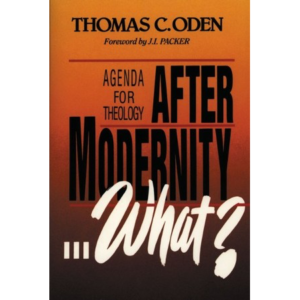
Divorcing the spirit of the age
Thomas C. Oden on overcoming the theological faddism of the late twentieth century
