What it means to say “God”
Theologian David Bentley Hart discusses what Western people — both Christians and atheists — understand by the terms God, transcendence, being, and reality in modernity. (48 minutes)

Fragmenting forces in modern life
Volume 97 excerpts
Hear excerpts from interviews with Mark Noll, Stanley Fish, James Peters, Scott Moore, and Makoto Fujimura. (28 minutes)
Reality and the relations that constitute us
Reuben Slife discusses key concerns in the work of David L. Schindler (1943–2022). 31 (minutes)

Implications of an “absent” God
David L. Schindler (1943–2022) explores the implications for a civilization that discards the reality that being is grounded in God. (66 minutes)
David Cayley, R.I.P.
David Cayley (1946–2026) describes Ivan Illich’s insights into the “instrumental attitude” that defines modernity, in particular the blurring of the distinction between mechanisms and organisms. (39 minutes)
On disposable experience
Todd Gitlin argues that we simultaneously resent and crave the experience of media saturation, and that it ultimately cheapens our lives. (33 minutes)
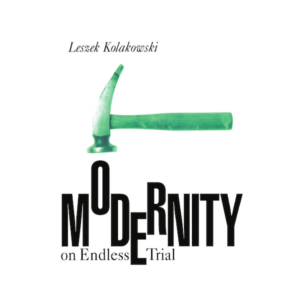
From Descartes to Nietzsche
Leszek Kolakowski on Cartesian rationality and modernity’s loss of meaning
Christian culture and the myth of the secular
Ken Myers draws on T. S. Eliot to argue that Western civilization has broken down, not into a multiplicity of cultures, but into a “post-culture.” (47 minutes)
Modernity’s crisis of place
Craig Bartholomew reflects on the importance of place to our humanity. (58 minutes)

The epistemology of love
In this lecture, N. T. Wright examines the epistemology of love and how it counters the reductionism of Enlightenment and Epicurean ways of knowing. (63 minutes)
The cost of “killing” God
In this October 2023 lecture, Carl Trueman explores the concept of “desecration” as a frame for understanding the nature of modernity in our time. (42 minutes)

Cultural superiority and Medieval romance literature
A flood of images
Oliver O’Donovan describes the distinctive character of publicity in modernity, which drowns us in a flood of ever-changing representations that do not serve the common good. (37 minutes)
Publicity and representative images in society
Oliver O’Donovan describes the nature of publicity as the force that mediates our communication with one another, creating common interests and then rapidly subsuming them into newer ones.(Lecture 3 of 3; 57 minutes)
Mordor versus the Shire
In this lecture, Heidi White explains how the modern project is a diabolical inversion of Christendom and calls for Christians to build lives and a culture that can counter it. (53 minutes)
“Only a real world can save us”
Oliver O’Donovan explores how the “religion” of modernity lacks a coherent world in which one may participate with full human agency and moral purpose. (Lecture 3 of 3; 61 minutes)

A poet’s relationship to time
Dickinson and modern malaise