
What it means to say “God”
Theologian David Bentley Hart discusses what Western people — both Christians and atheists — understand by the terms God, transcendence, being, and reality in modernity. (48 minutes)
What materialism cannot explain
The artistry of life
In this lecture, Peter Crawford reflects on an anthropology of identity and its implications for the vocation of educators. (81 minutes)
A radical turn
In this lecture, D. C. Schindler explores Plato’s ideas on education to argue that the essence of education is a revolution — a complete turning-around — of the soul toward God, reality, and the self. (44 minutes)
Reality and the relations that constitute us
Reuben Slife discusses key concerns in the work of David L. Schindler (1943–2022). 31 (minutes)

Implications of an “absent” God
David L. Schindler (1943–2022) explores the implications for a civilization that discards the reality that being is grounded in God. (66 minutes)
Volume 102 excerpts
Hear excerpts from interviews with Daniel M. Bell Jr., Lew Daly, Adam K. Webb, Stratford Caldecott, James Matthew Wilson, and Thomas Hibbs. (30 minutes)
Quiet misanthropy vs. Christian humanism
Bishop Robert Barron explores the misanthropic and inherently unstable anthropology at the heart of the modern university and offers an alternative for human flourishing. (46 minutes)
“We become what we behold”
Peter Crawford explores how a sacramental education involves helping students to behold a world saturated with signs that point to Christ — and then to act as faithful stewards. (68 minutes)
The nature of things
In this 2026 lecture, Mary Harrington explores modernity’s “Thomophobic epistemological straitjacket” that bans serious inquiry into the nature of things. (41 minutes)

We are not “stochastic parrots”
In this essay, Talbot Brewer argues that our understanding of the nature of words and their relationship to human nature is “teetering” due to artificial intelligence chatbot systems and large language models (LLMs). (42 minutes)
How tech is making us less human
Christine Rosen argues that we must reckon with serious moral and ethical questions raised by the acceleration of "artificial intelligence" into almost every area of life. (31 minutes)

A living tradition
In this lecture, James Matthew Wilson explores the nature of tradition as a “condition of possibility” that situates both reason and poetry. (49 minutes)
Mars Hill Audio Journal, Volume 167
FEATURED GUESTS: Nicholas Carr, Thomas Ward, Joseph Stuart, Steven Knepper, Robert Wyllie, Ephraim Radner, and Andrew Willard Jones

The desire for truth
In this article, Romanus Cessario, O.P., recounts the life, theology, and influence of St. Thomas Aquinas (1224/5–1274). (38 minutes)
When myth becomes fact
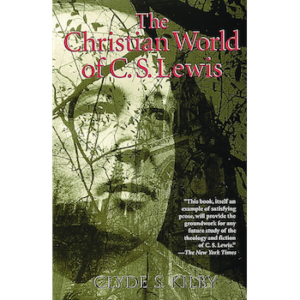
In this 1976 interview, Clyde Kilby (1902–1986) discusses C. S. Lewis’s critique of scientism and rationalism, his belief in the primacy of the imagination, and his mythic vision. (37 minutes)
Christian culture and the myth of the secular
Ken Myers draws on T. S. Eliot to argue that Western civilization has broken down, not into a multiplicity of cultures, but into a “post-culture.” (47 minutes)
Disengagement from the world
Nicholas Carr encourages us to consider how automation technologies impact our ability to engage with the world and whether — like a good tool — they present a more inviting world or close us off from that world. (30 minutes)
Modernity’s crisis of place
Craig Bartholomew reflects on the importance of place to our humanity. (58 minutes)
