
A call to counter-revolution
Jeanne Schindler argues that three key technological inventions — the car, central heating, and digital devices — have contributed, respectively, to the loss of “at-homeness” people experience in the city, the home, and within ourselves. (50 minutes)

Wisdom on education, virtue, and membership
This Feature honors the life and legacy of Wendell Berry (1934–2026) with excerpts from interviews with Jeffrey Bilbro, Jack Baker, Michael Stevens, and J. Matthew Bonzo. (20 minutes)

“It takes character to read a book”
Joel Halldorf examines how our relationship to texts and reading changes as technology shifts. (53 minutes)

The mystery and dignity of the human person
Jens Zimmermann reflects on why a defense of personhood is a crucial task for the future of humanity. (47 minutes)

David Cayley, R.I.P.
David Cayley (1946–2026) describes Ivan Illich’s insights into the “instrumental attitude” that defines modernity, in particular the blurring of the distinction between mechanisms and organisms. (39 minutes)

The plausibility of “post-human” aspirations
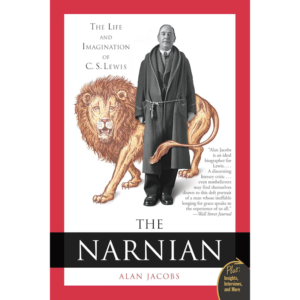
Seeking control, in white magic and The Green Book
Alan Jacobs on C. S. Lewis’s critique of the modern pursuit of god-like control

We are not “stochastic parrots”
In this essay, Talbot Brewer argues that our understanding of the nature of words and their relationship to human nature is “teetering” due to artificial intelligence chatbot systems and large language models (LLMs). (42 minutes)

Catechesis in “Screentopia”
In this lecture, Brad East builds a case for why he believes digital technology is the greatest threat facing American Christians today. (57 minutes)

Modern isolation

How tech is making us less human
Christine Rosen argues that we must reckon with serious moral and ethical questions raised by the acceleration of "artificial intelligence" into almost every area of life. (31 minutes)

Human beings as “word-bearers”
In this lecture, D. C. Schindler argues that misology — hatred for reason and contempt for language — is a deep cause of our current cultural crisis. (56 minutes)
Mars Hill Audio Journal, Volume 167
FEATURED GUESTS: Nicholas Carr, Thomas Ward, Joseph Stuart, Steven Knepper, Robert Wyllie, Ephraim Radner, and Andrew Willard Jones

Nietzsche, technology, and desire
Steven Knepper and Robert Wyllie discuss philosopher Byung-Chul Han’s thought on Nietzsche and on the effects of digital media on concepts of freedom, desire, and receptivity to others. (14 minutes)
The destructive perils of speech without a real partner
Josef Pieper and Marc Barnes on how chatbots pervert the nature of conversation
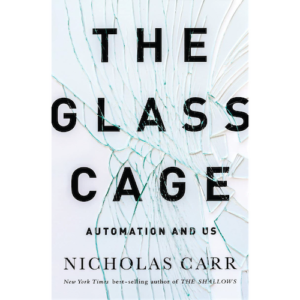
Machines and misanthropy
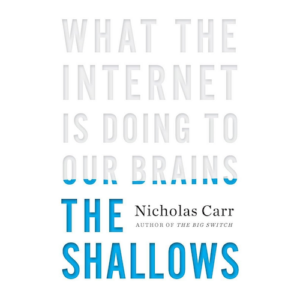
Nicholas Carr on how technology has transformed our understanding of progress (and people)
Disengagement from the world
Nicholas Carr encourages us to consider how automation technologies impact our ability to engage with the world and whether — like a good tool — they present a more inviting world or close us off from that world. (30 minutes)

Life more abundantly
Jeanne Schindler advocates for a return to an understanding and prioritizing of sensory experience — real engagement with the real world — as foundational to learning and living. (35 minutes)