Reason and the love of truth

Reason and the love of truth
FROM VOL. 97
James Peters discusses historical understandings of reason and rationality and how they differ from the modern notion of rationality. (21 minutes)
The inward eye, cosmic truth, and making well

The inward eye, cosmic truth, and making well

Andrew Kern takes his listeners along an “interlinear” reading of a portion of St. Augustine’s Confessions that explores the differences between how God makes and how we create. (38 minutes)
The beauty of truth and goodness
The beauty of truth and goodness

FROM VOL. 141
James Matthew Wilson talks about how cultivating the desire to perceive the interior life of things sustains the basic human capacity for recognizing truth, pursuing wisdom, and contemplating beauty. (23 minutes)
All trees, no forest

All trees, no forest

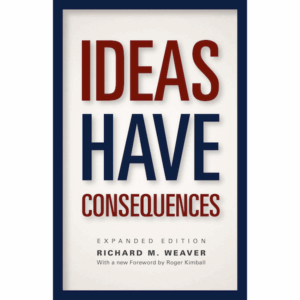
Richard Weaver on the attenuating of knowledge
Shared Practices, Strong Communities

Shared Practices, Strong Communities

Christine Pohl reflects on why a deliberate commitment to certain shared practices is necessary for the sustaining of community. (57 minutes)
Truth, goodness, and beauty (and why they matter)

Truth, goodness, and beauty (and why they matter)

FROM VOL. 147
Philosopher D. C. Schindler examines how postmodernism poses a unique threat to our sense of an interior self. (28 minutes)
The joy and mystery of poetry

The joy and mystery of poetry

FROM VOL. 98
Jeanne Murray Walker discusses how she helps students approach and appreciate poetry as the mysteriously meaningful literature it is, rather than as a linguistic cage containing static meaning to be abstracted from the words of the poem. (23 minutes)
Knowing the world through the body

Knowing the world through the body

FROM VOL. 76
Professor Martin X. Moleski explains why Michael Polanyi (1891-1976) left his career in science to become a philosopher. (16 minutes)
"A sign of contradiction"

“A sign of contradiction”

In this lecture, Daniel Gibbons compares and contrasts understandings of sacramental poetics proposed by Augustine, Aquinas, and Sydney. (36 minutes)
Treating Truth with sovereign respect

Treating Truth with sovereign respect

Henri de Lubac on the urgency of intellectual activity
Goodness, truth, and conscience

Goodness, truth, and conscience

David Crawford examines Karol Wojtyła’s thought on the relationship between conscience and truth. (37 minutes)
When language is weaponized
When language is weaponized

FROM VOL. 52
Jeffrey Meyers explains George Orwell's understanding of how language can be used as a weapon in totalitarian movements and regimes. (10 minutes)
Multi-leveled language and active spiritual engagement
Multi-leveled language and active spiritual engagement
FROM VOL. 95
Eugene Peterson talks about how Jesus spent most of his time speaking normally and conversationally, and how the Spirit infused this normal speech. (14 minutes)
Torrential winds of doctrine

Torrential winds of doctrine

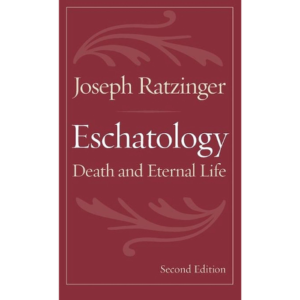
Joseph Cardinal Ratzinger on the “dictatorship of relativism”
Why liberalism tends toward absolutism

Why liberalism tends toward absolutism

In this lecture, Michael Hanby examines what causes liberalism to become dictatorial in thought and practice. (49 minutes)
No neutral view of the cosmos

No neutral view of the cosmos

Ken Myers argues that Christians need to recover a “whole-earth discipleship” that enables them to think Christianly about all areas of life, including public life. (50 minutes)
The unintended consequences of the Reformation
The unintended consequences of the Reformation

FROM VOL. 114
Historian Brad Gregory discusses the unintended consequences of the Reformation, consequences which continue to trouble us. (26 minutes)
Justice and truth

Justice and truth

Joseph Ratzinger: “Plato’s philosophy is utterly misconceived when he is presented as an individualistic, dualistic thinker who negates what is earthly and advocates a flight into the beyond.”
Sustaining a heritage of wisdom

Sustaining a heritage of wisdom

Louise Cowan (1916–2015) explains how the classics reach the deep core of our imagination and teach us to order our loves according to the wholeness of reality. (16 minutes)
Sources of wisdom (and of doubt)

Sources of wisdom (and of doubt)

Roger Lundin shares what he has appreciated about Mars Hill Audio conversations, and he discusses what makes Christian belief so implausible to non-believers. (32 minutes)