PREVIEW
Sign up for a membership
The player for this Journal volume is only available to current members or listeners with a legacy account. If you have an active membership, log in here. If you’d like to become a member — with access to all our audio programs — sign up here.
Guests heard on Volume 149
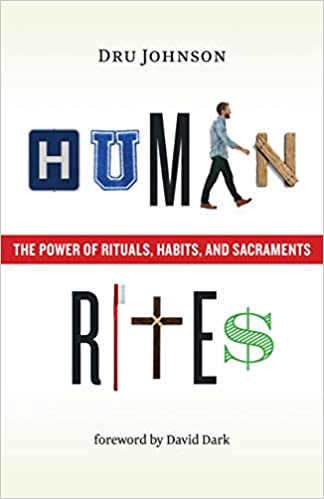
Dru Johnson, author of Human Rites: The Power of Rituals, Habits, and Sacraments, on how rituals serve to shape our understanding of God and Creation
read more
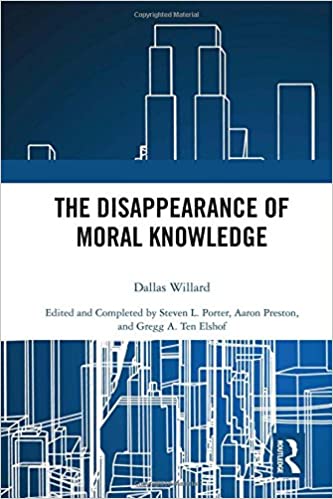
Steven L. Porter, editor of The Disappearance of Moral Knowledge, on the causes and consequences of the loss of confidence in the rationality of morality (Archive Feature available)
read more
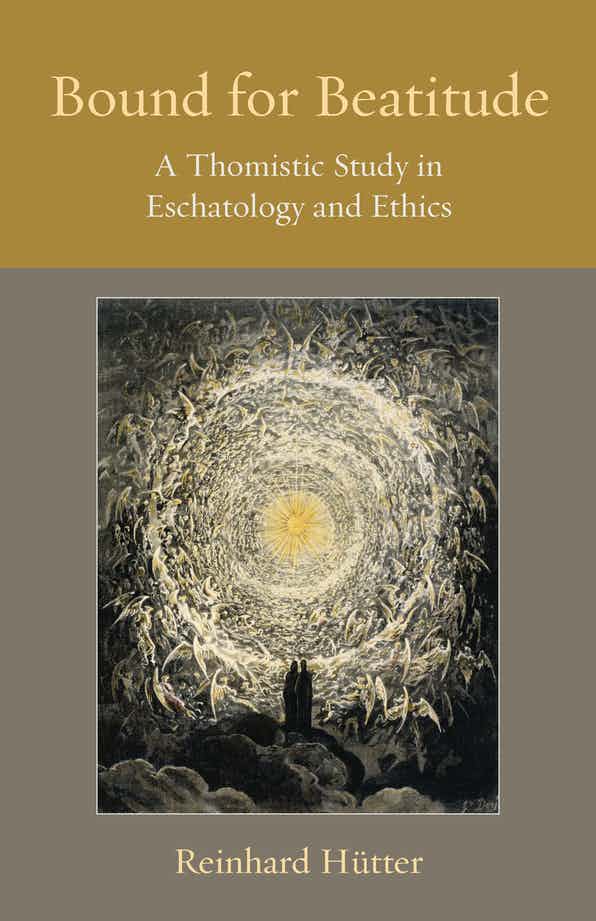
Reinhard Hütter, author of Bound for Beatitude: A Thomistic Study in Eschatology and Ethics, on why Christian ethics must be ordered by Christian eschatology
read more
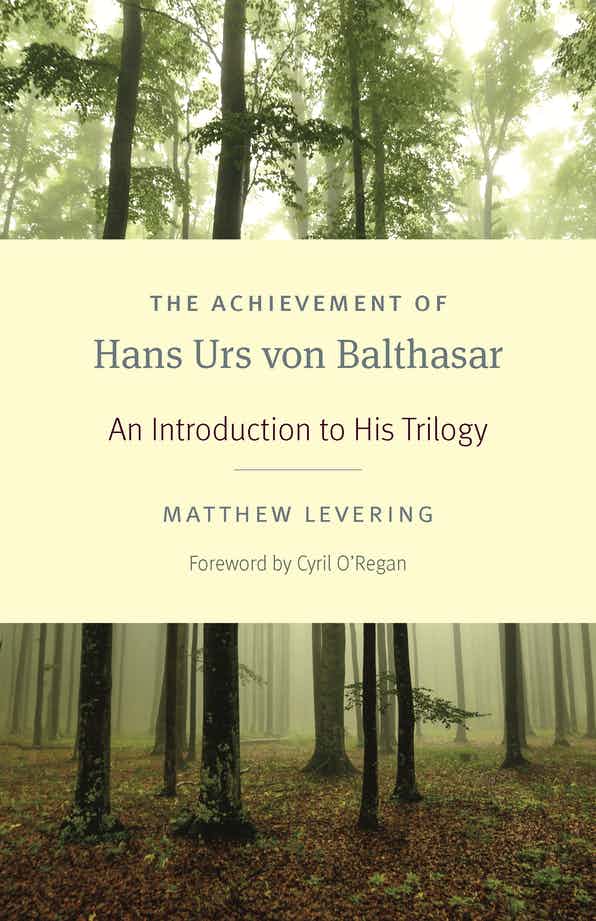
Matthew Levering, author of The Achievement of Hans Urs von Balthasar: An Introduction to His Trilogy, on the theological and philosophical concerns of Hans Urs von Balthasar
read more
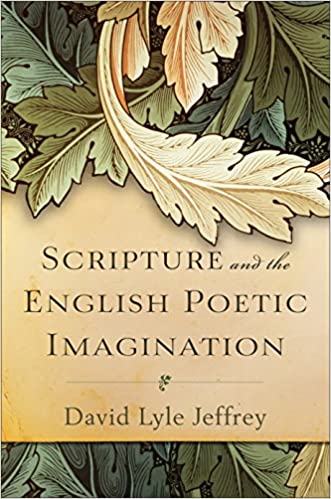
David Lyle Jeffrey, author of Scripture and the English Poetic Tradition, on the influence of the Bible on English poetry
read more
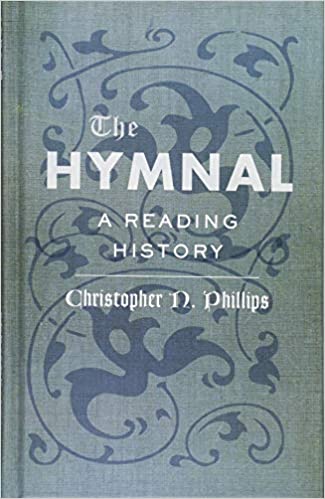
Christopher Phillips, author of The Hymnal: A Reading History, on the cultural and spiritual effects of hymns and the “thingness” of hymnals (Archive Feature available)
read moreRelated reading and listening
- “If there is no God, all is permitted” — Gary Saul Morson explores the consequences of belief and disbelief in God through Russian literature. (51 minutes)
- To be at home in the world — D. C. Schindler examines how rituals enable us to experience time in a meaningful way — how they actually make time habitable for us. (41 minutes)
- Theology and the imagination — Jeffrey Barbeau explains what made C. S. Lewis an effective “translator” of theology for non-theologians. (21 minutes)
- The pathos of sin —
FROM VOL. 15 Poet Robert Pinsky discusses his translation of Dante’s Inferno. (9 minutes) - Existential preparation for reading literature —
FROM VOL. 128 Rod Dreher recounts how he thought he was reading Dante’s Commedia, when in reality the poem was reading him. (18 minutes) - An icon of the whole world — Jason Baxter explains how Dante includes a panoply of characters and creatures in his Comedia, offering a prismatic view of all of Creation in its glory. (20 minutes)
- Ethics hidden in economics —
FROM VOL. 134 William Cavanaugh explains why Christians should think about economics theologically, not just as a science or an ethical discipline. (25 minutes) - The “sovereign uselessness of moral reflection” — Calling on the wisdom of St. Augustine, Oliver O’Donovan reminds his listeners that all knowledge participates in the eternal Logos of God and is rooted in love, not disinterested moral judgement.(Lecture 1 of 3; 52 minutes)
- An invitation to a feast — Christina Bieber Lake explains how poetry is an invitation to experience the beauty and goodness of Creation as gift. (44 minutes)
- A false dichotomy — In this conversation from 2009, Dallas Willard (1934–2013) discusses the truth of spiritual knowledge and its epistemological validity. (63 minutes)
- Christian belief as real knowledge — Dallas Willard on the modern divorce between faith and knowledge
- Humility and moral knowledge —
FROM VOL. 149 Steven L. Porter discusses The Disappearance of Moral Knowledge, an unfinished manuscript (which he helped to complete) by the late philosopher Dallas Willard. (22 minutes) - Willard, Dallas — FROM THE GUEST PAGE: Dallas Willard (1935–2013) was a philosophy professor at the University of Southern California and an author of many books on Christianity and discipleship.
- University or “utiliversity”? — In this essay, Reinhard Hütter examines in depth John Henry Newman’s The Idea of a University and argues that its insights and prescriptions are urgently relevant to the current status of higher education. (87 minutes)
- From enthusiasm to discernment — Hans Urs von Balthasar on how the assumption that taste is entirely subjective is a function of immaturity
- Cultivating the Virtue of Reverence — Paul Woodruff (1943–2023) discusses the importance of reverence as a virtue that enriches relationships, elevates civic life, and helps leaders to wield power wisely. (53 minutes)
- Poetry and Liturgy — Karen Dieleman explores the influence of liturgical practices on shaping the imaginations and poetry of Elizabeth Barrett Browning, Christina Rossetti, and Adelaide Proctor. (49 minutes)
- Sacramental Poetics — Poet and Eastern Orthodox believer Scott Cairns explains how a good poem functions like an icon: it assists the process of our becoming aware of what is real, and it is generative in the ways it keeps opening up new understandings. (56 minutes)
- Poetry and piety —
FROM VOL. 48 James Trott discusses insights he learned while editing A Sacrifice of Praise: An Anthology of Christian Poetry in English from Caedman to the Mid-Twentieth Century. (7 minutes) - A poet’s relationship to time —
FROM VOL. 57 Poet Wilmer Mills (1969–2011) discusses how his agricultural and cross-cultural childhood in Brazil shaped his imagination and his relationship with modernity. (11 minutes) - The life of the city in poetry —
FROM VOL. 1 Ken Myers talks with W. H. Auden’s biographer and literary executor, Edward Mendelson, about political and social themes in Auden’s poetry. (7 minutes) - Joy & sorrow, destitution & abundance — In this poetry reading and talk, poet Christian Wiman discusses his own faith journey and how his struggles worked themselves into his poems. (40 minutes)
- Seeing Creation Anew: The Life & Poetry of Gerard Manley Hopkins — Dana Gioia examines Gerard Manley Hopkins‘s poetic genius and dedication to Christ in spite of his personal trials and difficult cultural context. (55 minutes)
- “The essence of a moment, clearly perceived” — Haiku poet Gary Hotham reads his poetry and discusses how the form of haiku reveals the connection between creatures and creation. (45 minutes)
- The joy and mystery of poetry —
FROM VOL. 98 Jeanne Murray Walker discusses how she helps students approach and appreciate poetry as the mysteriously meaningful literature it is, rather than as a linguistic cage containing static meaning to be abstracted from the words of the poem. (23 minutes) - The idiom for the revelation of mystery — Dana Gioia on the foundational place of poetry in Christian faith
- Breaking the frozen sea — Dana Gioia on how poetry enchants
- John Donne’s Passion in Life, Faith, & Verse — Poet Dana Gioia discusses the remarkable life of poet John Donne and how his spiritual and intellectual struggles created the conditions for his unique poetic voice. (53 minutes)
- Longfellow’s appeal —
FROM VOL. 53 Poet and critic Dana Gioia explains why Henry Wadsworth Longfellow (1807-1882) is one of the three great American poets. (30 minutes) - Sacramental correspondence —
FROM VOL. 51 Poet Dana Gioia discusses the state of contemporary poetry and the sacramental relationship between language and reality. (15 minutes) - Wonder, being, skepticism, and reason —
FROM VOL. 135 Matthew Levering talks about the long and rich tradition of reasoning about God. (23 minutes) - Etiquette and ethics — In this essay, Judith Martin (a.k.a. Miss Manners) argues that etiquette is “civilization’s first necessity” and an indispensable societal virtue. (21 minutes)
- Eugenics and the rise of “evolutionary ethics” —
FROM VOL. 70 Richard Weikart describes evolutionary ethics and examines the ties between national racism and the eugenics movements of the late nineteenth and early twentieth centuries. (16 minutes) - “A sign of contradiction” — In this lecture, Daniel Gibbons compares and contrasts understandings of sacramental poetics proposed by Augustine, Aquinas, and Sydney. (36 minutes)
- Education as a pilgrimage and a mystery — In this lecture, James Matthew Wilson gives a compelling argument for understanding the role of a literary or poetic education as an immersion of the whole being in truth and beauty. (43 minutes)
- “Prophet of holiness” — Timothy Larsen discusses a new edition of George MacDonald‘s Diary of An Old Soul, a slim book of poem-prayers to be read daily as a devotional aid. (30 minutes)
- Science’s need for philosophy and revelation — D. Stephen Long explores a consistent theme in the work of theologian Hans Urs von Balthasar: the relationship between Christianity, modernity, and secularity. (46 minutes)
- Touch’d with a coal from heav’n — Daniel Ritchie finds in the poetry of William Cowper (1731–1800) an anticipation of Michael Polanyi’s epistemology
- How we know the world — Daniel Ritchie argues that poet and hymnodist William Cowper was ahead of his time in critiquing the Enlightenment’s reductionist view of knowledge. (16 minutes)
- William Cowper: Reconciling the Heart with the Head — Daniel E. Ritchie discusses the life and work of poet William Cowper (1731–1800), comparing his commitment to understanding reality through personal knowledge, intuition, and rigorous contemplation with the thought of Michael Polanyi. (43 minutes)
- Bearing witness through poetry — Roger Lundin discusses the incarnational witness of poet Czesław Miłosz (1911–2004), exploring his service to truth and to his native tongue, Polish. (16 minutes)
- Czesław Miłosz: A Poet of Luminous Things — Roger Lundin discusses the themes, breadth, and depth of poet Czesław Miłosz‘s work, explaining how Milosz incarnated in his life and work a sense of exile and alienation so common to modern man. (43 minutes)
- Soundings of the human soul — Professor John H. Timmerman discusses the poetry of the late Jane Kenyon (1947-1995) and his visit to her home, Eagle Pond Farm. (16 minutes)
- Jane Kenyon: Living and Dying at Eagle Pond Farm — Biographer John H. Timmerman discusses the life and work of poet Jane Kenyon (1947–1995). (53 minutes)
- The formative power of hymns and hymnbooks —
FROM VOL. 149 Christopher Phillips discusses the cultural and spiritual effects of hymns and the “thingness” of hymnals. (18 minutes) - Congregational singing in Martin Luther’s time —
FROM VOL. 137 Liturgical scholar Robin Leaver clarifies some misconceptions about Martin Luther’s commitment to congregational singing. (10 minutes) - Early 19th-century hymnody —
FROM VOL. 151 Musicologist Peter Mercer-Taylor tells the story of how early 19th-century hymnody introduced many Americans to a repertoire of classical music. (27 minutes) - How the truth finds itself when confronted with error — Hans Urs von Balthasar on the intense radiance emanating from the writings of St. Irenaeus as he confronted heresies
- The rediscovery of meaning — Poet and theologian Malcolm Guite explains Owen Barfield’s idea of the development of consciousness over time, an evolution made evident through language that reveals an earlier, pre-modern way of seeing the world. (63 minutes)
- Levering, Matthew — FROM THE GUEST PAGE: Matthew Levering is James N. Jr. and Mary D. Perry Chair of Theology, Mundelein Seminary, a prolific author, and the Senior Editor of The New Ressourcement, a quarterly journal founded in 2023.