PREVIEW
The player for this Journal volume is only available to current members or listeners with a legacy account. If you have an active membership, log in here. If you’d like to become a member — with access to all our audio programs — sign up here.
Guests heard on Volume 146
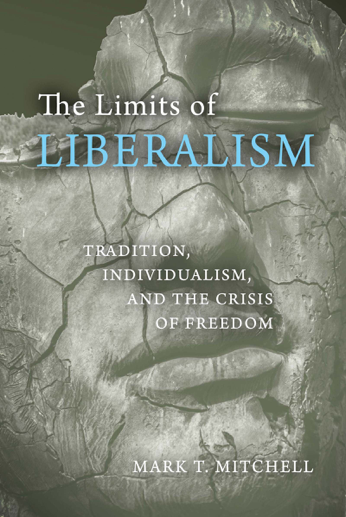
Mark Mitchell, author of The Limits of Liberalism: Tradition, Individualism, and the Crisis of Freedom, on liberalism’s false metaphysical claims about purpose, human nature, and tradition (Archive Feature available)
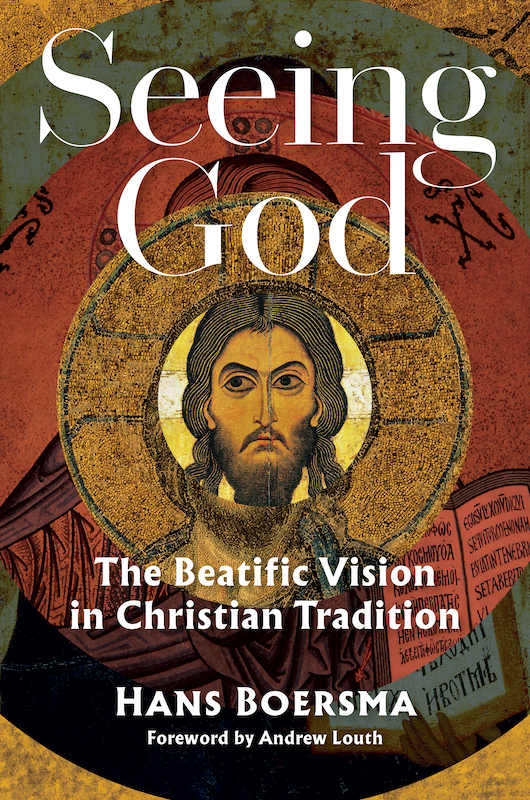
Hans Boersma, author of Seeing God: The Beatific Vision in Christian Tradition, on the cultural implications of the beatific vision (Archive Feature available)
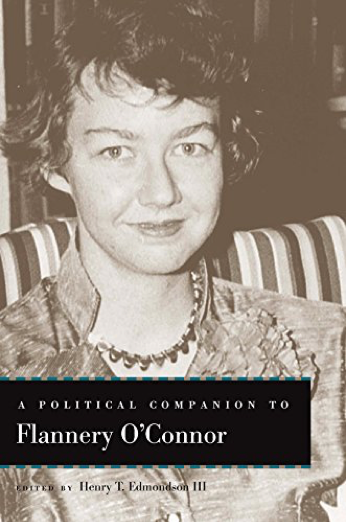
Henry T. Edmondson, III, editor of A Political Companion to Flannery O’Connor, on Flannery O’Connor’s understanding of political life (Archive Feature available)
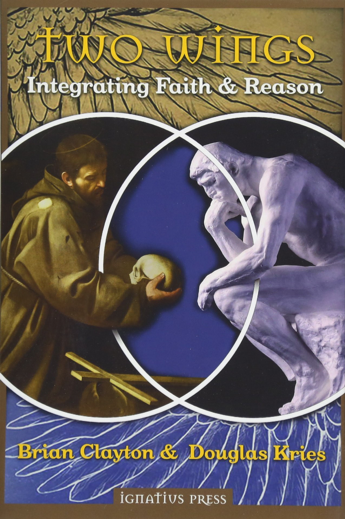
Brian Clayton and Douglas Kries, author of Two Wings: Integrating Faith and Reason, on the common and faulty assumption that faith and reason cannot be reconciled
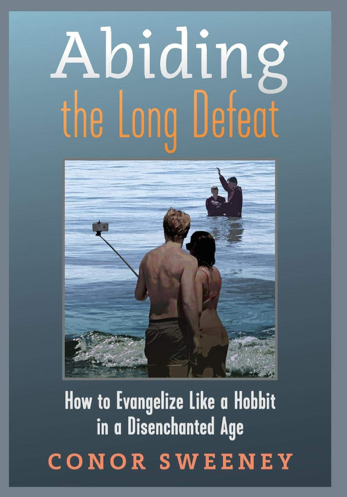
Conor Sweeney, author of Abiding the Long Defeat: How to Evangelize Like a Hobbit in a Disenchanted Age, on wrestling with the ‘death of God’ with the help of hobbit wisdom, religious experience, and sacramental theology
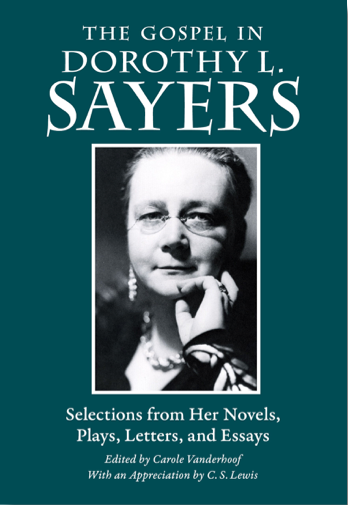
Carole Vanderhoof, author of The Gospel in Dorothy L. Sayers: Selections from Her Novels, Plays, Letters, and Essays, on the creative, intelligent, and demanding integrity of Dorothy L. Sayers
Related reading and listening
- Paradoxes of “nature” and “culture” — Robert Spaemann, on the destructive consequences of a merely naturalistic understanding of nature
- A sampling of newly published lectures — Ken Myers introduces listeners to four recently released lectures, courtesy of our Partners. The lecturers are Jennifer Frey, Gary Saul Morson, N. T. Wright, and Andrew Kern. (27 minutes)
- Grace and Christian realism — Jennifer Frey explores Thomist elements in Flannery O’Connor’s theology and writing, with a particular emphasis on a Thomist understanding of art. (39 minutes)
- The primacy of the Body of Christ — FROM VOL. 134 Philip Turner reflects on how Christian ethics is misplaced if it has as its central concern individual moral behavior or social justice. (28 minutes)
- Theology and the imagination — Jeffrey Barbeau explains what made C. S. Lewis an effective “translator” of theology for non-theologians. (21 minutes)
- How communities remember who they are — Oliver O’Donovan on the necessity of tradition in sustaining communal identity
- How common loves shape communities — Oliver O’Donovan discusses how communities mediate love and knowledge to their members and what challenges arise as a community’s traditions are confronted by sin, error, and plurality. (Lecture 2 of 3; 49 minutes)
- Beyond a reasonable doubt — From a 1980 interview with Ken Myers, Mortimer J. Adler discusses his argument that belief in the existence of God is rational. (14 minutes)
- Money, status, and satisfaction — FROM VOL. 44 David Myers and Robert Frank discuss the tenuous relationship between wealth and happiness. (22 minutes)
- City of God, City of Man — Architect Philip Bess discusses how our modern-day confusion and moral illiteracy are worked out visibly in the cities and buildings our architects create. (57 minutes)
- Christian belief as real knowledge — Dallas Willard on the modern divorce between faith and knowledge
- Harbinger of disorder — Mark Mitchell on Michael Polanyi’s recognition of the dangerous dead-end of materialistic reductionism
- Showing as meaning — Daniel McInerny on how the arts convey meaning
- Shared Practices, Strong Communities — Christine Pohl reflects on why a deliberate commitment to certain shared practices is necessary for the sustaining of community. (57 minutes)
- How the Church promotes the cause of freedom — Oliver O’Donovan: “We discover we are free when we are commanded by that authority which commands us according to the law of our being, disclosing the secrets of the heart.”
- What is beyond our choosing? — D. C. Schindler on our nihilistic quest for freedom
- The danger of not defining “freedom” — Richard Bauckham insists that an adequate understanding of freedom requires recognition of God as the ground of true human freedom
- Power to the people — Nathan O. Hatch on the DIY spirit of early American Christianity
- Free for obedience — Glenn W. Olsen on Augustine’s understanding of freedom
- What Ockham severed — Jean-Charles Nault on the advent of sheer freedom
- How the Enlightenment blinded us — Alasdair MacIntyre on the dependence of rationality on a lived tradition
- Cultivating the Virtue of Reverence — Paul Woodruff (1943–2023) discusses the importance of reverence as a virtue that enriches relationships, elevates civic life, and helps leaders to wield power wisely. (53 minutes)
- A more robust account of political life — FROM VOL. 138 John Milbank and Adrian Pabst on why politics needs to recognize the human soul in its depth (and what happens when it doesn’t). (51 minutes)
- The collapse of public life — FROM VOL. 154 D. C. Schindler explains how liberalism sought to make way for individuals to function together without any orientation to an explicit common good. (37 minutes)
- The profound drama of human sexuality — In this lecture, D. C. Schindler explains the cosmological significance of human sexuality and why it is paradigmatic of the relationship between nature and freedom. (32 minutes)
- Mars Hill Audio Journal, Volume 164 — FEATURED GUESTS: Dana Gioia, Brady Stiller, Robert Royal, Richard DeClue, Tiffany Schubert, and Joonas Sildre
- Learning from experience — Flannery O’Connor on belief and experience
- Hillbilly Augustinian — Ralph Wood on Flannery O’Connor’s refusal to adapt her fiction to the national temper
- The grotesque and the transcendent — Christina Bieber Lake on why Flannery O’Connor’s readers have to work
- Flannery at 100 — In honor of Flannery O’Connor’s 100th birthday, we have gathered here an aural feast of interviews with O’Connor scholars and aficionados discussing her life, work, and faith. (3 hours, 28 minutes)
- Insights into O’Connor’s development as a writer — FROM VOL. 160 Jessica Hooten Wilson discusses her experience studying and organizing Flannery O’Connor’s unfinished third novel, Why Do the Heathen Rage? (27 minutes)
- The personal element in all knowing — Mark Mitchell connects key aspects of Michael Polanyi’s conception of knowledge with Matthew Crawford’s insistence that real knowing involves more than technique. (34 minutes)
- Gratitude and stewardship as political postures — FROM VOL. 118 Mark Mitchell explores the consequences of four concepts that are sadly missing from most political debates today: creatureliness, gratitude, human scale, and place. (18 minutes)
- An impoverished anthropology — FROM VOL. 146 Mark Mitchell asks whether there is anything that truly binds Americans together beyond their commitment to self-creation. (34 minutes)
- Wonder, being, skepticism, and reason — FROM VOL. 135 Matthew Levering talks about the long and rich tradition of reasoning about God. (23 minutes)
- Liberalism’s self-destructive dynamic — T. S. Eliot on the social need to move toward something and not just away
- Countering American apathy toward history — FROM VOL. 124 Historian John Fea discusses how American and Protestant individualism continues to influence our orientation toward the past. (22 minutes)
- “Detachment as a whole way of life” — FROM VOL. 85 Professor Christopher Shannon discusses how early twentieth-century social scientists encouraged the American idea that individual identity works against communal membership. (17 minutes)
- The fraught marriage of liberty and equality — In this essay, Patrick Deneen examines Alexis de Tocqueville’s complex and insightful portrait of “democratic man” living in the context of perpetual societal tension between the excesses of liberty and equality. (39 minutes)
- When philosophy loses its way — FROM VOL. 52 Ralph McInerny (1929–2010) speaks about themes from his 1999 Gifford Lectures, which relate how natural theology came to be regarded as pointless, resulting in a philosophical dead end.(24 minutes)
- The need for robust Christian intellectual life — In this lecture, Robert Benne surveys the contemporary landscape in which Christian scholars attempt to integrate their faith and their intellectual life. (43 minutes)
- The fatal polytheism of late liberalism — Oliver O’Donovan on the failure that leads to social collapse, marked by conflict, suspicion, and violence
- The recovery of true authority for societal flourishing — Michael Hanby addresses a confusion at the heart of our current cultural crisis: a conflation of the concepts of authority and power. (52 minutes)
- Alexis de Tocqueville’s penetrating review of America — FROM VOL. 91 Hugh Brogan and Daniel Ritchie discuss Alexis de Tocqueville’s insights into American society, government, and character. (26 minutes)
- Recovering the primacy of contemplation — Augusto Del Noce finds in St. Augustine resources to diagnose the fatal flaw in progressivism
- Why liberalism tends toward absolutism — In this lecture, Michael Hanby examines what causes liberalism to become dictatorial in thought and practice. (49 minutes)
- Faith as the pathway to knowledge — Lesslie Newbigin on authority and the Author of all being
- Mars Hill Audio Journal, Volume 162 — FEATURED GUESTS: Mark Noll, R. Jared Staudt, Paul Weston, William C. Hackett, Hans Boersma, and David Paul Baird
- Cultural implications of the beatific vision — FROM VOL. 146 Theologian Hans Boersma argues that the beatific vision described throughout scripture is foreshadowed in “this-worldy experiences.” (22 minutes)
- Sacramental preaching — FROM VOL. 135 Hans Boersma discusses the need to recover a patristic way of preaching and reading scripture. (23 minutes)
Tags:
Beatific visionBoersma, HansClayton, BrianEdmondson, Henry T., IIIFaith and reasonFreedomIndividualismKries, DouglasLiberalismMitchell, MarkO'Connor, FlannerySacramental theologySayers, Dorothy L.Sweeney, ConorTraditionVanderhoof, Carole