PREVIEW
The player for this Journal volume is only available to current members or listeners with a legacy account. If you have an active membership, log in here. If you’d like to become a member — with access to all our audio programs — sign up here.
Guests heard on Volume 53
Lawrence Adams, on the possibilities of religious pluralism in Islamic views of state and society
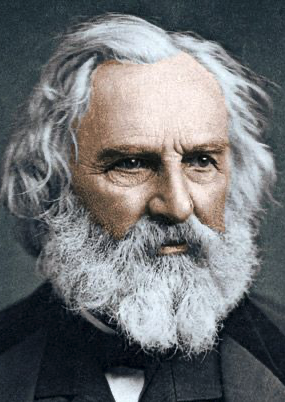
Dana Gioia, on the craft, popularity, and significance of Henry Wadsworth Longfellow (Archive Feature available)
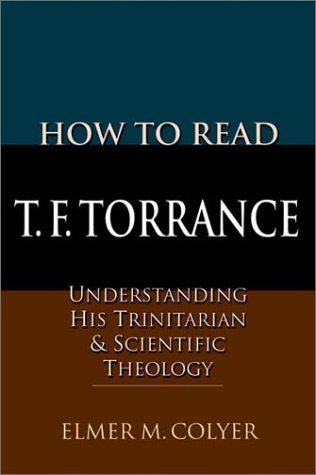
Elmer M. Colyer, author of How to Read T. F. Torrance: Understanding His Trinitarian and Scientific Theology, on theologian Thomas F. Torrance’s understanding of the Incarnation
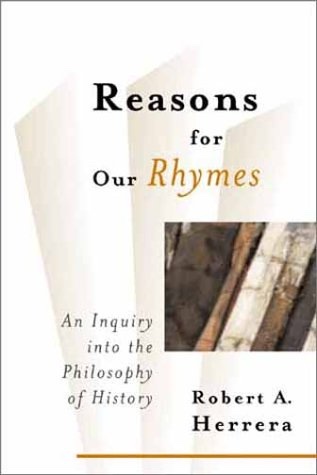
R. A. Herrera, author of Reasons for Our Rhymes: An Inquiry into the Philosophy of History, on how the Christian view of Creation and Incarnation shapes an understanding of history
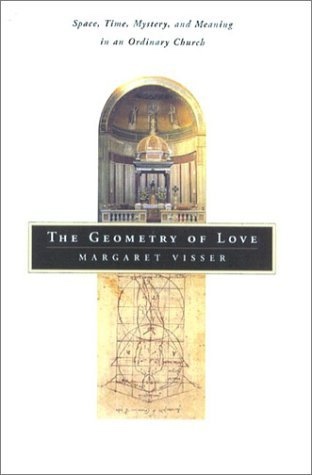
Margaret Visser, author of The Geometry of Love: Space, Time, Mystery, and Meaning in an Ordinary Church, on learning to recognize the deep meaning in the design of Christian churches
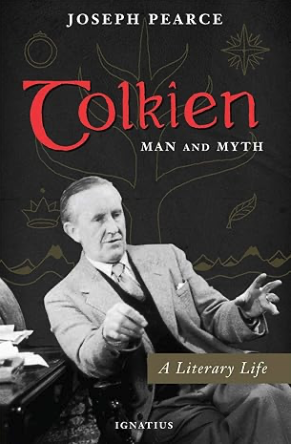
Joseph Pearce, author of Tolkien: Man and Myth, on Tolkien’s other writings and on his view of myth and story
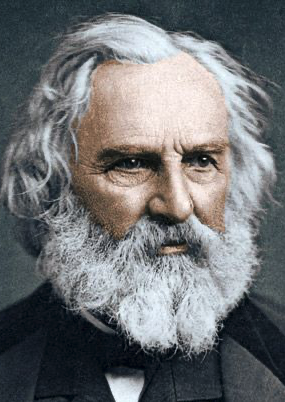
Bonus: Dana Gioia on the sorrowful life of Henry Wadsworth Longfellow; the congenial literary circle that gathered around him; and the international recognition that he achieved for American letters
Related reading and listening
- The true places aren’t on any map — Clyde Kilby on C. S. Lewis’s claim that the Gospel is the greatest myth
- Knowing and living our metaphysical totality — Clyde Kilby on the power of myth to bring together “the slender hints of the knowable”
- Savoring the taste of Reality — C. S. Lewis on the transporting, illuminating capacity of Myth
- When myth becomes fact — In this 1976 interview, Clyde Kilby (1902–1986) discusses C. S. Lewis’s critique of scientism and rationalism, his belief in the primacy of the imagination, and his mythic vision. (37 minutes)
- A great Reality at the core of things — Clyde Kilby on the nature and need for myths
- “A Myth Retold” — Literary critic Thomas Howard explains why he considers C. S. Lewis’s Till We Have Faces to be one of the author’s richest and most rewarding works. (18 minutes)
- How to make war on nothingness? — David Bentley Hart argues that if it rejects Christ, the only remaining option for a post-Christian culture is conscious or “narcotic” nihilism, which takes the form of absolute, meaningless volition. (66 minutes)
- The Bride of Christ — John Cavadini explores the different views of Origen and Augustine as to the nature and mission of the Church, and he calls for a recovery of the identity of the Church as the Bride of Christ. (38 minutes)
- Reason and the love of truth — FROM VOL. 97 James Peters discusses historical understandings of reason and rationality and how they differ from the modern notion of rationality. (21 minutes)
- Early ambivalence toward anti-Nazi resistance — FROM VOL.107 Biographer Ferdinand Schlingensiepen talks about the memory of Dietrich Bonhoeffer in the post-war period of Germany, and how his popularity changed over the years. (15 minutes)
- A sampling of newly published lectures — Ken Myers introduces listeners to four recently released lectures, courtesy of our Partners. The lecturers are Jennifer Frey, Gary Saul Morson, N. T. Wright, and Andrew Kern. (27 minutes)
- The inward eye, cosmic truth, and making well — Andrew Kern takes his listeners along an “interlinear” reading of a portion of St. Augustine’s Confessions that explores the differences between how God makes and how we create. (38 minutes)
- Rose without thorns — Ken Myers introduces various settings of “Ther is no rose of swych vertu,” a medieval carol that uses imagery of a rosebush to describe the Virgin Mary. (29 minutes)
- A “cosmological omnibus” — George Grant recounts the fascinating history of Hernando Colón’s attempt in the 16th century to curate a universal library of the world’s knowledge. (41 minutes)
- “Investigations of divine works” — Greg Wilbur explains how closely connected music is to the order of the cosmos and how it even reveals attributes of God. (56 minutes)
- Silence at the end of history — Alan Jacobs examines several literary imaginings of “the last days” and argues that such narration is profoundly inadequate and perhaps even presumptuous. (51 minutes)
- A letter from Ken Myers — Ken Myers examines the cultural implications of the Incarnation and the deep-seated dualism of modernity that divorces spirituality from our material experience. (22 minutes)
- How music blesses and teaches — FROM VOL. 64 Theologian and musician Jeremy Begbie explores what we learn about time, theology, and the structure of Creation from the experience of music. (28 minutes)
- Mars Hill Audio Journal, Volume 166 — FEATURED GUESTS: William Cavanaugh, Kent Burreson, Beth Hoeltke, Jeffrey Barbeau, Jason Baxter, John Betz, and Bruce Herman
- Creation, in harmony with the Logos — Rowan Williams on the Logos and the diverse logoi that mirror it
- An icon of the whole world — Jason Baxter explains how Dante includes a panoply of characters and creatures in his Comedia, offering a prismatic view of all of Creation in its glory. (20 minutes)
- Cosmic realities in the built world — Christopher and Christine Perrin discuss the implications of architect Christopher Alexander’s (1936–2022) discovery of patterns of building that cohere with the the created cosmos and with ourselves as human creatures. (59 minutes)
- The “book” of Creation — Alan Noble explains why the modern world makes it profoundly difficult to experience Creation as revelation, and he encourages unmediated encounters with Creation that lead to meditation. (52 minutes)
- Life more abundantly — Jeanne Schindler advocates for a return to an understanding and prioritizing of sensory experience — real engagement with the real world — as foundational to learning and living. (35 minutes)
- The Heav’ns and All the Powers Therein — In this extended interview, Michael Ward makes a compelling case that the qualities attributed to the seven planets in the cosmology of antiquity and the Middle Ages are embodied in C. S. Lewis’s seven books about Narnia. (68 minutes)
- Heaven and earth are full of His glory — Gerald R. McDermott examines the typological tradition of the Church, particularly through Jonathan Edwards’s thought, and he argues for a recovery of the Christian understanding of the universe as an “immense Trinitarian symbol.” (61 minutes)
- An invitation to a feast — Christina Bieber Lake explains how poetry is an invitation to experience the beauty and goodness of Creation as gift. (44 minutes)
- Mordor versus the Shire — In this lecture, Heidi White explains how the modern project is a diabolical inversion of Christendom and calls for Christians to build lives and a culture that can counter it. (53 minutes)
- Stewarding God’s creation — FROM VOL. 116 Fred Bahnson talks about how a Christian understanding of God’s redemptive work on the earth should influence our practices of growing and sharing food. (19 minutes)
- “Earth-shaking” and “heart-breaking” beauty — FROM VOL. 151 Junius Johnson warns that the pursuit of beauty is both perilous and an experience that points to the desire for God. (25 minutes)
- The de(con)struction of the humanities (and of truth) — Historian Gertrude Himmelfarb on the skeptical tendencies of the postmodern academy
- Clips from five extended interviews — We are pleased to share clips from five interviews that we’ve recently produced as full-length Conversations. (30 minutes)
- Breaking out of the immanent frame — Norman Wirzba on the true character of Creation and of our creatureliness
- Good News for All Creation — Theologian Norman Wirzba helps us rethink the category of nature in terms of the Christian doctrine of creation. (66 minutes)
- Ten, seven, and the rhythm of God’s love — Joseph Cardinal Ratzinger on the meaningfulness of numbers in Creation and Scripture
- Lives of generosity — Jonathan Wilson distinguishes between two fundamental ways of viewing Creation: a true Christian account of the world and a “survival of the fittest” one. (21 minutes)
- Creation and redemption as trinitarian projects — Colin Gunton on Christ and Spirit in creation and redemption
- Reflecting the being of God in communion — Colin Gunton on the relationality at the heart of Creation
- The whole world in his Hands — Colin Gunton on the trinitarian emphasis in St. Irenaeus’s doctrine of Creation
- The recovery of an integrated ecology — In this essay, Michael Hanby unpacks the summons of Laudato si’ to an ecological way of life based on a proper understanding of creation in its fullness and integrity. (57 minutes)
- Speaking the word in love — In this lecture, D. C. Schindler examines core insights from Ferdinand Ulrich on the central vocation of man and the meaning of being. (32 minutes)
- The life of the city in poetry — FROM VOL. 1 Ken Myers talks with W. H. Auden’s biographer and literary executor, Edward Mendelson, about political and social themes in Auden’s poetry. (7 minutes)
- Seeing Creation Anew: The Life & Poetry of Gerard Manley Hopkins — Dana Gioia examines Gerard Manley Hopkins‘s poetic genius and dedication to Christ in spite of his personal trials and difficult cultural context. (55 minutes)
- The idiom for the revelation of mystery — Dana Gioia on the foundational place of poetry in Christian faith
- Breaking the frozen sea — Dana Gioia on how poetry enchants
- Seneca’s moral courage — Dana Gioia explains how Seneca’s family was interwoven with the Roman governing class, ultimately leading to the philospher’s death at the hands of Emperor Nero. (27 minutes)
- John Donne’s Passion in Life, Faith, & Verse — Poet Dana Gioia discusses the remarkable life of poet John Donne and how his spiritual and intellectual struggles created the conditions for his unique poetic voice. (53 minutes)
- The importance of literary reading — FROM VOL. 70 Dana Gioia discusses the important role literary reading plays in society and the 2004 publication from the NEA about such reading. (13 minutes)
- Longfellow’s appeal — FROM VOL. 53 Poet and critic Dana Gioia explains why Henry Wadsworth Longfellow (1807-1882) is one of the three great American poets. (30 minutes)
- Sacramental correspondence — FROM VOL. 51 Poet Dana Gioia discusses the state of contemporary poetry and the sacramental relationship between language and reality. (15 minutes)