PREVIEW
You are unauthorized to view this page.
Guests heard on Volume 60
David Naugle, author of Worldview: The History of a Concept, on the origins of the term “worldview,” and the spiritual and religious significance of “worldview thinking” for Christians (Friday Feature available)
D. G. Hart, author of The Lost Soul of American Protestantism, on the distinctions between evangelicalism and confessional Protestantism
Dermot Quinn, editor of the third edition of Christopher Dawson’s Dynamics of World History, on Dawson’s historical wisdom and the skepticism of contemporary historians (Friday Feature and Conversation available)
Russell Hittinger, author of The First Grace: Rediscovering the Natural Law in a Post-Christian World, on how a right to privacy emerged and evolved in American constitutional law and on how a landmark federal court decision addressed physician-assisted suicide (Archive Feature available)
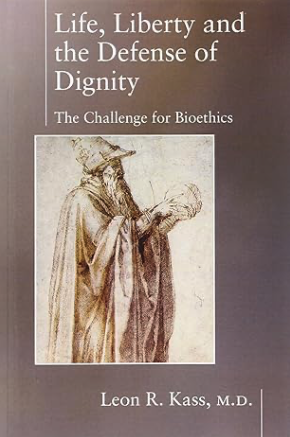
Leon Kass, author of Life, Liberty, and the Defense of Dignity: The Challenge for Bioethics, on why a commitment to life, liberty, and the pursuit of happiness is not enough to protect human dignity (Friday Feature and Conversation available)
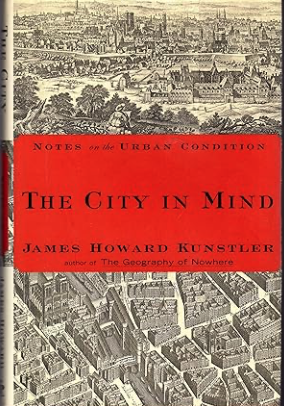
James Howard Kunstler, author of The City in Mind: Notes on the Urban Condition, on how designing spaces that respect cars but not pedestrians has made so much of America unlovable if not unlivable (Anthology available)
Related reading and listening
- Modernity’s crisis of place — Craig Bartholomew reflects on the importance of place to our humanity. (58 minutes)
- The Bride of Christ — John Cavadini explores the different views of Origen and Augustine as to the nature and mission of the Church, and he calls for a recovery of the identity of the Church as the Bride of Christ. (38 minutes)
- Reason and the love of truth —
FROM VOL. 97 James Peters discusses historical understandings of reason and rationality and how they differ from the modern notion of rationality. (21 minutes) - Early ambivalence toward anti-Nazi resistance —
FROM VOL.107 Biographer Ferdinand Schlingensiepen talks about the memory of Dietrich Bonhoeffer in the post-war period of Germany, and how his popularity changed over the years. (15 minutes) - A humanist urban vision for Chicago — Philip Bess imagines what metropolitan Chicago might look like in one hundred years if it were designed according to classical humanist principles and with an overt acknowledgement of sacred order. (93 minutes)
- A “cosmological omnibus” — George Grant recounts the fascinating history of Hernando Colón’s attempt in the 16th century to curate a universal library of the world’s knowledge. (41 minutes)
- The cost of “killing” God — In this October 2023 lecture, Carl Trueman explores the concept of “desecration” as a frame for understanding the nature of modernity in our time. (42 minutes)
- Silence at the end of history — Alan Jacobs examines several literary imaginings of “the last days” and argues that such narration is profoundly inadequate and perhaps even presumptuous. (51 minutes)
- Theology and the imagination — Jeffrey Barbeau explains what made C. S. Lewis an effective “translator” of theology for non-theologians. (21 minutes)
- Cosmic realities in the built world — Christopher and Christine Perrin discuss the implications of architect Christopher Alexander’s (1936–2022) discovery of patterns of building that cohere with the the created cosmos and with ourselves as human creatures. (59 minutes)
- Mystery novels with theological concerns — In these interviews from 1993, mystery author P. D. James speaks about the philosophical and theological issues woven into her novels, and Alan Jacobs discusses James’s novel The Children of Men. (23 minutes)
- Landscape and living memory —
FROM VOL. 44 Gayle Brandow Samuels examines the ways in which trees have served as anchor-points for memory and identity in American culture. (9 minutes) - City of God, City of Man — Architect Philip Bess discusses how our modern-day confusion and moral illiteracy are worked out visibly in the cities and buildings our architects create. (57 minutes)
- The de(con)struction of the humanities (and of truth) — Historian Gertrude Himmelfarb on the skeptical tendencies of the postmodern academy
- Man as “both mystic and hobbit” — D. C. Schindler explores how building is a quintessential human activity and an expression of our view of the meaning of reality. (47 minutes)
- Mars Hill Audio Journal, Volume 165 — FEATURED GUESTS: Jeffrey Bilbro, Daniel McInerny, Joseph Minich, Carl Elliott, Nadya Williams, and Don W. King
- The reciprocity of all things —
FROM VOL. 148 Jeffrey Bilbro explores the importance of sustainability through the essays, poetry and fiction of Wendell Berry. (13 minutes) - What are students for? —
FROM VOL. 140 Drawing from Wendell Berry’s works, Jack Baker and Jeffrey Bilbro discuss a vision of higher education that respects a multidimensional notion of place. (23 minutes) - Georges Bernanos & the Mystery of the Human Person — Translator J. C. Whitehouse praises French novelist Georges Bernanos’s profundity in exploring the depths of the human soul through the vehicle of fiction. (58 minutes)
- Power to the people — Nathan O. Hatch on the DIY spirit of early American Christianity
- A mixed reception —
FROM VOL. 162 Mark Noll discusses early critical reception of C. S. Lewis’s work in America. (29 minutes) - The Protestant project and indifference concerning God — Stanley Hauerwas on Alasdair MacIntyre’s critique of Protestant liberals
- “Only a real world can save us” — Oliver O’Donovan explores how the “religion” of modernity lacks a coherent world in which one may participate with full human agency and moral purpose. (Lecture 3 of 3; 61 minutes)
- The roots of “the indignant self-righteousness of protest” in modern politics — Alasdair MacIntyre on why unmasking nefarious motives became “one of the most characteristically modern of activities”
- The recovery of an integrated ecology — In this essay, Michael Hanby unpacks the summons of Laudato si’ to an ecological way of life based on a proper understanding of creation in its fullness and integrity. (57 minutes)
- Antagonism or fruitfulness? —
FROM VOL. 108 Jean Porter describes how natural law justifies legal and moral authority within the life of the human person. (17 minutes) - In defense of “society” — Dr. Russell Hittinger discusses the development in 19th-century Catholic social thought of the idea of society as a spiritual and cultural reality. (60 minutes)
- Natural law as “performance” —
FROM VOL. 124 R. J. Snell discusses how novel ideas about natural law focus less on moral propositions and concepts and more on the thrust for meaning and value. (27 minutes) - A poet’s relationship to time —
FROM VOL. 57 Poet Wilmer Mills (1969–2011) discusses how his agricultural and cross-cultural childhood in Brazil shaped his imagination and his relationship with modernity. (11 minutes) - The life of the city in poetry —
FROM VOL. 1 Ken Myers talks with W. H. Auden’s biographer and literary executor, Edward Mendelson, about political and social themes in Auden’s poetry. (7 minutes) - The downward spiral of all technocracies — Andrew Willard Jones explains the two paths that exist with the development of new technologies: one which leads to an expansion of the humane world and one which exploits and truncates both Creation and humanity. (65 minutes)
- To see people as people — Anthony Bradley argues that a recovery of Christian personalism is needed to counter the dehumanization, polarization, and tribalism of our day. (45 minutes)
- Ethical issues in neurobiological interventions — William Hurlbut explores current neurobiological advancements and the ethics and dangers of biotechnology interventions that go beyond therapy. (62 minutes)
- Gratitude and stewardship as political postures —
FROM VOL. 118 Mark Mitchell explores the consequences of four concepts that are sadly missing from most political debates today: creatureliness, gratitude, human scale, and place. (18 minutes) - An embedded life — Following a move from one state to another, Gilbert Meilaender explores the tension between being simultaneously a sojourner and a body located in place and time. (30 minutes)
- Against hacking babies — Oliver O’Donovan raises questions about IVF and the technologically ordered motive for efficiency
- Lex Rex, or Vox Populi Lex, or Rex Lex? — Law professor Li-ann Thio on the theological roots of belief in the rule of law
- Gratitude, vitalism, and the timid rationalist — In this lecture, Matthew Crawford draws a distinction between an orientation toward receiving life as gift and a timid and cramped rationalism that views man as an object to be synthetically remade. (52 minutes)
- Humans as biological hardware — In this essay, Brad Littlejohn and Clare Morell decry how modern technology tends to hack the human person in pursuit of profit. (55 minutes)
- A richer, deeper view of human dignity —
FROM VOL. 98 Moral philosopher Gilbert Meilaender examines the question of human dignity and its place within political discourse. (25 minutes) - “The system will be first” —
FROM VOL. 27 Robert Kanigel describes the transformation of work due to Frederick Winslow Taylor’s concept of scientific management. (11 minutes) - The theological significance of current events —
FROM VOL. 65 George Marsden discusses how Jonathan Edwards (1703–1758) understood world history and the American experience. (14 minutes) - Countering American apathy toward history —
FROM VOL. 124 Historian John Fea discusses how American and Protestant individualism continues to influence our orientation toward the past. (22 minutes) - Privacy and a right to kill —
FROM VOL. 60 Russell Hittinger explains the legal history behind the “right to privacy” and how it was used in landmark cases involving abortion and physician-assisted suicide. (33 minutes) - Faith that is more than “chemically pure” — Romano Guardini on sustaining a Christian understanding of all of Creation
- Critiquing “empire criticism” — Allan Bevere and Peter Leithart evaluate “empire criticism,” a way of reading the New Testament with an anti-imperial focus. (36 minutes)
- Human nature through the eyes of Lucian Freud —
FROM VOL. 7 Art critic and sculptor Ted Prescott discusses the work of British realist painter Lucian Freud (notably, the grandson of Sigmund Freud). (8 minutes) - Depicting the human form —
FROM VOL. 6 Ted Prescott explains the history of portraying the nude human body in art and contrasts it with the way the naked human form is often used in advertising. (9 minutes) - “Gender” as ultimate separation — In this November 2018 lecture, Margaret McCarthy explains how the predictions of Pope Paul VI’s Humanae vitae regarding the consequences of separating sex from procreation have proven true. (38 minutes)
- Virgil and purposeful history — In this lecture from June 2019, classical educator Louis Markos examines Book II of The Aeneid to argue that Virgil had an eschatological view of history. (68 minutes)