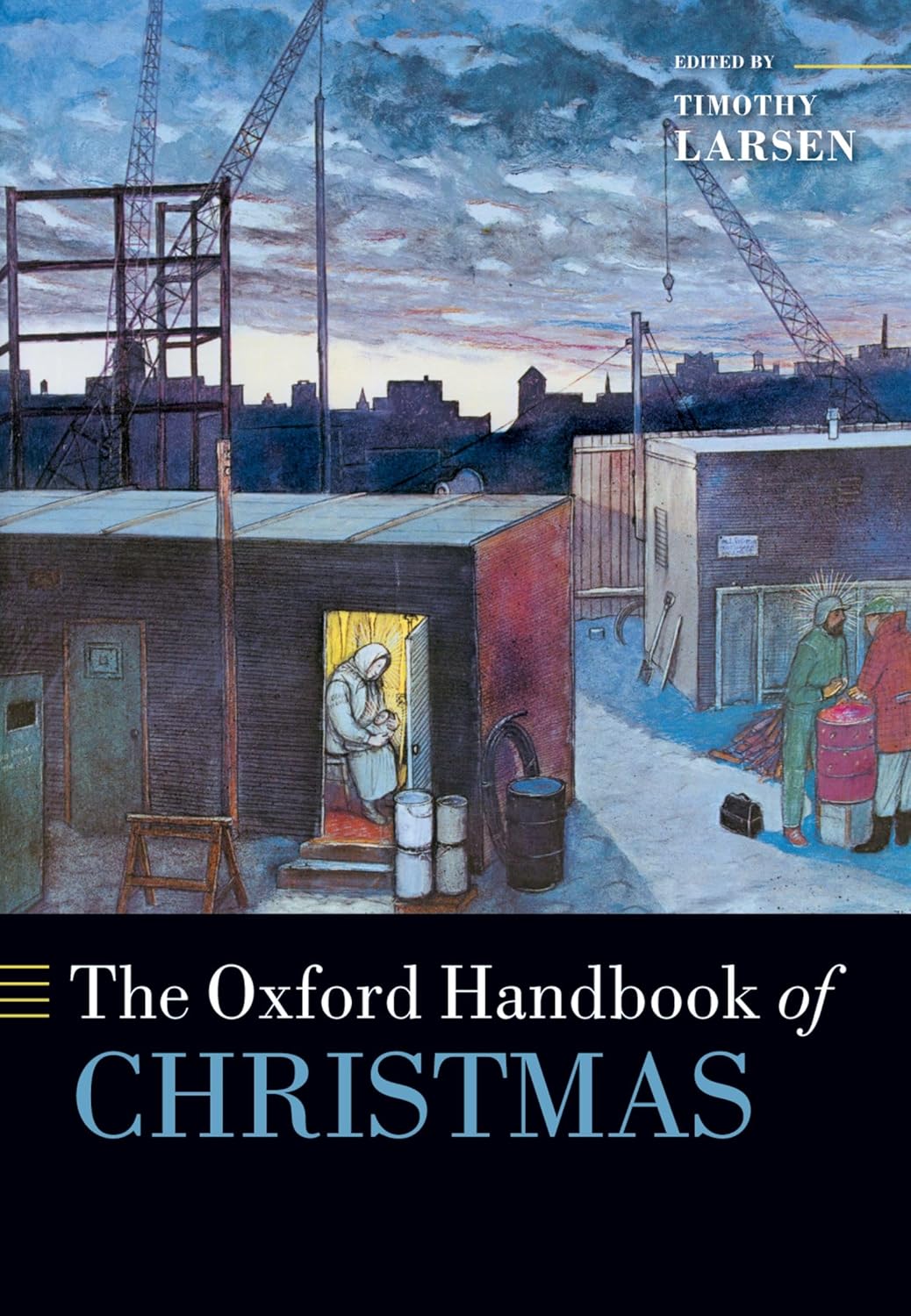
“Music played an important role in Lutheran worship from the beginning. In his own efforts to get sacred music to the people, Martin Luther adapted and translated into German some of the old Catholic hymns and chants, creating a new kind of congregational song called a ‘chorale’ — a theologically sound text paired with a simple melody sung by the entire congregation in unison, or featured in a multi-voice setting for choir or congregation. Chorale melodies could be drawn from the plainchant of the Catholic Church, from non-liturgical sacred song, or from vernacular folk songs. Two of Luther’s earliest and best-known Christmas chorales were the Advent hymn ‘Nun komm, der Heiden Heiland’ (‘Savior of the Nations, Come’), a rhymed adaptation of the venerable Ambrosian hymn Veni redemptor Gentium, and ‘Christum wir sollen loben schon’ (‘We Should Praise Christ Beautifully’), based on the fifth-century Christmas hymn by Sedulius, A solis ortus cardine. Like many chorales, both of these went on to have an illustrious life in settings for various vocal and instrumental groups, by composers from Luther’s friend Thomas Walter to J. S. Bach and beyond.
“Beyond his many four-part chorales, organ preludes, and multi-movement Christmas cantatas, Bach’s most important contribution to Christmas music is his Weihnachts-Oratorium, or Christmas Oratorio (BWV 248), a massive work written for performance in church across six days of the Christmas season of 1734: Part I, for Christmas Day, on the birth of Jesus; Part II, for 26 December, on the angels’ message to the shepherds; Part III, for 27 December, on the adoration of the shepherds; Part IV, for New Year’s Day, on the circumcision and naming of Jesus; Part 5, for the first Sunday after the New Year, on the journey of the Magi; and Part 6, for Epiphany (6 January), on the adoration of the Magi. Markus Rathey has shown how this arrangement offered churchgoers in Leipzig an almost two-week reflection on the dramatic events of the biblical narrative, modelling and encouraging the ‘internalization of religiosity’ emphasized by Lutheran officials who opposed the exterior celebrations, including masked plays and door-to-door pageantry, that had marked German Christmastides past. Indeed, covering the same narratives as many of the special chants, tropes, and dramas performed over these same days in the medieval Church, Bach’s oratorio, like his cantatas, emphasized not only the standard teachings regarding the first and second comings of Christ but, more particularly, the mandate to welcome Christ into one’s own heart in the here and now, a concept common both to medieval mysticism and seventeenth- and eighteenth-century piety. (Isaac Watts’s memorable line, ‘Let evry heart prepare him room’, from ‘Joy to the World’ [1719] comes to mind.) In the closing hymn-chorale of Part I, Ach mein herzliebes Jesulein (from the thirteenth stanza of Luther’s Christmas chorale Vom Himmel hoch), the believer invites baby Jesus to make his cradle in the believer’s heart. The alto aria near the end of Part III, Schließe, mein Herze — the only newly composed aria in the whole work — encourages the believer’s heart to hold this blessed wonder (of Jesus’s Incarnation) fast within its faith. This emphasis on the interior emotions, not only of joy, but of wonder, trust, comfort, gratitude, deep love, and desire, and on the heart as the place for Christmas celebration, would endure through the eighteenth and nineteenth centuries.”
— from Tova Leigh-Choate, “Carols and Music to 1900,” in Timothy Larsen, ed., The Oxford Handbook of Christmas (Oxford University Press, 2020)
This post was originally published on December 30, 2024.
Related reading and listening
The roots of J. S. Bach’s fruitfulness — Music historian Markus Rathey explains why and how J. S. Bach composed his choral works as he did. (54 minutes)
Celebrating Christmas with Bach (through Epiphany) — Ken Myers offers a detailed introduction to J. S. Bach’s Christmas Oratorio, a work composed to be sung on six occasions from Dec. 25th to Jan. 6th
Rose without thorns — Ken Myers introduces various settings of “Ther is no rose of swych vertu,” a medieval carol that uses imagery of a rosebush to describe the Virgin Mary. (29 minutes)
Anticipation and festivity — Tova Leigh-Choate on the earliest forms of musical celebration during Advent and Christmas
Nun komm der Heiden Heiland — Ken Myers looks at the history of an Advent hymn written by St. Ambrose in the fourth century, adapted by Martin Luther in the sixteenth century, and transformed by J. S. Bach and many others in the years since. (21 minutes)
An ancient liturgical form — Calvin Stapert on the long history of recounting Christ’s sufferings musically
The St. Matthew Passion: A Listener’s Guide — In this lecture, Paul Munson guides listeners into a deeper theological and musical appreciation of J. S. Bach’sSt. Matthew Passion. (1 hour 48 minutes)
Musicologist Michael Marissen discusses the masterful way in which J. S. Bach uses musical idiom and quotation by way of theological counterpoint to the texts of his sacred vocal works. (13 minutes)
Gifts for a baby King — Ken Myers introduces listeners to various musical compositions created for Epiphany (January 6), the Church’s feast day celebrating the revelation of Christ to the world. (25 minutes)
“The angels sang, and the shepherds too” — Ken Myers introduces listeners to the Christmas musical compositions of French composer Marc-Antoine Charpentier (c.1645–1704). (19 minutes)
The physical beauty of music — Music can be likened to a cathedral, says professional guitarist Gordon Kreplin, when it creates through silence and sound a meditative space into which one may enter and encounter God. (14 minutes)
David Bentley Hart describes how the Christian understanding of Creation as beauty and gift, as the outward expression of the delight the Trinity has in itself, reveals a vision of reality different from the pagan or fatalist vision of reality. (12 minutes)
Genealogy of a work of praise — For Good Friday, Ken Myers tells the history of the text and music behind the popular hymn, “O Sacred Head, now wounded.” (27 minutes)
Bach retrospective — In light of Passiontide and Holy Week, Ken Myers revisits three interviews — with Calvin Stapert, Robin Leaver, and Christoph Wolff — that provide an illustrative background for listeners to appreciate J. S. Bach’s theological attentiveness and scholarly genius. (36 minutes)
The infinity of beauty in Bach — David Bentley Hart on why Johann Sebastian Bach is the greatest of Christian theologians
In dulci jubilo — Ken Myers introduces some of the music for the season composed by Michael Praetorius (1571–1621), best known for his settings of Es ist ein Ros entsprungen (“Lo how a rose e’er blooming”) and In dulci jubilo.(18 minutes)
The music and the notes are precious — Ken Myers encourages an understanding of the Church as a particular culture that should be nourished and sustained, and then describes the history of an Advent hymn written by St. Ambrose. (27 minutes)
Passions before Bach — In preparation for Holy Week, Ken Myers presents a whirlwind music history lesson with musical examples from the sixteenth, seventeenth, and eighteenth centuries. (22 minutes)
The mysteries and glory of Christmas and its music — Ken Myers presents examples of music from five centuries that captures some sense of the astonishing fact of the Nativity of our Lord. (26 minutes)
Martin Luther, Printing, and the Making of the Reformation — Historian Andrew Pettegree(Brand Luther: 1517, Printing, and the Making of the Reformation) describes how Luther’s facility for writing in German and his intuitive business sense spread ideas and transformed the distribution model of the printing industry. (55 minutes)
Music for Good Friday — A conversation with Markus Rathey and Michael Marissen about Johann Sebastian Bach’sSt. John Passion. (12 minutes)
Mars Hill Audio Journal, Volume 137 — FEATURED GUESTS:
Gilbert Meilaender, James L. Nolan, Joel Salatin, Michael Di Fuccia, Robin Leaver, and Michael Marissen
Mars Hill Audio Journal, Volume 136 — FEATURED GUESTS:
Thomas Albert Howard, Mark Noll, Andrew Pettegree, Peter J. Leithart, Norm Klassen, James Litton, and Joseph O’Brien
Mars Hill Audio Journal, Volume 135 — FEATURED GUESTS:
Bob Cutillo, Hans Boersma, Dana Gioia, Matthew Levering, Bruce Gordon, and Markus Rathey
Mars Hill Audio Journal, Volume 120 — FEATURED GUESTS:
Douglas Rushkoff, Phillip Thompson, Jonathan Wilson, James Bratt, D. C. Schindler, and Paul Elie
Mars Hill Audio Journal, Volume 71 — FEATURED GUESTS: Peter Augustine Lawler, David Koyzis, Roger Lundin, Craig Gay, Steven Rhoads, and R. Larry Todd
Mars Hill Audio Journal, Volume 47 — FEATURED GUESTS: Christopher Clausen, Don Eberly, George Weigel, Luci Shaw, Steve Wilkens, David Harvey, John Durham Peters, and Masaaki Suzuki
Mars Hill Audio Journal, Volume 45 — FEATURED GUESTS: Jeff Speck, Victor Davis Hanson, Allan C. Carlson, Paulina Borsook, John F. Kilner, Robert E. Webber, and Christoph Wolff
Mars Hill Audio Journal, Volume 44 — FEATURED GUESTS: James Davison Hunter, Brian C. Robertson, David Myers, Robert Frank, Gayle Brandow Samuels, Thomas Hine, Thomas Hibbs, and Robin Leaver
Mars Hill Audio Journal, Volume 43 — FEATURED GUESTS: Jedediah Purdy, Lendol Calder, John Nelson, George Arasimowicz, James Calvin Schaap, Frederick Buechner, Kay Hymowitz, and Calvin Stapert
Mars Hill Audio Journal, Volume 41 — FEATURED GUESTS: Harry Blamires, David Healy, Paul Gutjahr, Christine Pohl, Francis Fukuyama, Paul Corby Finney, and J. A. C. Redford