
Guests heard on Volume 112
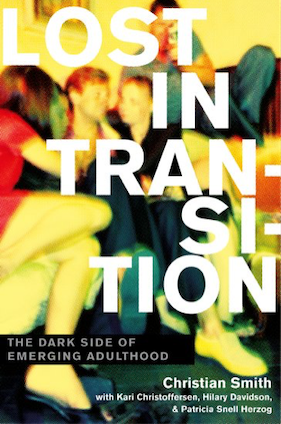
Christian Smith, author of Lost In Translation: The Dark Side of Emerging Adulthood, on why “emerging adults” feel compelled to keep all their options open, in life and in thought
David L. Schindler, author of Ordering Love: Liberal Societies and the Memory of God, on how modern liberalism fails to acknowledge the reality of God’s love in the order of Creation
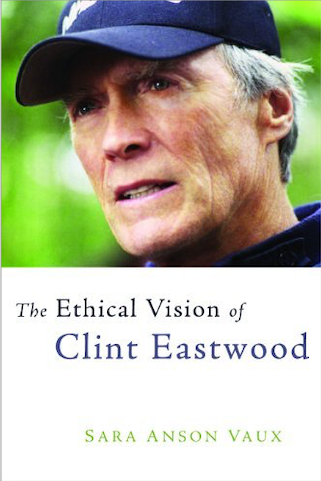
Sara Anson Vaux, author of The Ethical Vision of Clint Eastwood, on the moral vision of director Clint Eastwood
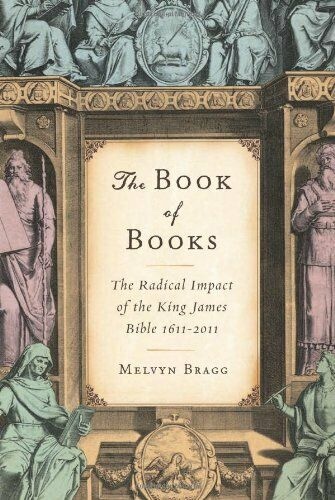
Melvyn Bragg, author of The Book of Books: The Radical Impact of the King James Bible, 1611-2011, on the origins and profound cultural influence of the King James Bible
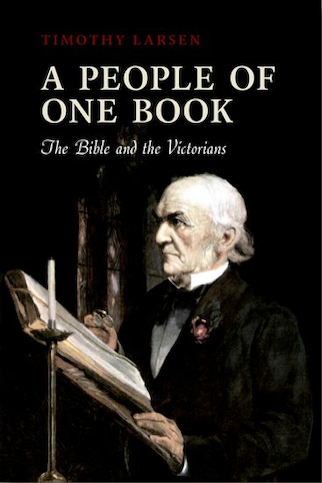
Timothy Larsen, author of A People of One Book: The Bible and the Victorians, on how Victorians were united in their preoccupation with the Bible, whether or not they believed in God
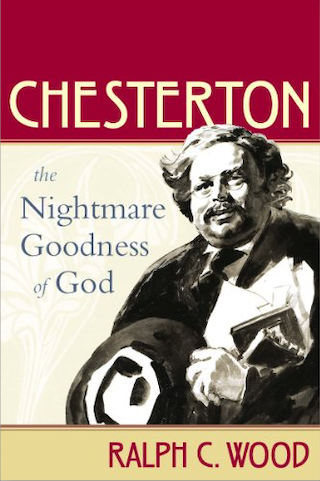
Ralph C. Wood, author of Chesterton: The Nightmare Goodness of God, on the sacramental vision of G. K. Chesterton, and on the enigmatic message of The Man Who Was Thursday (Archive Feature available)
Related reading and listening
- A sampling of newly published lectures — Ken Myers introduces listeners to four recently released lectures, courtesy of our Partners. The lecturers are Jennifer Frey, Gary Saul Morson, N. T. Wright, and Andrew Kern. (27 minutes)
- The just war tradition and whole-life discipleship — Daniel M. Bell, Jr. discusses the just war tradition, a tradition which is often invoked by figures who, upon closer inspection, tend to lack a robust understanding of its history and criteria. (57 minutes)
- The epistemology of love — In this lecture, N. T. Wright examines the epistemology of love and how it counters the reductionism of Enlightenment and Epicurean ways of knowing. (63 minutes)
- God also was a Cave-man — G. K. Chesterton on the convergence of omnipotence and impotence in Bethlehem
- “Emerging adulthood” —
FROM VOL. 100 Christian Smith discusses the aimless cultural world of emerging adulthood and on how it makes the idea of objective moral order implausible. (17 minutes) - Knowing and doing the good — Oliver O’Donovan raises several key questions and complications involved in the task of taking concrete and practical action toward a recognized moral good. (Lecture 3 of 3; 63 minutes)
- Moral knowledge of reality — Oliver O’Donovan argues that admiration is the fundamental form of knowing the world, as we cannot know fully those elements of reality (“bare facts”) that contain no significance for us. (Lecture 2 of 3; 55 minutes)
- A more robust account of political life —
FROM VOL. 138 John Milbank and Adrian Pabst on why politics needs to recognize the human soul in its depth (and what happens when it doesn’t). (51 minutes) - The collapse of public life —
FROM VOL. 154 D. C. Schindler explains how liberalism sought to make way for individuals to function together without any orientation to an explicit common good. (37 minutes) - To see people as people — Anthony Bradley argues that a recovery of Christian personalism is needed to counter the dehumanization, polarization, and tribalism of our day. (45 minutes)
- Mars Hill Audio Journal, Volume 164 — FEATURED GUESTS: Dana Gioia, Brady Stiller, Robert Royal, Richard DeClue, Tiffany Schubert, and Joonas Sildre
- An impoverished anthropology —
FROM VOL. 146 Mark Mitchell asks whether there is anything that truly binds Americans together beyond their commitment to self-creation. (34 minutes) - Liberalism’s self-destructive dynamic — T. S. Eliot on the social need to move toward something and not just away
- The fraught marriage of liberty and equality — In this essay, Patrick Deneen examines Alexis de Tocqueville’s complex and insightful portrait of “democratic man” living in the context of perpetual societal tension between the excesses of liberty and equality. (39 minutes)
- Victorian ideas about belief and doubt —
FROM VOL. 148 Timothy Larsen situates George MacDonald within a Victorian understanding of faith and doubt. (17 minutes) - “Prophet of holiness” — Timothy Larsen discusses a new edition of George MacDonald‘s Diary of An Old Soul, a slim book of poem-prayers to be read daily as a devotional aid. (30 minutes)
- The (super)natural theology of fairy-tales — Alison Milbank describes Chesterton’s belief that story-telling is an affirmation of transcendent meaning
- The fatal polytheism of late liberalism — Oliver O’Donovan on the failure that leads to social collapse, marked by conflict, suspicion, and violence
- The recovery of true authority for societal flourishing — Michael Hanby addresses a confusion at the heart of our current cultural crisis: a conflation of the concepts of authority and power. (52 minutes)
- Why liberalism tends toward absolutism — In this lecture, Michael Hanby examines what causes liberalism to become dictatorial in thought and practice. (49 minutes)
- Is liberalism compatible with religious freedom? — D. C. Schindler relies on two Thomistic axioms to illustrate why liberalism — which claims to offer a minimalist conception of the common good — is ultimately incompatible with a Catholic understanding of religious freedom. (34 minutes)
- Christopher Hitchens vs. G. K. Chesterton — Ralph Wood compares Christopher Hitchens‘s view of the cosmos with that of G. K. Chesterton, arguing that Chesterton succeeded where Hitchens failed. (44 minutes)
- The sacramental vision of G. K. Chesterton —
FROM VOL. 112 Ralph C. Wood describes G. K. Chesterton’s imagination as especially fruitful in conveying grace and edification to his readers. (19 minutes) - A fresh and refreshing imagination —
FROM VOL. 111 Biographer Ian Ker explains why G. K. Chesterton deserves wider recognition as a significant literary critic. (24 minutes) - G. K. Chesterton’s defiant joy —
FROM VOL. 110 Biographer Kevin Belmonte on how G. K. Chesterton embraced a “defiant joy” in spite of the cynical pessimism of many of his contemporaries. (16 minutes) - Bemused by joy — Fr. James V. Schall, S.J., on G. K. Chesterton’s awareness of the reality of both evil and joy
- Accounting for “the unfathomable sadness of pagan poetry” — Biographer Ian Ker on Chesterton’s rejection of the idea of the evolution of religions
- Seeing the Christian story for what it is — Dale Ahlquist discusses a new edition of G. K. Chesterton’s The Everlasting Man, to which he contributed an introduction, notes, and commentary. (34 minutes)
- Rejecting “two-tiered” Thomism —
FROM VOL. 155 David Bentley Hart on how “two-tier Thomism” deviates from historic Christian understanding of the relationship between God and Creation. (42 minutes) - The sovereignty of love — In this 2022 lecture, Oliver O’Donovan explains the historical background — and present consequences — of the assertion by Jesus of two great commands. (67 minutes)
- Larsen, Timothy — FROM THE GUEST PAGE: Timothy Larsen is McManis Professor of Christian Thought and Professor of History at Wheaton College (IL).
- Christology and human relationality — Joseph Ratzinger on how the longing for eternity expressed in human love is an analogue of Trinitarian love
- The basic act and order of things — David L. Schindler (1943–2022) insists that the reduction of love to a matter of private and personal sentiment, piety, or good will — is one of the fundamental disorders of modern culture. Christians should know better. (39 minutes)
- Challenging the “gospel of democracy” — Robert Kraynak argues that assumptions many modern Christians hold about liberal democracy are rooted in some false ideas about the nature and purpose of civil government. (46 minutes)
- Mars Hill Audio Journal, Volume 154 — FEATURED GUESTS: Felicia Wu Song, Michael Ward, Norman Wirzba, Carl Trueman, D. C. Schindler, and Kerry McCarthy
- Religion within the bounds of citizenship — In a 2006 lecture, Oliver O’Donovan argues that the conventional way of describing Western civil society creates obstacles to the participation of believers (Muslim, Christian, and other). (68 minutes)
- A foretaste of the kingdom of God — Oliver O’Donovan on the sovereignty of love
- Loving relationships in community — In conversation with moral philosopher Oliver O’Donovan, and with readings from his book, Entering into Rest, Ken Myers explores a central theme in O’Donovan’s work: that we are created to enjoy loving relationships in community. (27 minutes)
- Knowledge transformed by love — David K. Naugle on the reordered thinking of the redeemed
- Redefining gender — In this article from Communio, Margaret Harper McCarthy demonstrates that the attempt to eliminate the givenness of sexual difference rests on a denial of the created person’s origin in and ordination toward relations of love. (68 minutes)
- Marva Dawn on spiritual formation and being Church — This Feature presents an interview with Marva Dawn from Volume 38 of the Journal, during which she talks about concerns discussed in two of her books, related to the spiritual formation of children and a more holistic understanding of sex and intimacy. (23 minutes)
- Totalitarianism in a new mode — John Milbank on how liberalism has a marked tendency to become illiberal
- The impact of the King James Version of the Bible — Melvyn Bragg argues that the influence of the King James Version of the Bible on literature, politics, democracy, and civil rights has largely been airbrushed from history, despite its incontrovertible influence on cultural figures such as William Shakespeare. (22 minutes)
- A very figurative and metaphorical God — David Lyle Jeffrey on the poetic character of the voice of God
- Seeing things as they are — F. A. Lea on the imaginative vision of G. K. Chesterton
- Liberalism’s totalitarian logic — Antonio López on the logic of liberalism’s totalitarian tendencies
- Mars Hill Audio Journal, Volume 148 — FEATURED GUESTS: Steven D. Smith, Willem Vanderburg, Jeffrey Bilbro, Emma Mason, Alison Milbank, and Timothy Larsen
- Post-liberalism of an earlier generation — Allan C. Carlson discusses an anthology of articles from Free America, a magazine published between 1937 and 1947 whose writers believed that political democracy could only survive if coupled with decentralized economic democracy. (26 minutes)
- The Sixth Commandment and the obligation to protect public health — Ethicist Gilbert Meilaender explains why our experience with COVID-19 has made it difficult for many — citizens and officials — to honor a proper obligation to protect public health. (17 minutes)
- Mars Hill Audio Journal, Volume 147 — FEATURED GUESTS: R. Jared Staudt, Jason Peters, D. C. Schindler, Craig Gay, Mary Hirschfeld, and Patrick Samway