
PREVIEW
Guests heard on Volume 114

Susan Cain, author of Quiet: The Power of Introverts in a World That Can’t Stop Talking, on how the twentieth-century displacement of character by “personality” encouraged Americans to sell themselves (and marginalize introverts)
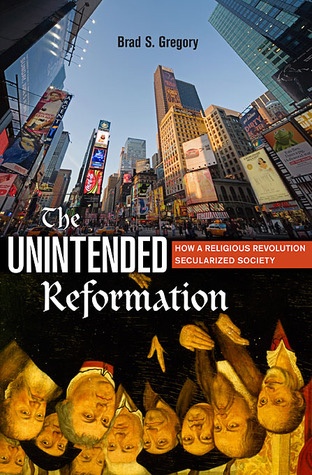
Brad S. Gregory, author of The Unintended Reformation: How a Religious Revolution Secularized Society, on the danger of assuming that previous epochs of history have no lasting influence, and how unintended consequences of the Reformation shrunk Christian cultural influence (Archive Feature available)
David Sehat, author of The Myth of American Religious Freedom, on why the story of religious liberty in America is more complicated than is often acknowledged
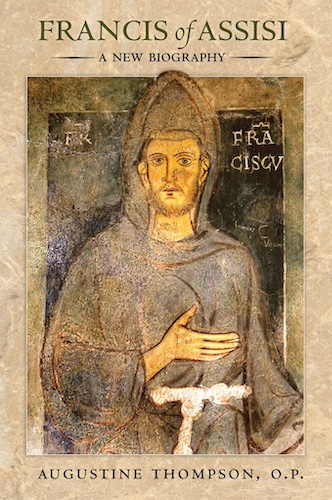
Augustine Thompson, O.P., author of Francis of Assisi: A New Biography, on the myths and realities of St. Francis of Assisi
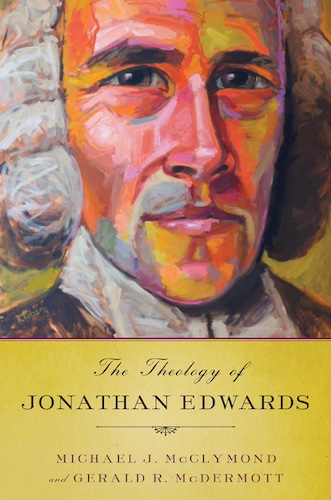
Gerald R. McDermott, author of The Theology of Jonathan Edwards, on how love and beauty are more fundamental in the thought of Jonathan Edwards than the image of an angry God
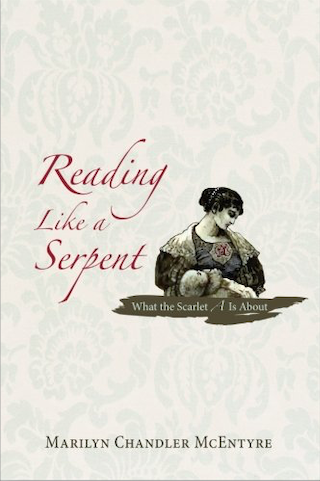
Marilyn Chandler McEntyre, author of Reading Like a Serpent: What the Scarlet A Is About, on lessons in The Scarlet Letter about wise ways of reading complex texts
Related reading and listening
- “A Myth Retold” — Literary critic Thomas Howard explains why he considers C. S. Lewis’s Till We Have Faces to be one of the author’s richest and most rewarding works. (18 minutes)
- The Bride of Christ — John Cavadini explores the different views of Origen and Augustine as to the nature and mission of the Church, and he calls for a recovery of the identity of the Church as the Bride of Christ. (38 minutes)
- Reason and the love of truth —
FROM VOL. 97 James Peters discusses historical understandings of reason and rationality and how they differ from the modern notion of rationality. (21 minutes) - Early ambivalence toward anti-Nazi resistance —
FROM VOL.107 Biographer Ferdinand Schlingensiepen talks about the memory of Dietrich Bonhoeffer in the post-war period of Germany, and how his popularity changed over the years. (15 minutes) - A sampling of newly published lectures — Ken Myers introduces listeners to four recently released lectures, courtesy of our Partners. The lecturers are Jennifer Frey, Gary Saul Morson, N. T. Wright, and Andrew Kern. (27 minutes)
- Grace and Christian realism — Jennifer Frey explores Thomist elements in Flannery O’Connor’s theology and writing, with a particular emphasis on a Thomist understanding of art. (39 minutes)
- Divine love and human sexuality — Paul Tyson argues that views about sexuality are downstream from theological — or at least metaphysical — assumptions about human nature. (16 minutes)
- A “cosmological omnibus” — George Grant recounts the fascinating history of Hernando Colón’s attempt in the 16th century to curate a universal library of the world’s knowledge. (41 minutes)
- Silence at the end of history — Alan Jacobs examines several literary imaginings of “the last days” and argues that such narration is profoundly inadequate and perhaps even presumptuous. (51 minutes)
- “Subtraction stories” and a longing for transcendence — In this lecture, James K. A. Smith explores key elements of Charles Taylor’s understanding of what it means to live in a secular age. (43 minutes)
- The beauty of truth and goodness —
FROM VOL. 141 James Matthew Wilson talks about how cultivating the desire to perceive the interior life of things sustains the basic human capacity for recognizing truth, pursuing wisdom, and contemplating beauty. (23 minutes) - The implausibility of belief —
FROM VOL. 123 James K. A. Smith discusses the evangelical and ecclesial ramifications for Christians living within Charles Taylor’s third wave of secularism. (25 minutes) - The pathos of sin —
FROM VOL. 15 Poet Robert Pinsky discusses his translation of Dante’s Inferno. (9 minutes) - Existential preparation for reading literature —
FROM VOL. 128 Rod Dreher recounts how he thought he was reading Dante’s Commedia, when in reality the poem was reading him. (18 minutes) - An icon of the whole world — Jason Baxter explains how Dante includes a panoply of characters and creatures in his Comedia, offering a prismatic view of all of Creation in its glory. (20 minutes)
- The soul’s awakening —
FROM VOL. 145 Jason Baxter discusses the great psychological subtlety in Dante’s Divine Comedy. (20 minutes) - How literature shaped Lewis —
FROM VOL. 155 Jason Baxter explains how reading medieval literature enabled C. S. Lewis to become a “naturalized citizen of the Middle Ages.” (25 minutes) - The “book” of Creation — Alan Noble explains why the modern world makes it profoundly difficult to experience Creation as revelation, and he encourages unmediated encounters with Creation that lead to meditation. (52 minutes)
- Heaven and earth are full of His glory — Gerald R. McDermott examines the typological tradition of the Church, particularly through Jonathan Edwards’s thought, and he argues for a recovery of the Christian understanding of the universe as an “immense Trinitarian symbol.” (61 minutes)
- Ontology and reality in fiction — Katy Carl discusses Catholic novelist Graham Greene’s skill in portraying the struggle between spiritual belief and doubt. (27 minutes)
- Sacred and Profane Love: Graham Greene and the Catholic Imagination — Katy Carl discusses novelist Graham Greene’s fiction and spiritual struggles in light of the concept of the Catholic imagination. (49 minutes)
- Alert to the magic in the world — Junius Johnson discusses the importance of teaching stories, particularly fairy stories, in classical education. (25 minutes)
- The de(con)struction of the humanities (and of truth) — Historian Gertrude Himmelfarb on the skeptical tendencies of the postmodern academy
- Thinking Together — Alan Jacobs discusses some principles he’s compiled to help us think well (and charitably) in our cultural context, and he warns us to be attentive to the ways technology displaces previously fixed communities. (53 minutes)
- The establishment of nonbelief —
FROM VOL. 10 George Marsden explains how and why American universities became places where religious concerns are excluded. (10 minutes) - Secularization and anarchy — Joseph Cardinal Ratzinger on the necessary connection between law, ethics, and worship
- Mars Hill Audio Journal, Volume 165 — FEATURED GUESTS: Jeffrey Bilbro, Daniel McInerny, Joseph Minich, Carl Elliott, Nadya Williams, and Don W. King
- Lives of generosity — Jonathan Wilson distinguishes between two fundamental ways of viewing Creation: a true Christian account of the world and a “survival of the fittest” one. (21 minutes)
- “Only a real world can save us” — Oliver O’Donovan explores how the “religion” of modernity lacks a coherent world in which one may participate with full human agency and moral purpose. (Lecture 3 of 3; 61 minutes)
- The life of the city in poetry —
FROM VOL. 1 Ken Myers talks with W. H. Auden’s biographer and literary executor, Edward Mendelson, about political and social themes in Auden’s poetry. (7 minutes) - The importance of literary reading —
FROM VOL. 70 Dana Gioia discusses the important role literary reading plays in society and the 2004 publication from the NEA about such reading. (13 minutes) - Flannery at 100 — In honor of Flannery O’Connor’s 100th birthday, we have gathered here an aural feast of interviews with O’Connor scholars and aficionados discussing her life, work, and faith. (3 hours, 28 minutes)
- Ideas made incarnate — In this lecture, Karen Swallow Prior examines the power of great literature to shape lives, nourish imaginations, and develop a vision of the good life. (43 minutes)
- Insights into O’Connor’s development as a writer —
FROM VOL. 160 Jessica Hooten Wilson discusses her experience studying and organizing Flannery O’Connor’s unfinished third novel, Why Do the Heathen Rage? (27 minutes) - Impact of “infotainment” on community — Neil Gabler and C. John Sommerville discuss how the mentalities conveyed by our experience with communications media work against the nurturing of community. (36 minutes)
- Modernity and the shaping of America —
FROM VOL. 48 Historian Jon Butler explains how aspects of modernity were already present and at work in colonial American life prior to 1776. (12 minutes) - The theological significance of current events —
FROM VOL. 65 George Marsden discusses how Jonathan Edwards (1703–1758) understood world history and the American experience. (14 minutes) - Countering American apathy toward history —
FROM VOL. 124 Historian John Fea discusses how American and Protestant individualism continues to influence our orientation toward the past. (22 minutes) - “A sign of contradiction” — In this lecture, Daniel Gibbons compares and contrasts understandings of sacramental poetics proposed by Augustine, Aquinas, and Sydney. (36 minutes)
- Education as a pilgrimage and a mystery — In this lecture, James Matthew Wilson gives a compelling argument for understanding the role of a literary or poetic education as an immersion of the whole being in truth and beauty. (43 minutes)
- Virgil and purposeful history — In this lecture from June 2019, classical educator Louis Markos examines Book II of The Aeneid to argue that Virgil had an eschatological view of history. (68 minutes)
- Good stewardship of language — Marilyn Chandler McEntyre discusses central themes from her 2009 book, Caring for Words in a Culture of Lies. ALSO: clips from 6 other programs about language. (36 minutes)
- Bearing well the burdens of the past, present, and future — Louis Markos shows how great literature like the Iliad links us to the human story and strengthens us to live fully and well. (65 minutes)
- The relationship between prudence and reality — In this lecture, Ken Myers explains how the virtue of prudence is fundamentally connected with a deep and anchored understanding of reality. (54 minutes)
- A metaphysics of realism, relationality, and personalism — John Milbank gives a survey and critique of the efforts of 20th and 21st century theologians to articulate a Trinitarian ontology that reflects reality and counters secularization. (61 minutes)
- Books worthy of a lifetime of encounters —
FROM VOL. 69 Daniel Ritchie discusses why great books programs survive mainly in Christian institutions while declining in secular ones. (13 minutes) - The political wisdom of Edmund Burke —
FROM VOL. 28 Daniel Ritchie discusses the enduring political wisdom of British statesman and political thinker Edmund Burke (1729–1797). (13 minutes) - Literature for wisdom, not propaganda —
FROM VOL. 23 Daniel Ritchie provides a constructive alternative to the ideological captivity of literature and literary studies. (13 minutes) - Apprehending the enduring things — Vigen Guroian explains how children’s literature has the capacity to birth the moral imagination in our children, affirming for them the permanent things. (53 minutes)
- Recovering the primacy of contemplation — Augusto Del Noce finds in St. Augustine resources to diagnose the fatal flaw in progressivism