PREVIEW
The player for this Journal volume is only available to current members or listeners with a legacy account. If you have an active membership, log in here. If you’d like to become a member — with access to all our audio programs — sign up here.
Guests heard on Volume 123
Nicholas M. Healy, author of Hauerwas: A (Very) Critical Introduction, on some of the practical and theological weaknesses in the writings of Stanley Hauerwas
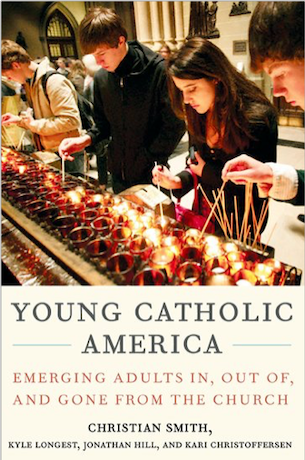
Christian Smith, author of Young Catholic America: Emerging Adults In, Out of, and Gone From the Church, on the spiritual lives of emerging adults raised within the Roman Catholic Church and taught at Catholic schools
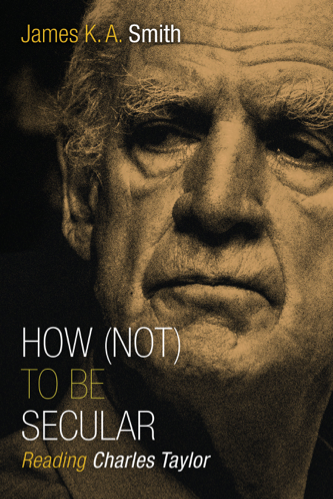
James K. A. Smith, author of How (Not) to Be Secular: Reading Charles Taylor, on Charles Taylor’s explanation (in The Secular Age) of how modern culture came to unlearn the theistic assumption of the West
Esther Lightcap Meek, author of A Little Manual for Knowing, on why pitting “objectivity” against “subjectivity” in describing the nature of knowledge isn’t helpful, and on why all knowing involves making a commitment
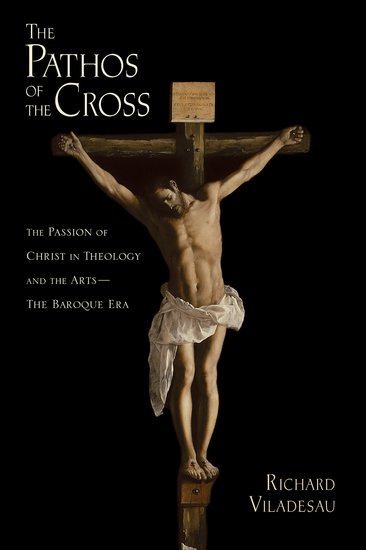
Richard Viladesau, author of The Pathos of the Cross: The Passion of Christ in Theology and the Arts — The Baroque Era, on the relationship between formal, propositional, academic theology and the theological expressions found in works of art and music
Jeremy Begbie, author of Music, Modernity, and God: Listening to Music, on why theologians should be more interested in how music and modernity have interacted
Related reading and listening
- Christian culture and the myth of the secular — Ken Myers draws on T. S. Eliot to argue that Western civilization has broken down, not into a multiplicity of cultures, but into a “post-culture.” (47 minutes)
- Modernity’s crisis of place — Craig Bartholomew reflects on the importance of place to our humanity. (58 minutes)
- A sampling of newly published lectures — Ken Myers introduces listeners to four recently released lectures, courtesy of our Partners. The lecturers are Jennifer Frey, Gary Saul Morson, N. T. Wright, and Andrew Kern. (27 minutes)
- The epistemology of love — In this lecture, N. T. Wright examines the epistemology of love and how it counters the reductionism of Enlightenment and Epicurean ways of knowing. (63 minutes)
- The cost of “killing” God — In this October 2023 lecture, Carl Trueman explores the concept of “desecration” as a frame for understanding the nature of modernity in our time. (42 minutes)
- “Investigations of divine works” — Greg Wilbur explains how closely connected music is to the order of the cosmos and how it even reveals attributes of God. (56 minutes)
- Cultural superiority and Medieval romance literature — FROM VOL. 164 Tiffany Schubert argues that Jane Austen’s novels subtly incorporate some medieval literary conventions in ways that enable modern readers to experience a sense of wonder, romance, and the benevolence of Providence. (30 minutes)
- “Subtraction stories” and a longing for transcendence — In this lecture, James K. A. Smith explores key elements of Charles Taylor’s understanding of what it means to live in a secular age. (43 minutes)
- How music blesses and teaches — FROM VOL. 64 Theologian and musician Jeremy Begbie explores what we learn about time, theology, and the structure of Creation from the experience of music. (28 minutes)
- The implausibility of belief — FROM VOL. 123 James K. A. Smith discusses the evangelical and ecclesial ramifications for Christians living within Charles Taylor’s third wave of secularism. (25 minutes)
- A flood of images — Oliver O’Donovan describes the distinctive character of publicity in modernity, which drowns us in a flood of ever-changing representations that do not serve the common good. (37 minutes)
- Publicity and representative images in society — Oliver O’Donovan describes the nature of publicity as the force that mediates our communication with one another, creating common interests and then rapidly subsuming them into newer ones.(Lecture 3 of 3; 57 minutes)
- Mordor versus the Shire — In this lecture, Heidi White explains how the modern project is a diabolical inversion of Christendom and calls for Christians to build lives and a culture that can counter it. (53 minutes)
- “Emerging adulthood” — FROM VOL. 100 Christian Smith discusses the aimless cultural world of emerging adulthood and on how it makes the idea of objective moral order implausible. (17 minutes)
- A false dichotomy — In this conversation from 2009, Dallas Willard (1934–2013) discusses the truth of spiritual knowledge and its epistemological validity. (63 minutes)
- Harbinger of disorder — Mark Mitchell on Michael Polanyi’s recognition of the dangerous dead-end of materialistic reductionism
- The vice of curiosity — Stanley Hauerwas on the warning from Paul Griffiths about desiring to own knowledge
- Passing on the virtues to the next generation — Theologian and ethicist Stanley Hauerwas reflects on being a godparent and the responsibility to cultivate and talk about Christian virtue. (21 minutes)
- The Protestant project and indifference concerning God — Stanley Hauerwas on Alasdair MacIntyre’s critique of Protestant liberals
- “Only a real world can save us” — Oliver O’Donovan explores how the “religion” of modernity lacks a coherent world in which one may participate with full human agency and moral purpose. (Lecture 3 of 3; 61 minutes)
- A life well lived — In this essay, Stanley Hauerwas explains the breadth and depth of Alasdair MacIntyre’s thought, the goal of which was to help people to act intelligibly and live morally worthy lives. (40 minutes)
- Sacramental Poetics — Poet and Eastern Orthodox believer Scott Cairns explains how a good poem functions like an icon: it assists the process of our becoming aware of what is real, and it is generative in the ways it keeps opening up new understandings. (56 minutes)
- Music that conveys spiritual truths — FROM VOL. 137 Musicologist Michael Marissen discusses the masterful way in which J. S. Bach uses musical idiom and quotation by way of theological counterpoint to the texts of his sacred vocal works. (13 minutes)
- A poet’s relationship to time — FROM VOL. 57 Poet Wilmer Mills (1969–2011) discusses how his agricultural and cross-cultural childhood in Brazil shaped his imagination and his relationship with modernity. (11 minutes)
- Dickinson and modern malaise — FROM VOL. 36 Roger Lundin explains how Emily Dickinson’s understanding of love, nature, religion, and mortality are modern in content. (11 minutes)
- How discovery happens — Esther Lightcap Meek on Michael Polanyi’s account of scientific discovery
- Making contact with reality — FROM VOL. 139 Esther Lightcap Meek discusses the realism of philosopher and chemist Michael Polanyi. (23 minutes)
- Steward of knowledge vs. autonomous knower — FROM VOL. 66 Esther Lightcap Meek challenges the modernist view of knowledge, which prefers the figure of the autonomous knower to the figure of a steward of knowledge acquired in part from others. (15 minutes)
- Modernity and the shaping of America — FROM VOL. 48 Historian Jon Butler explains how aspects of modernity were already present and at work in colonial American life prior to 1776. (12 minutes)
- Music, silence, and the order of Creation — In this lecture, Ken Myers explains how it is that our participation in harmonic beauty in music is a kind of participation in the life of God, in Whom all order and beauty coheres and is sustained. (61 minutes)
- Mars Hill Audio Journal, Volume 163 — FEATURED GUESTS: Andrew Youngblood, R. J. Snell, Nicholas Denysenko, Nigel Biggar, Robert McNamara, and David Cayley
- Embodied knowledge — FROM VOL. 121 James K. A. Smith advocates for a return to some pre-modern conceptualizations of the human body. (18 minutes)
- Music and the meaning of Creation — In this 2018 lecture, Ken Myers advocates for a recovery of the pre-Enlightenment idea of the intelligibility of music. (61 minutes)
- Counterpoint as a “spirited discussion” — In this essay, John Ahern explains the beauty and order of counterpoint, the accumulation of multiple melodies that come together in a harmonious whole. (20 minutes)
- Science’s need for philosophy and revelation — D. Stephen Long explores a consistent theme in the work of theologian Hans Urs von Balthasar: the relationship between Christianity, modernity, and secularity. (46 minutes)
- Augusto Del Noce’s critique of modernity — FROM VOL. 128 Physicist and mathematician Carlo Lancellotti discusses the life and work of twentieth-century Italian philosopher, Augusto Del Noce. (25 minutes)
- Faith as the pathway to knowledge — Lesslie Newbigin on authority and the Author of all being
- The integration of theoretical and mythic intelligence — FROM VOL. 156 William C. Hackett discusses the relationships between philosophy and theology, and of both to the meaning embedded in myth. (29 minutes)
- The formation of affections — FROM VOL. 101 James K. A. Smith explains how education always involves the formation of affections and how the form of Christian education should imitate patterns of formation evident in historic Christian liturgy. (15 minutes)
- A fearful darkness in mind, heart, and spirit — Roberta Bayer draws on the work of George Parkin Grant (1918–1988) to argue that our “culture of death” must be countered with an understanding of reality based in love, redemptive suffering, and a recognition of limitations to individual control. (33 minutes)
- How music reflects and continues the created order — Musician, composer, and teacher Greg Wilbur explores how music reflects the created order of the cosmos. (55 minutes)
- Cleansing sea breezes — Thomas C. Oden argues that rather than being conformed to contemporary ideological trends, we should be informed by 2000 years of the Church’s wisdom. And Darrell Amundsen corrects some false claims about the early Church’s views on suicide. (27 minutes)
- Divorcing the spirit of the age — Thomas C. Oden on overcoming the theological faddism of the late twentieth century
- Orienting reason and passions — In an essay titled “The Abolition of Mania” (Modern Age, Spring 2022), Michael Ward applies C. S. Lewis’s insights to the polarization that afflicts modern societies. (16 minutes)
- Developing a Christian aesthetic — In the inaugural lecture for the Eliot Society, titled “Faithful Imaginations in a Meaningful Creation,” Ken Myers addresses the question of the relationship between the arts and the Church. (59 minutes)
- The negation of transcendence — Michael Hanby argues that our current civilizational crisis can be understood as a “new totalitarianism” that negates or disallows every form of transcendence. (32 minutes)
- Lessons from Leviticus — The book of Leviticus may be assumed to be irrelevant for charting a way through the challenges of modernity. Theologian Peter J. Leithart disagrees. (22 minutes)
- Mars Hill Audio Journal, Volume 161 — FEATURED GUESTS: Andrew Wilson, Kyle Edward Williams, Andrew James Spencer, Landon Loftin, Esther Lightcap Meek, Andrew Davison
- Smith, James K. A. — FROM THE GUEST PAGE: James K. A. Smith is Professor of Philosophy at Calvin University, where he holds the Gary & Henrietta Byker Chair in Applied Reformed Theology and Worldview.
- Meek, Esther Lightcap — FROM THE GUEST PAGE: Esther Lightcap Meek is Professor of Philosophy Emeritus at Geneva College, in Western Pennsylvania, and Senior Scholar with The Seattle School for Theology and Psychology.