
PREVIEW
Guests heard on Volume 132
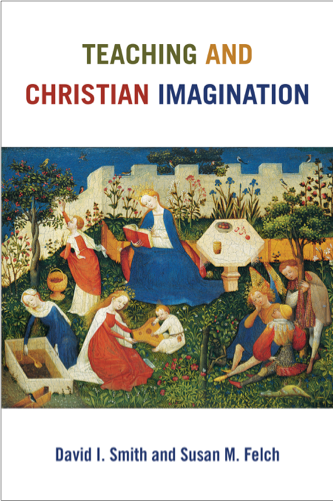
David I. Smith, co-author of Teaching and Christian Imagination, on how metaphors assumed by teachers lead them to imagine the vocation of teaching
read moreSusan Felch, co-author of Teaching and Christian Imagination, on how the metaphors of gardens, building, and feasting can inform the task of education
read more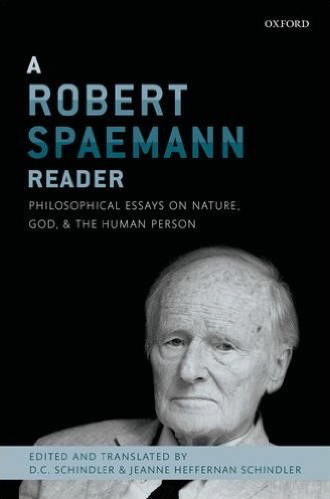
D. C. Schindler, translator of A Robert Spaemann Reader: Philosophical Essays on Nature, God, and the Human Person, on philosopher Robert Spaemann’s understanding of a teleological nature (Archive Feature available)
read more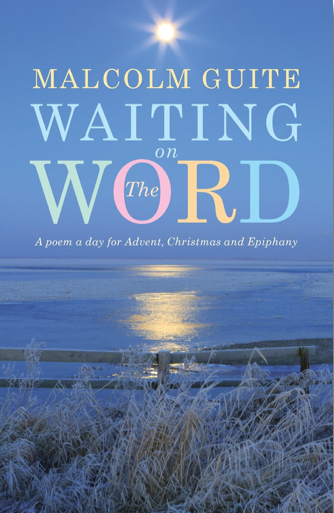
Malcolm Guite, author of Waiting on the Word: A Poem a Day for Advent, Christmas, and Epiphany, on his seven sonnets based on the ancient “O Antiphons” sung traditionally during Advent
read more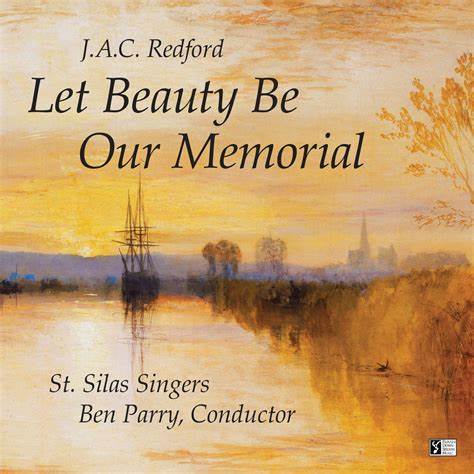
J. A. C. Redford, composer of “Let Beauty Be Our Memorial,” on setting Malcolm Guite’s “O Antiphon” sonnets to music
read moreRelated reading and listening
- Paradoxes of “nature” and “culture” — Robert Spaemann, on the destructive consequences of a merely naturalistic understanding of nature
- In tune with the muses of Zion — Ken Myers on the Christmas music of Michael Praetorius
- To be at home in the world — D. C. Schindler examines how rituals enable us to experience time in a meaningful way — how they actually make time habitable for us. (41 minutes)
- Nun komm der Heiden Heiland — Ken Myers looks at the history of an Advent hymn written by St. Ambrose in the fourth century, adapted by Martin Luther in the sixteenth century, and transformed by J. S. Bach and many others in the years since. (21 minutes)
- Guite, Malcolm — FROM THE GUEST PAGE: Malcolm Guite is a poet and priest who lectures widely in England and North America on theology and literature and has published poetry, theology, and literary criticism.
- Life more abundantly — Jeanne Schindler advocates for a return to an understanding and prioritizing of sensory experience — real engagement with the real world — as foundational to learning and living. (35 minutes)
- Alert to the magic in the world — Junius Johnson discusses the importance of teaching stories, particularly fairy stories, in classical education. (25 minutes)
- Prayer and complexity in Arvo Pärt’s music — In honor of Estonian composer Arvo Pärt’s 90th birthday, Ken Myers talks with Peter Bouteneff, about the singular qualities of Pärt’s music. (19 minutes)
- Man as “both mystic and hobbit” — D. C. Schindler explores how building is a quintessential human activity and an expression of our view of the meaning of reality. (47 minutes)
- Students as arbiters of knowledge —
FROM VOL. 94 Tim Clydesdale discusses the experience of freshmen year at college, suggesting that by that time students have been effectively inoculated against a love of knowledge. (21 minutes) - Helping boys become virtuous men — Teacher and chaplain Mark Perkins describes forms of formation that take the body seriously 50 minutes
- What is beyond our choosing? — D. C. Schindler on our nihilistic quest for freedom
- The Transformed Vision of Samuel Taylor Coleridge — Poet Malcolm Guite explores the dramatic and even prophetic parallels between the life of Samuel Taylor Coleridge and that of the titular character in his famous poem “The Rime of the Ancient Mariner.” (59 minutes)
- The hatred of logos — D. C. Schindler draws on Plato to argue that in its very form, social media evidences a general contempt for logos — reason and language — which defines man. (26 minutes)
- Politics and the good —
FROM VOL. 160 D. C. Schindler argues that political order cannot be disentangled from the social, and that fundamental questions of what humans are and what the good is cannot be bracketed from politics. (30 minutes) - The collapse of public life —
FROM VOL. 154 D. C. Schindler explains how liberalism sought to make way for individuals to function together without any orientation to an explicit common good. (37 minutes) - Truth, goodness, and beauty (and why they matter) —
FROM VOL. 147 Philosopher D. C. Schindler examines how postmodernism poses a unique threat to our sense of an interior self. (28 minutes) - The interiority of reality —
FROM VOL. 132 D. C. Schindler discusses the thought of contemporary German philosopher Robert Spaemann, and his defense of a purposeful structure in nature. (28 minutes)) - The dramatic ecstasy of reason —
FROM VOL. 120 D. C. Schindler argues that the Enlightenment was not wrong for giving too much to reason; it was wrong in endorsing an impoverished conception of reason. (19 minutes) - Speaking the word in love — In this lecture, D. C. Schindler examines core insights from Ferdinand Ulrich on the central vocation of man and the meaning of being. (32 minutes)
- The profound drama of human sexuality — In this lecture, D. C. Schindler explains the cosmological significance of human sexuality and why it is paradigmatic of the relationship between nature and freedom. (32 minutes)
- Personhood and the gift of the self — In this lecture, D. C. Schindler examines the concept of self-gift which was central to Karol Wojtyła’s thought. (39 minutes)
- Governments officially committed to ignorance — In this lecture, D. C. Schindler explains why authority, properly understood, is essential to genuinely human life. (39 minutes)
- Music that conveys spiritual truths —
FROM VOL. 137 Musicologist Michael Marissen discusses the masterful way in which J. S. Bach uses musical idiom and quotation by way of theological counterpoint to the texts of his sacred vocal works. (13 minutes) - Countering American apathy toward history —
FROM VOL. 124 Historian John Fea discusses how American and Protestant individualism continues to influence our orientation toward the past. (22 minutes) - Education that counters alienation — In this lecture, Jeanne Schindler explores how digital technologies warp not only education but our experience of being human. (30 minutes)
- Education vs. conditioning — Education necessarily involves metaphysical and theological preconditions, and Michael Hanby argues that our current education crisis is a result of society rejecting these preconditions. (41 minutes)
- Knowing by heart — D. C. Schindler reflects on Plato’s idea of “conversion” in education, assuming the symbol of the heart as the center of man. (39 minutes)
- Education as a pilgrimage and a mystery — In this lecture, James Matthew Wilson gives a compelling argument for understanding the role of a literary or poetic education as an immersion of the whole being in truth and beauty. (43 minutes)
- Submission to mathematical truth — In this lecture, Carlo Lancellotti argues that integration of the moral, cognitive, and aesthetic aspects of mathematics is needed in a robust liberal arts mathematics curriculum. (25 minutes)
- Gifts for a baby King — Ken Myers introduces listeners to various musical compositions created for Epiphany (January 6), the Church’s feast day celebrating the revelation of Christ to the world. (25 minutes)
- Seven Messianic titles, seven attributes of Christ — Ken Myers introduces listeners to four composers who each have set all seven of the O Antiphons to music. (17 minutes)
- A prophetic “wake-up call” — In this 2024 lecture honoring the bicentennial of George MacDonald’s birth, Malcolm Guite explores MacDonald’s power to awaken readers’ spirits and effect in them a change of consciousness. (59 minutes)
- Seasons and everyday saints — Sylvie Vanhoozer introduces a French Advent tradition that involves a community of “little saints” whose stories have something to teach us about following Christ throughout the year. (28 minutes)
- The gift of meaningful work — In this lecture, D. C. Schindler argues that genuine work is inherently meaningful and facilitates an encounter with reality and therefore, ultimately, with God. (36 minutes)
- What higher education forgot —
FROM VOL. 84 Harry L. Lewis discusses higher education’s amnesia about its purposes, and how that shortchanges students. (19 minutes) - The formation of affections —
FROM VOL. 101 James K. A. Smith explains how education always involves the formation of affections and how the form of Christian education should imitate patterns of formation evident in historic Christian liturgy. (15 minutes) - A Christian philosophy of integrated education —
FROM VOL. 61 Michael L. Peterson discusses how Christianity could inform society’s understandings of education and human nature. (8 minutes) - Education for human flourishing — Co-authors Paul Spears and Steven Loomis argue that Christians should foster education that does justice to humans in our fullness of being. (23 minutes)
- The social irrelevance of secular higher education —
FROM VOL. 85 Professor C. John Sommerville describes the increasingly marginal influence of universities in our society, and why they seem to be of no substantive relevance to people outside the school. (13 minutes) - The history of Christianity and higher education —
FROM VOL. 50 In tracing Christianity’s relationship to the academy, Arthur F. Holmes points to Augustine as one of the first to embrace higher learning, believing God’s ordered creation to be open to study by the rational mind of man. (9 minutes) - Is liberalism compatible with religious freedom? — D. C. Schindler relies on two Thomistic axioms to illustrate why liberalism — which claims to offer a minimalist conception of the common good — is ultimately incompatible with a Catholic understanding of religious freedom. (34 minutes)
- In praise of a hierarchy of taste — In a lecture at a CiRCE Institute conference, Ken Myers presented a rebuttal to the notion that encouraging the aesthetic appreciation of “higher things” is elitist and undemocratic. (58 minutes)
- The formative power of hymns and hymnbooks —
FROM VOL. 149 Christopher Phillips discusses the cultural and spiritual effects of hymns and the “thingness” of hymnals. (18 minutes) - Congregational singing in Martin Luther’s time —
FROM VOL. 137 Liturgical scholar Robin Leaver clarifies some misconceptions about Martin Luther’s commitment to congregational singing. (10 minutes) - Early 19th-century hymnody —
FROM VOL. 151 Musicologist Peter Mercer-Taylor tells the story of how early 19th-century hymnody introduced many Americans to a repertoire of classical music. (27 minutes) - How music reflects and continues the created order — Musician, composer, and teacher Greg Wilbur explores how music reflects the created order of the cosmos. (55 minutes)
- On wonder, wisdom, worship, and work — Classical educator Ravi Jain dives deeply into the nature, purpose, and interconnectedness of the liberal, common, and fine arts. (43 minutes)
- Orienting reason and passions — In an essay titled “The Abolition of Mania” (Modern Age, Spring 2022), Michael Ward applies C. S. Lewis’s insights to the polarization that afflicts modern societies. (16 minutes)
- The rediscovery of meaning — Poet and theologian Malcolm Guite explains Owen Barfield’s idea of the development of consciousness over time, an evolution made evident through language that reveals an earlier, pre-modern way of seeing the world. (63 minutes)