
The artistry of life
In this lecture, Peter Crawford reflects on an anthropology of identity and its implications for the vocation of educators. (81 minutes)
A life of vigilant examination
In this lecture, Jonathan Sanford uses Plato’s Apology to explore what wisdom has to do with human flourishing. (49 minutes)
A radical turn
In this lecture, D. C. Schindler explores Plato’s ideas on education to argue that the essence of education is a revolution — a complete turning-around — of the soul toward God, reality, and the self. (44 minutes)
St. Maximus, St. Augustine, and literature
Justin Johnson argues that the anthropology and ontology of St. Maximus the Confessor provide a “user-friendly Augustinian framework” to teach literature. (59 minutes)
Teaching wisdom through legends and myths
Heather Lloyd uses the legend of King Arthur to explore how to teach classical integrated humanities. (37 minutes)

A call to counter-revolution
Jeanne Schindler argues that three key technological inventions — the car, central heating, and digital devices — have contributed, respectively, to the loss of “at-homeness” people experience in the city, the home, and within ourselves. (50 minutes)

Wisdom on education, virtue, and membership
This Feature honors the life and legacy of Wendell Berry (1934–2026) with excerpts from interviews with Jeffrey Bilbro, Jack Baker, Michael Stevens, and J. Matthew Bonzo. (20 minutes)
“A revolution prevented, not made”
Darrell Falconbourg explains the tensions inherent in the word “revolution,” which in the classical sense meant a return to an origin and in modernity means a total rupture with the past. (41 minutes)
Taking up the tale
In this lecture, Malcolm Guite explains how the literary tradition is received, studied, indwelt, and then passed on as a living thing. (105 minutes)
A medley of voices on education
This Feature presents excerpts from several guest interviews (with David I. Smith, Scott Newstok, Norman Klassen, and Jens Zimmermann) on the topic of education. (25 minutes)
Thinking like Shakespeare
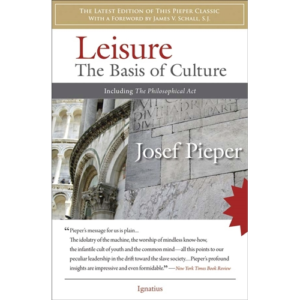
Maintaining a connected grasp of things
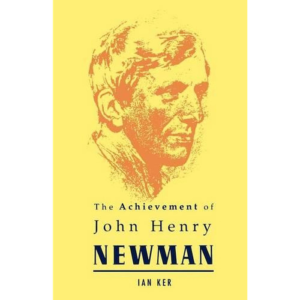
Ian Ker summarizes the central concern of John Henry Newman’s educational philosophy as developed in The Idea of a University
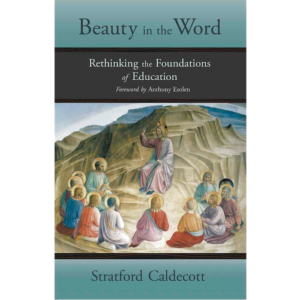
Teaching for wonderfulness
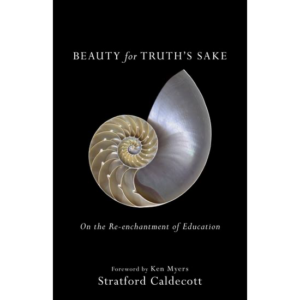
Stratford Caldecott on why education is about how we become more human, and therefore more free
Love precedes reason
Andrew Kern traces the ubiquity and power of the image of the temple throughout Scripture and discusses what its pattern means for education. (21 minutes)
Mars Hill Audio Journal, Volume 168
FEATURED GUESTS: Brian Brock, Fr. Luke Bell, Peter Harrison, Katie Calloway, Brent Strawn, and Petroc Willey
Volume 102 excerpts
Hear excerpts from interviews with Daniel M. Bell Jr., Lew Daly, Adam K. Webb, Stratford Caldecott, James Matthew Wilson, and Thomas Hibbs. (30 minutes)
“We become what we behold”
Peter Crawford explores how a sacramental education involves helping students to behold a world saturated with signs that point to Christ — and then to act as faithful stewards. (68 minutes)
