PREVIEW
The player for this Journal volume is only available to current members or listeners with a legacy account. If you have an active membership, log in here. If you’d like to become a member — with access to all our audio programs — sign up here.
Guests heard on Volume 134
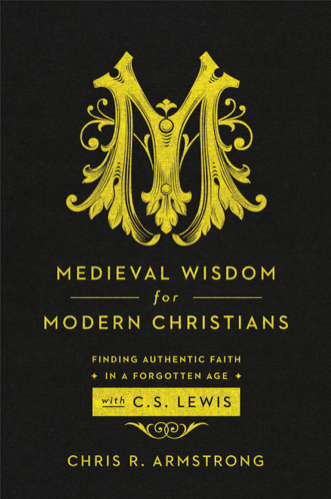
Chris Armstrong, author of Medieval Wisdom for Modern Christians: Finding Authentic Faith in a Forgotten Age with C. S. Lewis, on what Lewis knew (and we need to know) about the culture and faith of medieval Christianity
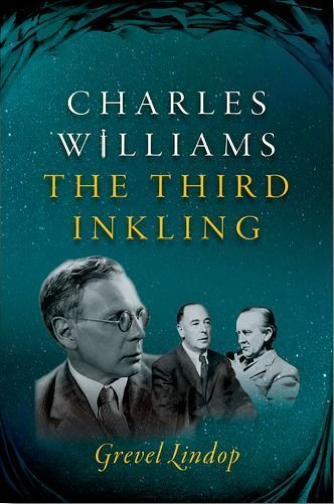
Grevel Lindop, author of Charles Williams: The Third Inkling, on the unique poetic imagination of a much neglected poet, novelist, and theologian
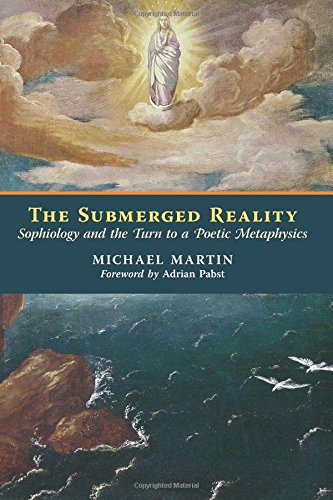
Michael Martin, author of The Submerged Reality: Sophiology and the Turn to a Poetic Metaphysics, on how the experience of Beauty in Creation and art can enable an encounter with divine Wisdom
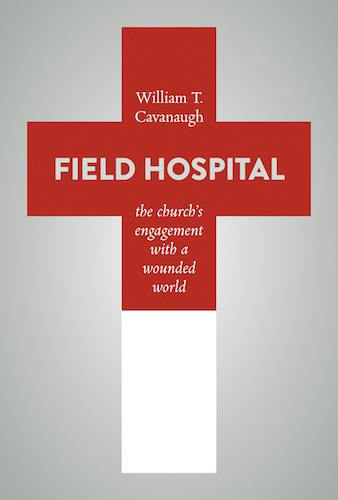
William T. Cavanaugh, author of Field Hospital: The Church’s Engagement with a Wounded World, on why Christians should think about economics theologically, not just as a science or an ethical discipline (Archive Feature available)
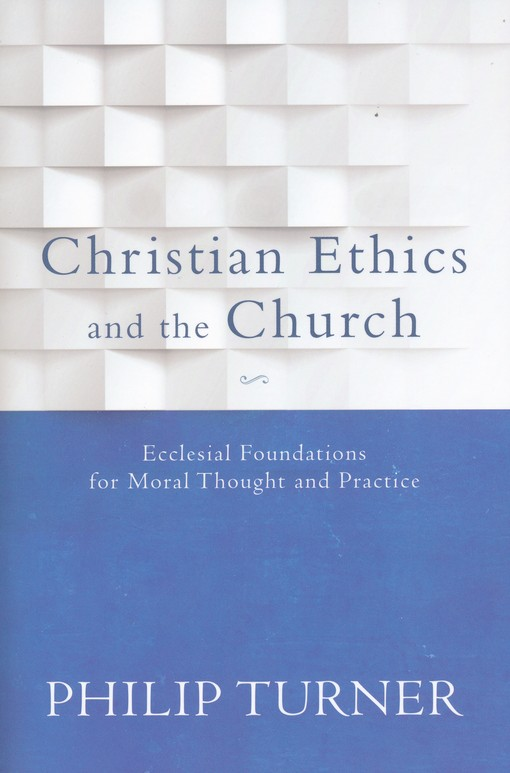
Philip Turner, author of Christian Ethics and the Church: Ecclesial Foundations for Moral Thought and Practice, on why Christian ethics has the health of the Church at its center, not just personal obedience or social justice
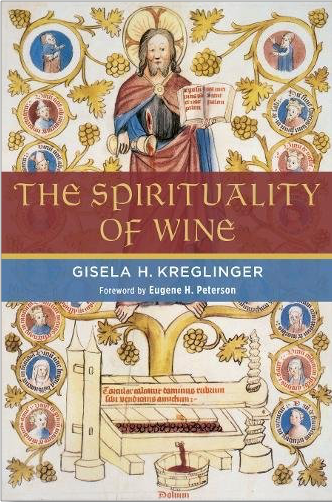
Gisela Kreglinger, author of The Spirituality of Wine, on wine, the culture of wine, and the superabundant goodness of God made manifest in the gift of wine
Related reading and listening
- The true places aren’t on any map — Clyde Kilby on C. S. Lewis’s claim that the Gospel is the greatest myth
- Savoring the taste of Reality — C. S. Lewis on the transporting, illuminating capacity of Myth
- When myth becomes fact — In this 1976 interview, Clyde Kilby (1902–1986) discusses C. S. Lewis’s critique of scientism and rationalism, his belief in the primacy of the imagination, and his mythic vision. (37 minutes)
- A great Reality at the core of things — Clyde Kilby on the nature and need for myths
- “A Myth Retold” — Literary critic Thomas Howard explains why he considers C. S. Lewis’s Till We Have Faces to be one of the author’s richest and most rewarding works. (18 minutes)
- The Bride of Christ — John Cavadini explores the different views of Origen and Augustine as to the nature and mission of the Church, and he calls for a recovery of the identity of the Church as the Bride of Christ. (38 minutes)
- The contested idea of beauty in art — FROM VOL.58 Ted Prescott describes the turn that the role of art in the West took in the 19th century in response to the weight of the “canons” and philosophy of beauty developed during the 17th and 18th centuries. (23 minutes)
- “If there is no God, all is permitted” — Gary Saul Morson explores the consequences of belief and disbelief in God through Russian literature. (51 minutes)
- Cultural superiority and Medieval romance literature — FROM VOL. 164 Tiffany Schubert argues that Jane Austen’s novels subtly incorporate some medieval literary conventions in ways that enable modern readers to experience a sense of wonder, romance, and the benevolence of Providence. (30 minutes)
- The beauty of truth and goodness — FROM VOL. 141 James Matthew Wilson talks about how cultivating the desire to perceive the interior life of things sustains the basic human capacity for recognizing truth, pursuing wisdom, and contemplating beauty. (23 minutes)
- The primacy of the Body of Christ — FROM VOL. 134 Philip Turner reflects on how Christian ethics is misplaced if it has as its central concern individual moral behavior or social justice. (28 minutes)
- Theology and the imagination — Jeffrey Barbeau explains what made C. S. Lewis an effective “translator” of theology for non-theologians. (21 minutes)
- Mars Hill Audio Journal, Volume 166 — FEATURED GUESTS: William Cavanaugh, Kent Burreson, Beth Hoeltke, Jeffrey Barbeau, Jason Baxter, John Betz, and Bruce Herman
- An icon of the whole world — Jason Baxter explains how Dante includes a panoply of characters and creatures in his Comedia, offering a prismatic view of all of Creation in its glory. (20 minutes)
- The soul’s awakening — FROM VOL. 145 Jason Baxter discusses the great psychological subtlety in Dante’s Divine Comedy. (20 minutes)
- How literature shaped Lewis — FROM VOL. 155 Jason Baxter explains how reading medieval literature enabled C. S. Lewis to become a “naturalized citizen of the Middle Ages.” (25 minutes)
- Ethics hidden in economics — FROM VOL. 134 William Cavanaugh explains why Christians should think about economics theologically, not just as a science or an ethical discipline. (25 minutes)
- Politics and idolatry — FROM VOL. 109 Theologian William Cavanaugh explains how the modern state is a unique kind of political entity, inviting a new kind of idolatry. (26 minutes)
- The modern invention of “religion” — FROM VOL. 101 Theologian William Cavanaugh examines the emptiness of the myth of religious violence. (22 minutes)
- The “sovereign uselessness of moral reflection” — Calling on the wisdom of St. Augustine, Oliver O’Donovan reminds his listeners that all knowledge participates in the eternal Logos of God and is rooted in love, not disinterested moral judgement.(Lecture 1 of 3; 52 minutes)
- Cosmic realities in the built world — Christopher and Christine Perrin discuss the implications of architect Christopher Alexander’s (1936–2022) discovery of patterns of building that cohere with the the created cosmos and with ourselves as human creatures. (59 minutes)
- The Heav’ns and All the Powers Therein — In this extended interview, Michael Ward makes a compelling case that the qualities attributed to the seven planets in the cosmology of antiquity and the Middle Ages are embodied in C. S. Lewis’s seven books about Narnia. (68 minutes)
- An invitation to a feast — Christina Bieber Lake explains how poetry is an invitation to experience the beauty and goodness of Creation as gift. (44 minutes)
- Money, status, and satisfaction — FROM VOL. 44 David Myers and Robert Frank discuss the tenuous relationship between wealth and happiness. (22 minutes)
- “Earth-shaking” and “heart-breaking” beauty — FROM VOL. 151 Junius Johnson warns that the pursuit of beauty is both perilous and an experience that points to the desire for God. (25 minutes)
- Humility and moral knowledge — FROM VOL. 149 Steven L. Porter discusses The Disappearance of Moral Knowledge, an unfinished manuscript (which he helped to complete) by the late philosopher Dallas Willard. (22 minutes)
- Thinking Together — Alan Jacobs discusses some principles he’s compiled to help us think well (and charitably) in our cultural context, and he warns us to be attentive to the ways technology displaces previously fixed communities. (53 minutes)
- Man as “both mystic and hobbit” — D. C. Schindler explores how building is a quintessential human activity and an expression of our view of the meaning of reality. (47 minutes)
- Mars Hill Audio Journal, Volume 165 — FEATURED GUESTS: Jeffrey Bilbro, Daniel McInerny, Joseph Minich, Carl Elliott, Nadya Williams, and Don W. King
- A mixed reception — FROM VOL. 162 Mark Noll discusses early critical reception of C. S. Lewis’s work in America. (29 minutes)
- “A man after reality” — FROM VOL. 30 Clyde Kilby discusses C. S. Lewis‘s critique of scientism and rationalism, and his belief in the primacy of the imagination. (15 minutes)
- Two versions of Shadowlands — FROM VOL. 10 Marjorie Mead examines two film portrayals of C. S. Lewis, noting which best captures Lewis’s jovial personality and the nuances of his faith. (4 minutes)
- Lives of generosity — Jonathan Wilson distinguishes between two fundamental ways of viewing Creation: a true Christian account of the world and a “survival of the fittest” one. (21 minutes)
- “Only a real world can save us” — Oliver O’Donovan explores how the “religion” of modernity lacks a coherent world in which one may participate with full human agency and moral purpose. (Lecture 3 of 3; 61 minutes)
- Cultivating the Virtue of Reverence — Paul Woodruff (1943–2023) discusses the importance of reverence as a virtue that enriches relationships, elevates civic life, and helps leaders to wield power wisely. (53 minutes)
- Truth, goodness, and beauty (and why they matter) — FROM VOL. 147 Philosopher D. C. Schindler examines how postmodernism poses a unique threat to our sense of an interior self. (28 minutes)
- The downward spiral of all technocracies — Andrew Willard Jones explains the two paths that exist with the development of new technologies: one which leads to an expansion of the humane world and one which exploits and truncates both Creation and humanity. (65 minutes)
- From culture war to culture care — In this 2016 lecture, artist Makoto Fujimura asks what would it look like for Christians to be stewards of beauty and human flourishing in all areas of life and culture. (48 minutes)
- Economics and personhood — FROM VOL. 147 Mary Hirschfeld argues that modern economics makes some fundamental assumptions about personhood, material goods, and God that prevent the development of a truly human understanding of economic life. (20 minutes)
- Etiquette and ethics — In this essay, Judith Martin (a.k.a. Miss Manners) argues that etiquette is “civilization’s first necessity” and an indispensable societal virtue. (21 minutes)
- Cultures of chance, cultures of control — Historian Jackson Lears explains how gambling springs from a longing for an experience of “unbidden beneficence,” a repudiation of the idea of control that marks modernity. (49 minutes)
- Impact of “infotainment” on community — Neil Gabler and C. John Sommerville discuss how the mentalities conveyed by our experience with communications media work against the nurturing of community. (36 minutes)
- Eugenics and the rise of “evolutionary ethics” — FROM VOL. 70 Richard Weikart describes evolutionary ethics and examines the ties between national racism and the eugenics movements of the late nineteenth and early twentieth centuries. (16 minutes)
- The gift of liturgical time — In this lecture, Gregory Wilbur explains how liturgy and liturgical time align us to the rhythms and order of Creation, forming us as disciples. (45 minutes)
- Foolishness, gravity, and the Church — In this essay, Albert L. Shepherd V explains why George MacDonald’s story “The Light Princess” is meant for “all who are childlike in faith and imagination.” (8 minutes)
- “Prophet of holiness” — Timothy Larsen discusses a new edition of George MacDonald‘s Diary of An Old Soul, a slim book of poem-prayers to be read daily as a devotional aid. (30 minutes)
- Aslan, the Christ-figure of Narnia — Alex Markos explores the transformational power of Aslan as the Christ figure in C. S. Lewis’s Chronicles of Narnia. (31 minutes)
- The relationship between prudence and reality — In this lecture, Ken Myers explains how the virtue of prudence is fundamentally connected with a deep and anchored understanding of reality. (54 minutes)
- Books worthy of a lifetime of encounters — FROM VOL. 69 Daniel Ritchie discusses why great books programs survive mainly in Christian institutions while declining in secular ones. (13 minutes)
- The political wisdom of Edmund Burke — FROM VOL. 28 Daniel Ritchie discusses the enduring political wisdom of British statesman and political thinker Edmund Burke (1729–1797). (13 minutes)