
PREVIEW
Guests heard on Volume 138
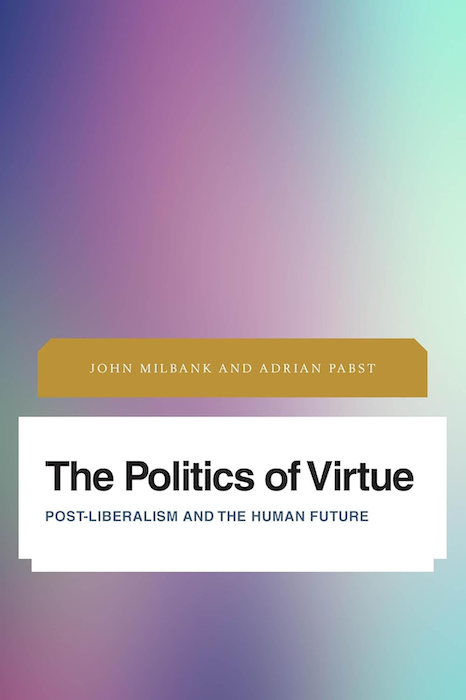
John Milbank, co-author of The Politics of Virtue: Post-Liberalism and the Human Future, on why politics needs to recognize the human soul (and what happens when it doesn’t) (Archive Feature available)
read moreAdrian Pabst, co-author of The Politics of Virtue: Post-Liberalism and the Human Future, on the “metacrisis” of liberalism (Archive Feature available)
read more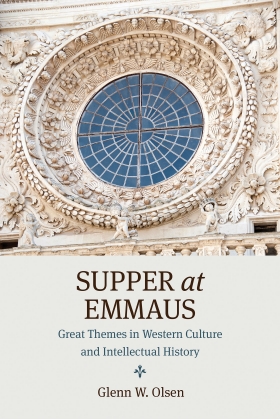
Glenn W. Olsen, author of Supper at Emmaus: Great Themes in Western Culture and Intellectual History, on Christopher Dawson’s understanding of religion and culture
read more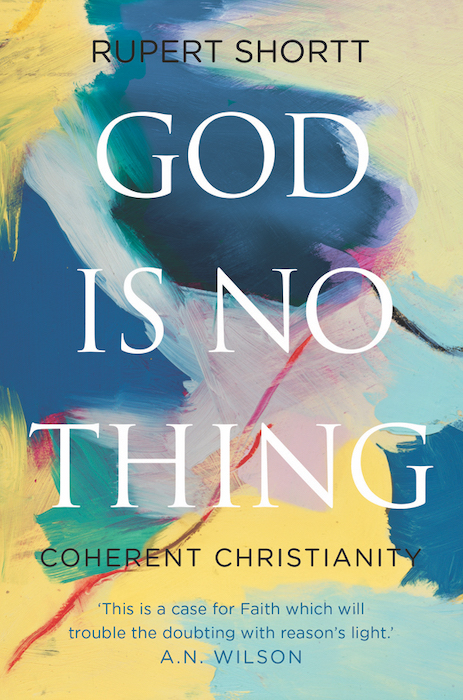
Rupert Shortt, author of God Is No Thing: Coherent Christianity, on how scientism misunderstands God and divine action
read more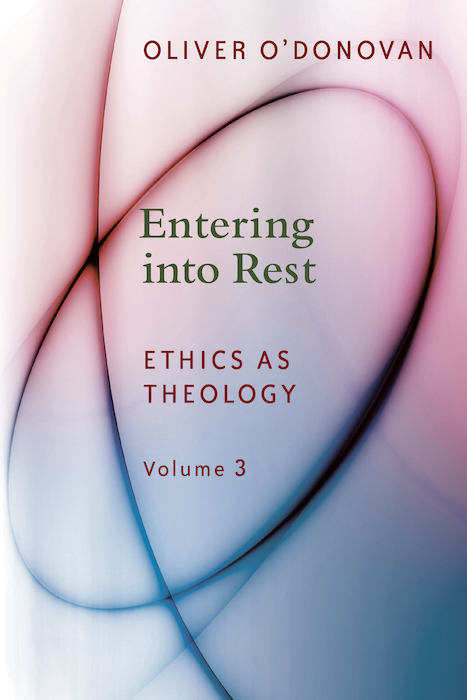
Oliver O’Donovan, author of Entering Into Rest, on the significance of love, community, and friendship as ethical and eschatological categories
read more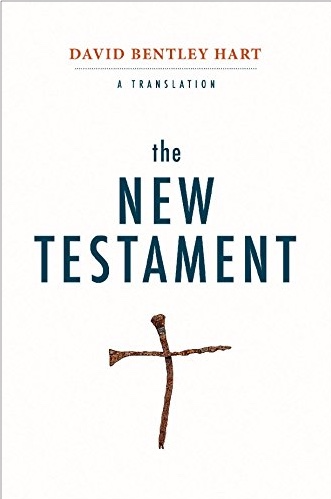
David Bentley Hart, translator of The New Testament: A Translation, on the hazards and delights of translating the New Testament
read moreRelated reading and listening
- Christian culture and the myth of the secular — Ken Myers draws on T. S. Eliot to argue that Western civilization has broken down, not into a multiplicity of cultures, but into a “post-culture.” (47 minutes)
- How to make war on nothingness? — David Bentley Hart argues that if it rejects Christ, the only remaining option for a post-Christian culture is conscious or “narcotic” nihilism, which takes the form of absolute, meaningless volition. (66 minutes)
- A sampling of newly published lectures — Ken Myers introduces listeners to four recently released lectures, courtesy of our Partners. The lecturers are Jennifer Frey, Gary Saul Morson, N. T. Wright, and Andrew Kern. (27 minutes)
- The just war tradition and whole-life discipleship — Daniel M. Bell, Jr. discusses the just war tradition, a tradition which is often invoked by figures who, upon closer inspection, tend to lack a robust understanding of its history and criteria. (57 minutes)
- War and loving our enemy-neighbor — Oliver O’Donovan on evaluating the conduct of war in light of the evangelical command of love
- The epistemology of love — In this lecture, N. T. Wright examines the epistemology of love and how it counters the reductionism of Enlightenment and Epicurean ways of knowing. (63 minutes)
- A flood of images — Oliver O’Donovan describes the distinctive character of publicity in modernity, which drowns us in a flood of ever-changing representations that do not serve the common good. (37 minutes)
- How communities remember who they are — Oliver O’Donovan on the necessity of tradition in sustaining communal identity
- Publicity and representative images in society — Oliver O’Donovan describes the nature of publicity as the force that mediates our communication with one another, creating common interests and then rapidly subsuming them into newer ones.(Lecture 3 of 3; 57 minutes)
- How common loves shape communities — Oliver O’Donovan discusses how communities mediate love and knowledge to their members and what challenges arise as a community’s traditions are confronted by sin, error, and plurality. (Lecture 2 of 3; 49 minutes)
- The “sovereign uselessness of moral reflection” — Calling on the wisdom of St. Augustine, Oliver O’Donovan reminds his listeners that all knowledge participates in the eternal Logos of God and is rooted in love, not disinterested moral judgement.(Lecture 1 of 3; 52 minutes)
- A culture “under threat of dissolution” —
FROM VOL. 138 Glenn Olsen talks about historian Christopher Dawson’s approach to cultural history, which views culture as the embodied religion of a people. (12 minutes) - How the Church promotes the cause of freedom — Oliver O’Donovan: “We discover we are free when we are commanded by that authority which commands us according to the law of our being, disclosing the secrets of the heart.”
- Free for obedience — Glenn W. Olsen on Augustine’s understanding of freedom
- “The search for shared ends” — Oliver O’Donovan examines whether and to what extent there might be the possibility of a unifying Christian perspective on political doctrine or policy. (59 minutes)
- Thinking coherently about politics — Ken Myers gives an introduction to political theologian Oliver O’Donovan, whose work has been instrumental in teaching many how to think about social and political life in light of the gospel of Christ. (57 minutes)
- The law of faith and of love — Oliver O’Donovan compares St. Augustine’s interpretation of Psalm 119 with that of others, revealing Augustine’s more nuanced understanding of the complexities of the life of faith that the psalmist explores. (64 minutes)
- “Only a real world can save us” — Oliver O’Donovan explores how the “religion” of modernity lacks a coherent world in which one may participate with full human agency and moral purpose. (Lecture 3 of 3; 61 minutes)
- Christian unity and civil society — Oliver O’Donovan introduces listeners to Dutch lay theologian Hugo Grotius, arguing that the questions he tackled relate to perennial concerns about the relationship between divine and human agency, and between civil and ecclesiastical authority. (Lecture 2 of 3; 57 minutes)
- The demoralizing effect of pagan Roman religion — Oliver O’Donovan examines St. Augustine’s critique of pagan Roman religion in Book II of his treatise City of God and asks his audience to consider what insights Augustine’s critique has for us today. (Lecture 1 of 3; 51 minutes)
- Knowing and doing the good — Oliver O’Donovan raises several key questions and complications involved in the task of taking concrete and practical action toward a recognized moral good. (Lecture 3 of 3; 63 minutes)
- Moral knowledge of reality — Oliver O’Donovan argues that admiration is the fundamental form of knowing the world, as we cannot know fully those elements of reality (“bare facts”) that contain no significance for us. (Lecture 2 of 3; 55 minutes)
- Attentiveness to the world, the self, and time — Oliver O’Donovan uses the metaphor of waking to discuss the concept of moral sensibility as attention to the world, the self, and time. (Lecture 1 of 3; 60 minutes)
- Natural law as “performance” —
FROM VOL. 124 R. J. Snell discusses how novel ideas about natural law focus less on moral propositions and concepts and more on the thrust for meaning and value. (27 minutes) - A more robust account of political life —
FROM VOL. 138 John Milbank and Adrian Pabst on why politics needs to recognize the human soul in its depth (and what happens when it doesn’t). (51 minutes) - The collapse of public life —
FROM VOL. 154 D. C. Schindler explains how liberalism sought to make way for individuals to function together without any orientation to an explicit common good. (37 minutes) - To see people as people — Anthony Bradley argues that a recovery of Christian personalism is needed to counter the dehumanization, polarization, and tribalism of our day. (45 minutes)
- An impoverished anthropology —
FROM VOL. 146 Mark Mitchell asks whether there is anything that truly binds Americans together beyond their commitment to self-creation. (34 minutes) - Insights from St. Thomas’s biblical exegesis — Jason Paone explains how St. Thomas’s commentaries reveal the saint’s personality, his rhetorical flair, and the Christocentric vision that underlie all his work. (24 minutes)
- Against hacking babies — Oliver O’Donovan raises questions about IVF and the technologically ordered motive for efficiency
- Impact of “infotainment” on community — Neil Gabler and C. John Sommerville discuss how the mentalities conveyed by our experience with communications media work against the nurturing of community. (36 minutes)
- Liberalism’s self-destructive dynamic — T. S. Eliot on the social need to move toward something and not just away
- Recognizing the Puritan flavor of “America” — George McKenna on the originally theocentric vision for the American vocation
- The fraught marriage of liberty and equality — In this essay, Patrick Deneen examines Alexis de Tocqueville’s complex and insightful portrait of “democratic man” living in the context of perpetual societal tension between the excesses of liberty and equality. (39 minutes)
- Critiquing “empire criticism” — Allan Bevere and Peter Leithart evaluate “empire criticism,” a way of reading the New Testament with an anti-imperial focus. (36 minutes)
- The fatal polytheism of late liberalism — Oliver O’Donovan on the failure that leads to social collapse, marked by conflict, suspicion, and violence
- The recovery of true authority for societal flourishing — Michael Hanby addresses a confusion at the heart of our current cultural crisis: a conflation of the concepts of authority and power. (52 minutes)
- A metaphysics of realism, relationality, and personalism — John Milbank gives a survey and critique of the efforts of 20th and 21st century theologians to articulate a Trinitarian ontology that reflects reality and counters secularization. (61 minutes)
- Why liberalism tends toward absolutism — In this lecture, Michael Hanby examines what causes liberalism to become dictatorial in thought and practice. (49 minutes)
- Is liberalism compatible with religious freedom? — D. C. Schindler relies on two Thomistic axioms to illustrate why liberalism — which claims to offer a minimalist conception of the common good — is ultimately incompatible with a Catholic understanding of religious freedom. (34 minutes)
- Christopher Hitchens vs. G. K. Chesterton — Ralph Wood compares Christopher Hitchens‘s view of the cosmos with that of G. K. Chesterton, arguing that Chesterton succeeded where Hitchens failed. (44 minutes)
- Only a dying civilization neglects its dead — Historian Dermot Quinn discusses the work of fellow historian Christopher Dawson (1889–1970). (15 minutes)
- Christopher Dawson: Chronicler of Christendom’s Rise and Fall — Dermot Quinn discusses historian Christopher Dawson’s meta-historical perspective and his wisdom about what makes cultures healthy or unhealthy. (54 minutes)
- Insisting that political leaders are incapable of obeying Christ — Oliver O’Donovan on the unintended consequences of the First Amendment to the U.S. Constitution.
- What makes a great historian? — John Lukacs on how historian Christopher Dawson displayed a proper nostalgia
- The gift of objective reality — Moral philosopher Oliver O’Donovan makes an argument for the consistency of the idea of law when it is conceived in a theological context. (40 minutes)
- Friendship and life together — In a lecture at Providence College, Ken Myers explores how the concept of friendship, which used to be central to political philosophy, was banished from considerations of public life as the state was exalted over society. (53 minutes)
- Freedom as conformity to reality — W. Bradford Littlejohn summarizes the definitions of liberty offered by Richard Bauckham and Oliver O’Donovan
- Faith and unbelief —
FROM VOL. 98 This Archive Feature revisits two conversations, one with Roger Lundin and one with David Bentley Hart, on what makes Christian belief so implausible to non-believers. (39 minutes) - Creation as beauty and gift —
FROM VOL. 67 David Bentley Hart describes how the Christian understanding of Creation as beauty and gift, as the outward expression of the delight the Trinity has in itself, reveals a vision of reality different from the pagan or fatalist vision of reality. (12 minutes)